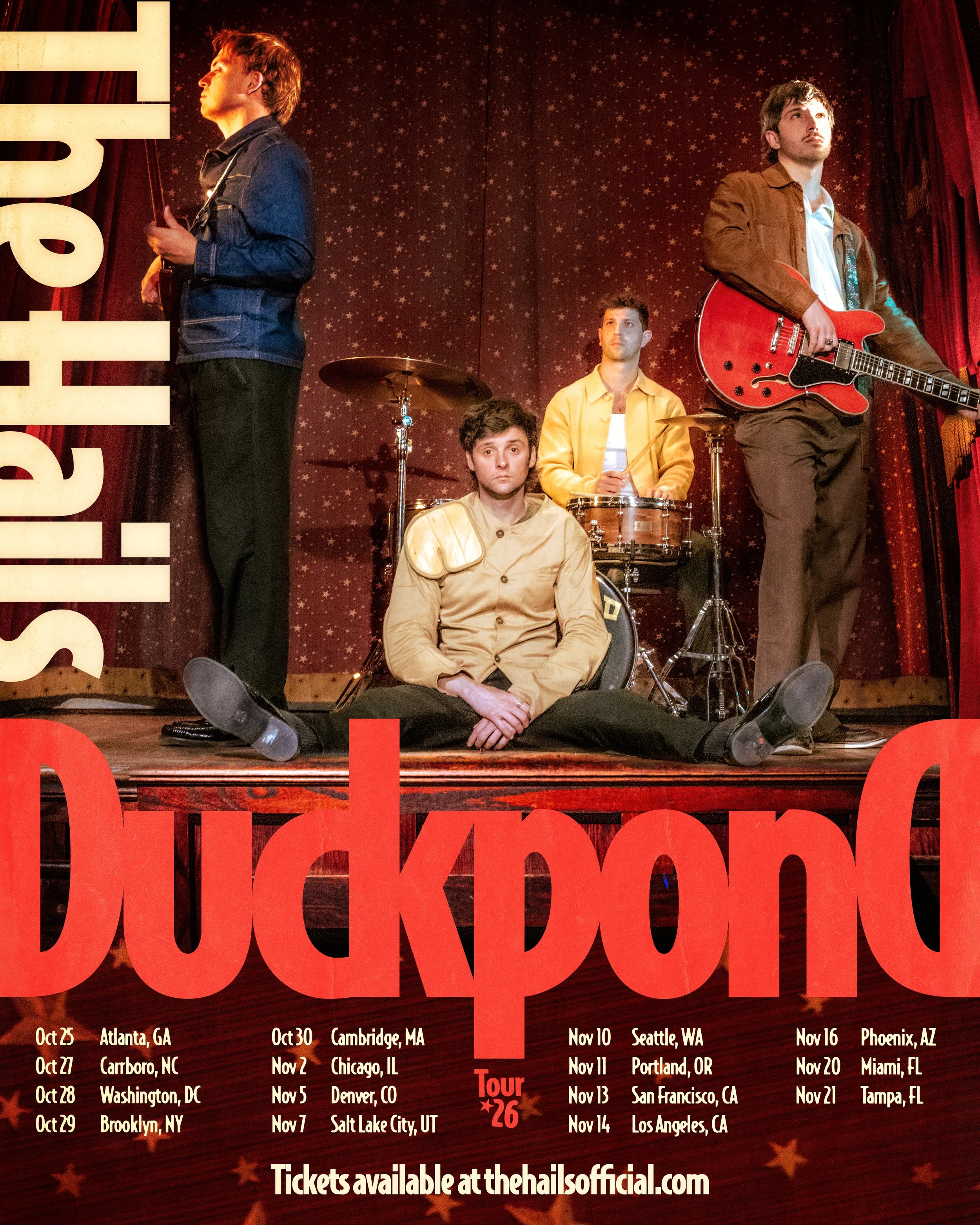
The Hails
What started as a college band in Florida has grown into a cross-country effort with the staying power to thrive through years of recording from thousands of miles apart. But the Hails decided it was time for a change — or rather, a return.
Out Oct. 23, their new album took shape under the same roof for the first time in years. It’s called “Duckpond,” and it’s a record they can proudly say came from all of them. Recently, I spoke with frontman Robbie Kingsley and drummer Zach Levy about it all.
Listen to this interview anywhere podcasts are available.
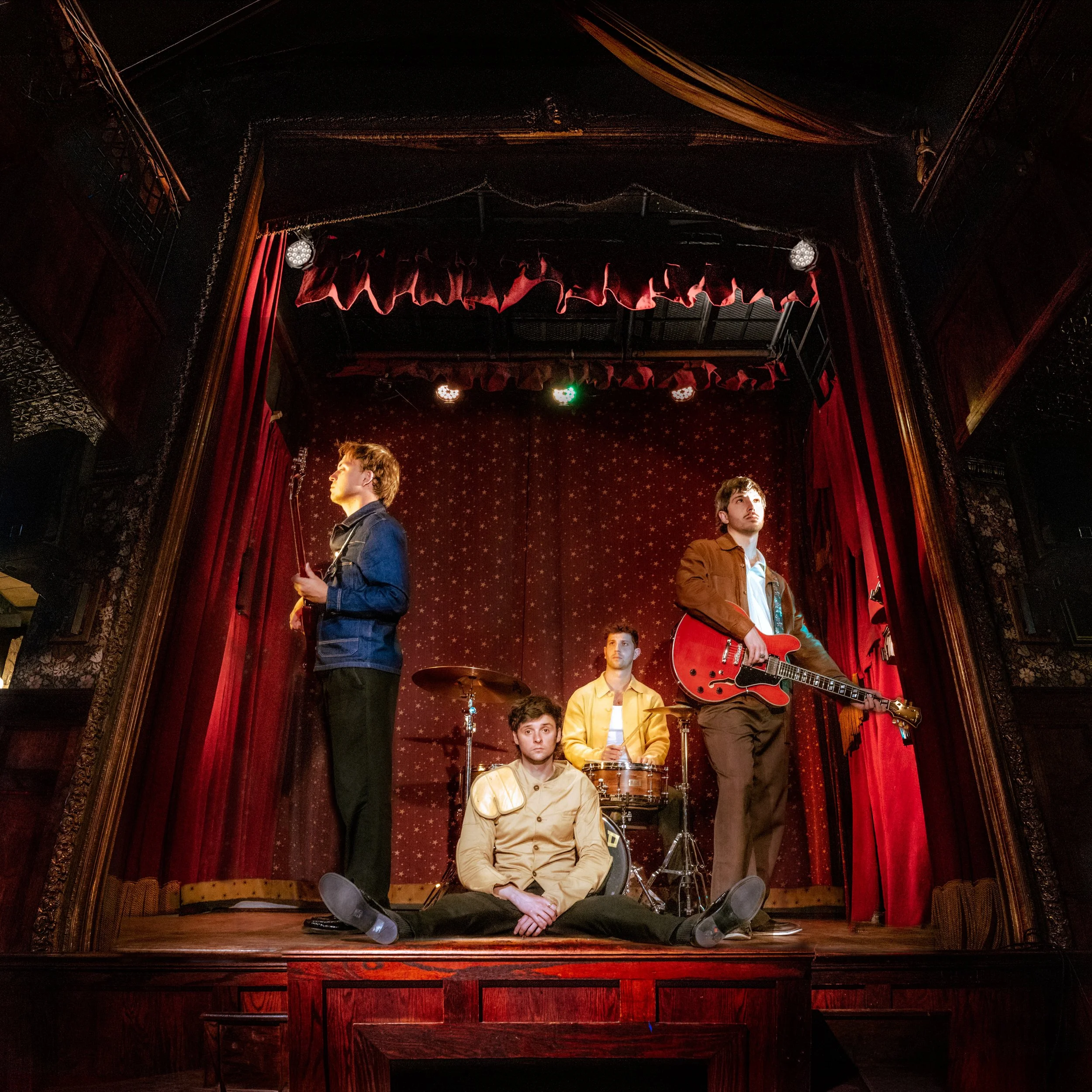
The following transcript was generated with transcription software and reviewed for accuracy. Minor errors or omissions may remain.
YY: At this point. You've spent years, I think, remote recording across different cities, and I read that for your new material, you rented a house in South Florida to physically be back in the same room together. So how do you think the decision to record that way again changed the band's creative chemistry from, you know, what it's been more recently? Did it kind of feel like old times?
RK: Yeah. Yeah, I think that was like the, the goal we were trying to get out of it, you know, just like be in the room, jam, feel out the jams together and less of like a, you know, sitting in a room hammering out a melody, alone, like more just feeling the flow and kind of understanding, like where each person wanted to take a certain groove or like a certain inspiration. So yeah, yeah, that was, that was very intentional.
And while you're normally spread across -- I think it's Miami, Brooklyn and DC -- how do you go about maintaining, like, a succinct creative focus while still making room for changes that are probably bound to happen with all the remote recording that you probably have to do most of the time?
RK: I guess like we usually just like rolled with things for the last couple releases. I think it's, you know, just like a constant fight to like find time to be together because, you know, I mean, we're like, we're still working at, you know, regular jobs and like, you know, outside of that, there's like family stuff and just life. So yeah, I mean it, but like, it's a, it's a constant passion where we're just like, you know, when are we getting together next? And what's the next move is, you know, always on our mind. I think that's why this record, you know, we really we're like, hey, let's, you know, set, set aside like a dedicated period of time. Like it was like finite. It was, you know, two months in a house, one month to record. And then, you know, that was basically the whole, the whole process. Like we knew we had, you know, end dates. So yeah, I think that's the first time we've actually had a structure to something.
And do you think you're better for it?
RK: Yeah, I mean, I love the record. So yeah. I mean, you know, it just I think it was time to, you know, actually like sit down in a room and like figure out, you know, how do we want to sound like coherently as a group more than just like, hey, I've got a song, you know, let's see what we can do with it.
So you were in the house for, for two months. Did you basically just sort of see music, like songwriting as like your full time job during that period of time?
RK: Yeah, I mean, I was still like flying back and forth to do my job. And Franco was flying back and forth from DC. And so it was just kind of, you know, it was it honestly was like a vacation, you know? I mean, Zach lived there so he can speak to, you know.
ZL: I mean, it did it did kind of feel like a full time. Right? I mean, I think I was working like some of the days, but it did feel it felt like when we were there, we were like fully there. Like that was like our total focus was really just locking in and writing as much music as possible together, because we hadn't been able to do that in honestly, like years. Like we used to, we, we had a studio we built, you know, a few years ago, but we got rid of that. And this was the first time we were able to kind of get in the room together and have like, you know, weeks at a time just kind of jamming and writing new material.
And speaking of that new material, I know that some of your most popular songs spent years being refined on stage before they were recorded. And so are there any tracks on your upcoming album that have followed that sort of same long-term evolution or was everything created, you know, in that two-month span?
RK: No, that was like, that was a rule we set ahead of time. Like nothing, nothing can be, you know, from previous ideas, voice notes, like literally nothing. So yeah, it was everything was everything was made in that room.
Was it hard not to let some of those other ideas that I'm sure you probably had, like, creep in?
RK: Honestly, no. Like I think, I think we were all at a point where we were just kind of like, I think we kind of exhausted that tank, you know, where it's like, I've heard, you know, Dylan's most recent guitar ideas for the last three years I've heard, you know, Franco's, you know, little production bits of stuff. And like, and we had tried, you know, like, I think, I think that's sort of how like "Cut The Swarm" was kind of, you know, finally like put out in the world because I was like a really old song that I had. And, and then Franco, you know, did a really good job, like, you know, kind of beefing up a lot of the sounds. And so that was fun. But I think it was just sort of like, we're so ready for just something new, you know, like we've just, we've tried this for so long and like, even even I think I felt tapped out of like sitting around on my acoustic guitars at home, you know, just don't really have much for probably like a year or two. So I, yeah, I was ready to just, you know, be fully collaborative.
Yeah. I mean, it sounds like that was the, the right call. Your latest single that you have out right now, it came out a little less than a month ago at, at time of recording. It's called "Story of You and Me." It uses film as sort of like a metaphor for navigating relationships. And so, you know, do you see this lens having any sort of broader influence on the upcoming record, or was that mainly just isolated to to the one song?
RK: Yeah, I think that's pretty, that's pretty solo to that, that song. I think that one, that one actually was kind of spearheaded by Franco. Because I didn't really have a lot of, I remember not really understanding the idea first because it was kind of born out of like a synth loop on the he has the Teenage Engineering OP-1. Which is like a really cool little toy. And so I didn't really like understand where he was going with it. And then all of a sudden it kind of locked in, but that was like past him writing a good bit of the lyrics. So. But yeah, no, I think the rest is, is a bit more about like, you know, our situation as a band and like trying to, you know, understand our place and like a late stage capitalistic like world where we're, you know, fighting jobs and fighting society to keep doing what we love.
Yeah. I love the Teenage Engineering gear. It all just looks so cool and succinct, but it's so foreign to me. I would not understand it either, so.
RK: Oh I know. Yeah, I like, I remember taking like 30 minutes to play with it and just it was fun. I was just so lost.
Yeah. But no, so the, the video for that song as well. Do you think you accomplish because I think a lot of times, you know, the goal of a video, not always, but a lot of times is to add another sort of sensory layer to what you've already recorded. Do you think that you accomplish that with the video, or did you kind of see it taking a different direction when that came out?
RK: I don't know if you have anything, Zach, but I, I mean, I think I think the video is really cool. Like I think it was just sort of, there's sort of like a narrative that, you know, we're going to build through these releases about we're sort of, you know, wanting it to be a metaphor for like, you know, we basically like, we're playing like fictionalized characters of ourselves. And all these guys want to do is they just want to put on a show. And so story of you and me, you know, is the show, but then you'll kind of see us, you know, through the rest of our our rollout, you know, we're kind of like doing idiotic things along the way. So yeah, I think, I think that, you know, sort of you and me sets the scene for, for what we want to be. And I think the rest of the, the rest of the songs will probably show some of that struggle.
ZL: Yeah. No pun intended. The the video definitely sets the stage for, you know, what's to come. Like Ravi said, we kind of we're fictionalized versions of ourselves and we're going through all these odd jobs as you'll, you'll see just to make ends meet and kind of. Yeah, no, I'm, I'm very excited for kind of what the next videos are going to look like and what we're going to keep diving into as far as kind of the brand and you know, message we're trying to get across with this album.
Robbie mentioned something in his last response that just sort of made me think, so your first album, it's called What's Your Motive? It came out back in 2023. A lot's changed since then, but if that album was sort of about, you know, figuring out who you are as a band, do you think this one's sort of a response to that last one, or is there like a different philosophy tying this body of work together?
RK: Yeah, I think that's still there. Like there's still, that's still like a pretty present theme of like, you know, understanding what motivates you and like, you know, where you want to put your time and energy. But then this one might be sort of a refocusing on like, how do you know, what do we actually want to do? Because it's that, that one certainly is sort of like, hey, you know, we're, we're a band and, you know, we want to make songs, but then this one's like, this one seems to be a bit more like we're a band that wants to be together and like wants to, you know, continue to write together. And, you know, we're, we're fighting like hell to, to keep that path alive. And yeah, I mean, even, even the title of Duck Pond is sort of, it's not really the, the, you know, the true meaning, but I've kind of ascribed a meaning of like a duck pond is like a man made safe haven for animals. And, you know, that's sort of where we can find ourselves at time where it's like, you know, a lot of people would be like, yeah, this is awesome. You know, like I, I have like decent streams, I play like fun shows, but like, we're at a point where we're kind of like, there's got to be more to this, right? Like, you know, we gotta, we gotta keep growing. It's sort of unsustainable at times. So yeah, we've kind of got to get out of the, the, the duck pond in a way.
Have you had the chance to play any of the new material for audiences yet?
RK: We did actually. We played we played two of the tracks on our last tour, like last fall, and they were, they were getting some pretty good, pretty good love.
That's good. Did it give you hope for for the rest of it?
RK: Yeah. Yeah. I mean, it was I think one thing too was kind of, you know, because we were playing in a room, you know, this was this was sort of our way of like, you know, kind of writing for like the live atmosphere as well, which a lot of bands like we know do a really good job at. And we like to toe the line of like, you know, really crazy interesting production and, but also like, you know, still trying to be like a guitar band. There's still a garage ethos to everything I do. But certainly, you know, like, we want to, we want to still, you know, be open to like just a good classic pop production. So, but sometimes that can get lost live, you know, you just don't really have the capabilities with like all the little bells and whistles and, you know, because, you know, when you're like running tracks through just like a live setting, it's not really the best the best medium for that type of sound. But yeah, so I think, yeah, we were just trying to kind of be a live band again at the same time. And so yeah, playing those songs, you know, it's, you're gonna basically recreate it identically to how we recorded it. So they'll definitely hopefully be, you know, good, good ones at the shows.
And I think in terms of your philosophy when it comes to playing your songs live versus how it sounds on on a record, what's one thing about the completed record that you're sort of excited for listeners to hear for the first time?
ZL: I think this record just feels the most complete and cohesive compared to, you know, other projects we've done. Honestly, in my opinion, since he seems upset where it just kind of flows really well and, you know, feels like a feels like something that was like written in like a time period together. It's got some familiarity, but it's also it reaches for something different that I feel like we haven't really done before. And I think, I think the people listening are going to be excited to kind of hear the direction we're going in and could be what we lean into more in the future as well.
I was reading some of your past interviews, and I think something that you've spoken about before is perseverance, pushing through the fatigue as a band, and you've been a band for almost ten years now. So something obviously is working. Is there something that immediately comes to mind that keeps that going?
RK: I mean, definitely the live show, like that's all I want to do is just get on a stage every night and perform. I definitely like tap into different, a different part of myself when I'm on tour. Like, you know, even even the struggles of tour, like I'll take that over, you know, going into a, an office. I still see myself, you know, on the 7:00 bill at Lollapalooza, you know, like beautiful sunset vibe. You know, I think there's there's still a path for us to be, you know, just among the great people of our own generation. So yeah, I think that's, that's sort of what, what still keeps it going.
ZL: I think we just love, we genuinely love making music together. And, and we had a lot of success in the beginning of our career. And, you know, we just want to keep writing great songs and performing for people. And I feel like that's just like the high that we chase, that we, we keep, we keep going for now.
I know you've got that tour coming up in October. Are you going to be playing any more shows between now and then?
RK: Nothing planned. We're going to kick it off by supporting a band. But that's not announced yet. But that hopefully will be announced soon and then yeah, it's, it's all kind of like right in that same time period. So it's all kind of rolling into like one, one big tour.