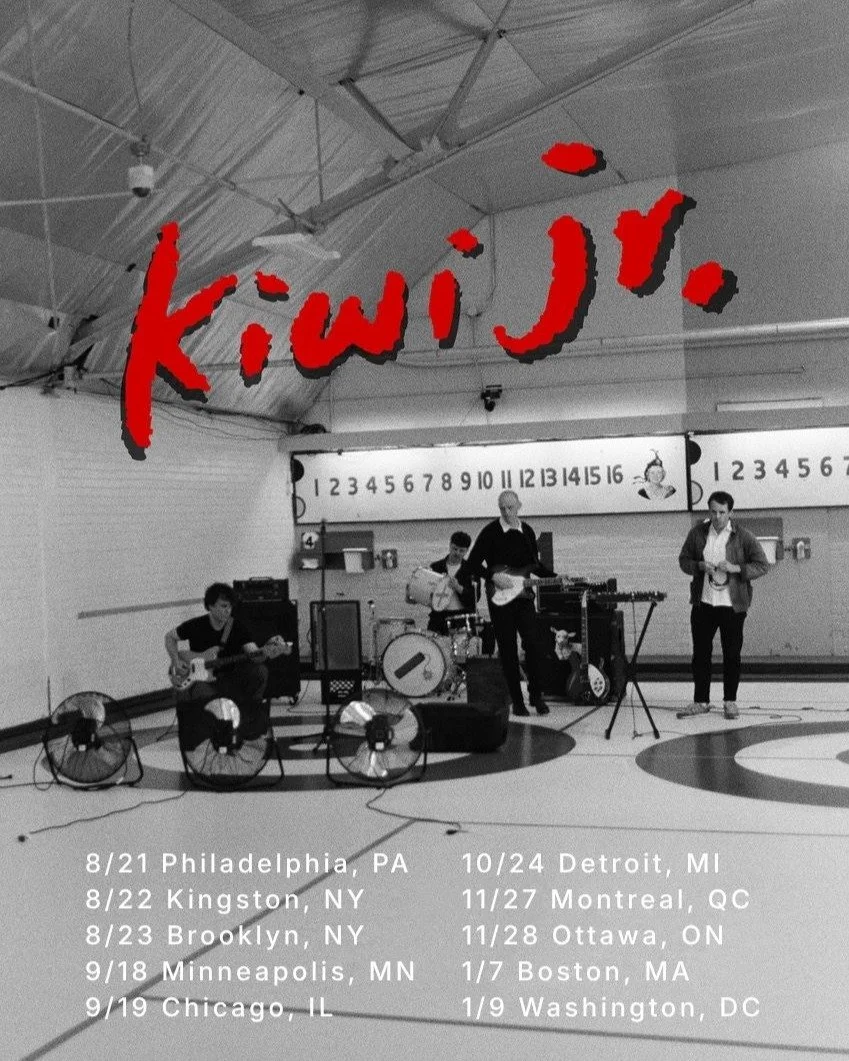
Kiwi Jr.
Celebrated in their home country of Canada and beyond for their succinct, immersive indie rock songs and lyrical storytelling, Kiwi Jr. has returned with their first album in four years — and it’s a record worth the wait.
“Blowin’ Up,” the band’s fourth studio album, is out Aug. 14. Recently, frontman Jeremy Gaudet spoke about this new collection of songs, where they came from and where the band is taking them next.
Listen to this interview anywhere podcasts are available.
The following transcript was generated with transcription software and reviewed for accuracy. Minor errors or omissions may remain.
YY: ”Blowin' Up" comes out in three weeks from today. I think by the time this interview goes up, it'll be about one week. What are your general thoughts as you sort of prepare to release the album?
JG: Well, I guess I just hope that people like it. You know, it's kind of just as simple as that. You work really hard on something for a while. It takes a long time just to figure out the administrative side and, and, you know, get a release date and all that boring stuff. But at the end of the day, you just hope that people notice it and that people respond to it.
I think, you know, along those same lines, I was just reading about it, your last album, "Chopper," was all written and recorded in a very defined period of time, which I understand made it feel very cohesive for you. And so how does this album compare? Does it feel similar?
Yeah. You're right. No, it's totally different. It's it's kind of the exact opposite. Whereas yeah, you're right with chopper, but this one was written over, you know, a few a couple of years and we really took our time and did a lot of demoing. We even like played some of the songs live. And yeah, we just, it felt more like our first record where we had no deadline in place and we were able just to kind of work at our own pace. You know, a lot of times when you do have a deadline in place for an album, it can be a good thing, you know, really motivating you to get the work done. But it can also mean, you know, you have to hand it off at a point where you don't feel like it's maybe at the right, you know, you wish you had a little more time to work on it and things like that. So anyway, it was just cool to switch things up with this one. We had, we were rehearsing in a new space. We worked in a new studio we've never worked in before. And yeah, and just like, everything was kind of different. Which was kind of by design, you know, we just wanted to, it's our fourth album, so we just wanted to shake things up a little bit and how we approached it. You know, we knew we weren't going to take any big swings, like make a country record or a hip hop record or anything like that. So it's just like anything that we could control, like where we were recording it, the people we were working with and things like that, we try to just make little subtle decisions that might give it a little bit of a different flavor compared to some of the other records.
Yeah. And you mentioned working in a new studio. It was recorded at High Bias Studios in Detroit and you know, the people you're working with as well, some great artists from the area helped with the album. I have one question about that, but before I go any further, does the song "Pure Michigan" have any connection to, you know, the records effective birthplace?
Totally. You know, I've been working on that song for like a few years actually. It took a really long time to to finish the lyric. I just, I had the idea, but I didn't really know what it was going to be, and I was just slowly picking away at it for a couple of years. And I had sent the guys in the band a demo of it, probably in like 2023 or something. And you know, nobody really responded to it. So it was just kind of put on the back burner. And then once this plan to make the album in Detroit kind of to take shape, it was like, okay, I know we definitely got to go back and finish that one. Yeah. And and, you know, really lean into the Detroit, Michigan, the whole thing. And, and, you know, and then we, like you said, we tried to get as many of our friends who are in the area on it as possible. And it just all sort of started to color itself in, if you know what I mean. Once we kind of made that plan to record it there.
Yeah. And with the people that you were working with, I guess, what did they bring to the table that, you know, you wouldn't have had otherwise if you weren't working with them aside from just like, okay, they play this instrument, so they're going to work on the record.
Yeah. Well, I guess the biggest example of, of, of that would be the Protomartyr feature. Joe and Greg are on the last track of the album "Landscape With Limousine," and that song was essentially done. You know, it was all recorded first, and then we asked them to jump in on it. So we really didn't know what they were going to bring. And, you know, I had a bit of a vocal idea for Joe. I knew I wanted him to kind of jump out in those course sections that we kind of left blank for him. But Greg, no instructions or anything, you know, just told him to feel it out, see what he comes up with. And he brought all this really cool texture stuff to it in places that I didn't anticipate. And you know, that I think that's the cool thing about doing collaborations and bringing in people from outside your band because with us anyway, you know, like we've been a band for ten years. We kind of know what each other are going to bring to the table. You know, what we're good at are likes and dislikes and things like that. But when you bring in somebody from the outside, it's exciting to hear their take on things. And, and that was definitely the case with the Protomartyr feature. We, we did no idea what they were going to do. And they totally, totally saved the song, so to speak.
And you guys have kind of always like collaborated with people, right? I know this for sure. Your last album you worked with, with some other musicians, has that always just sort of been your philosophy throughout your, your, I guess, career as a band?
It's just fun to bring in more friends, you know? Yeah, it's kind of as simple as that. I don't think we've ever had any features that, you know, we didn't get along or know the person before asking them. I don't think we've had any kind of shot in the dark, you know, let's see if so-and-so can come on the song. And it's always just been like buddies of ours and things like that. So I think, I think it's mostly just of something that's fun for us to just get people involved.
Yeah. I wanted to continue talking about the album a little bit. One thing that people continuously notice about your songwriting from album to album. You know, each album is going to be a little bit different, but one thing that remains the same is this inherent storytelling. That is, I just feel like is always there in the lyrics. And I feel like that's something that Kiwi Junior has definitely come to be known for. With this in mind, how do songs usually start for you when you're sort of going about the writing process?
Well, for me, it happens in a few different ways, you know? I think a lot of my favorite songs that I've written, I have either had a song title first or, you know, a general idea of what it was going to be about or even, you know, a fully completed set of lyrics before even starting the instrumentals. And, or I mean, like the music side of it. But, you know, there's a lot of songs in our catalog that just have started from the band jamming things out in band practice. You know, we somebody will bring a riff or a chord progression or something to the table. And then we're just jamming it out and then it's my job to go home and kind of figure out what kind of words are going to fit over top of this and how that's going to work. But I always find that way more work and like kind of stressful at times because when the music is done first, you know, there's kind of you know, there's a specific way that the words have to fall into place, you know, and sometimes you can end up trying to like, really, you know, think of a rhyme or like you're trying to like put a square peg in a circle hole kind of thing. And I find it so much easier if you're working the other way around and, and you can kind of start with the words and then let the music kind of follow suit after that. Yeah. So it happens in a few different ways. And that's the case on this record too. There's, there's some songs that I had fully demoed out and brought to the band, and then there's others that we just kind of improvised the, the start, the beginning of it at a rehearsal.
So with songs where the lyrics come first. Do you ever find yourself having to change some things around once the music comes?
Oh yeah, for sure. But like even example, like "Pure Michigan", you know, I remember thinking like, oh, that'd be a good song title. And then I started, I always kind of wanted to, I had the idea to write it was going to be way different in the beginning, but I had an idea to like set a song on the Ambassador Bridge and like crossing the border and stuff. And I had, so I had that idea and the song title and stuff first. And, and I got about halfway through the lyrics and before I started the melody and the, the instrumentation of that song.
And I think again, with, with the lyrics, each single that's come out from the album so far, there's four songs out. They each have had their own video and have their own sort of distinct set of visuals. How do you approach pairing what are often very like vivid lyrics with the actual visuals? Like how, how do you guys approach making a music video, I guess.
Yeah, it is crazy. We are making so many videos lately. It's just sort of the way things are happening right now. But I don't know, I don't, we don't put that much stock into our videos. Like, you know, we try to do a good job at them, but like, that's not our art form. At least it's not mine. You know, it's like a little thing that just has to exist to go on YouTube or whatever. And usually we just try to make sure that we can do it all in one day because it can be a drag if, you know, if you're stretching out a music video shoot over a whole weekend or something like that.
Getting everyone together is a pain as well, I'm sure.
It's a pain. And like some, you know, there have been times where we're like outside in the cold and like, nobody has eaten dinner or So somebody's yelling at you that you're losing the light. Yeah. And you're not getting paid for it. It's kind of a drag.
Well, I mean, that's, I think the the videos have been pretty well done. So obviously I'm sure it pays to, to know someone who's good at that sort of thing.
Oh yeah. Like, you know, the best is like when you can just hire someone who's really efficient, does a good job. Like Ben who did the "Blowin' Up" video. He did all of that really last minute just in one evening. And we were really happy with how it turned out. That's cool. He him just being a total pro at it, you know?
Yeah. And in situations like that, I mean, I don't know, did he like come with a complete idea for the video or were you like, well, here's kind of what we want and, you know, just sort of take it and run.
Well, that one we did have another video made for that one. And it didn't work out in the end for a few different reasons. So we just had a last minute pivot and just, you know, said to said to Ben, who's our friend from many years back you know, do you think you could help us do kind of a last minute replacement video. And so we just really didn't have a lot of thought going into that one. We were just happy that we were able to get something done. And I think he did an awesome job.
I was reading about some of your recording rituals. This was way back when you did "Cooler Returns." I think you had like a projector in the studio or something, just kind of keeping you going between takes. Did you have anything this time around, like anything sort of keeping you going?
Yeah, that was that "Cooler Returns recording sessions." Those were pretty unique. Yeah. No, nothing like that. No video. No. Yeah. Sorry. You're just. I'm getting like a flood of memories. You mentioned that. I haven't thought of those in a while, but. Yeah this time we had this really great cafe across the street, and we were eating these little breakfast sandwiches every day that came from there that we called SpongeBob sandwiches because the egg was like a perfect, you know, yellow square look like SpongeBob? I don't know. That's about as. That's about as much as I can give you about little extra bits in the studio with that one.
Fair enough. I love a good breakfast sandwich.
Yeah. Shout out Alba on Michigan Avenue.
Speaking of places, the write up for the album, it draws connections across some of the main tracks. Very well done. But it also tends to tie each one to a physical place. And so how much do you think the environment that you find yourself in when you're writing? How much do you think it tends to affect what you create?
You know, I don't know. I wouldn't, I wouldn't know how you know, how it would work otherwise. But I mentioned earlier that we did have a, you know, a different rehearsal space for this record. And that is something that we've tried to change. Every album is just find a different place to really work on the material before going into the studio. I just find it helps keep things a little more exciting and keep things from, you know, feeling like you're showing up to the same office job day after day. And just kind of waiting for your lunch break or whatever. I know that's not really what you meant when you're asking the question, but I do, you know, we do try to switch up the settings a little bit each, each record.
And you've got a couple of festival dates lined up through the rest of the summer. I know that as of right now, you have Bazooka Fest in Brooklyn and Riot Fest in Chicago in September, I believe. I understand the band tends to like playing on a big stage. And so how do you adapt your live set for these festival appearances?
The one thing that we always just try to remember is that there's so much more space on the stage. So like, you don't, you can, you know, you can move around a little bit. Yeah, I know that sounds painfully obvious to say out loud, but it is crazy. You know, we do play a lot of small venues and sometimes, you know, Brian plays two keyboards and guitar on one side of the stage. So we do have a lot of equipment on there that takes up space so we can feel, you know, pretty cramped sometimes. So we just have to remember that we can really stretch our legs on a big stage sometimes. And that's, that's fun to do also just, you know, take up a little more space.
Yeah. And you also have some dates coming up in Europe this fall. What are you most looking forward to about like actually touring the record?
Just playing new songs. Really simple as that. You know, we haven't put out a new album and I think it's four years now. But we've been playing a lot of shows in there and, and this will be the first time that we're adding, you know, a significant number of new songs to the set in years. so I think it's just going to be fun to, to keep things fresh and curious to know, you know, you never know which songs people are really going to respond to live and what's really going to work. You know, we can be really happy with the way something sounds on the record, but until you get it kind of road tested and play it live a few times, you don't really know if that's going to be like one that stays in the set or not. Yeah. So it's going to be fun for us just to kind of see what it's like.
How much of the record would you say you've been able to like play live so far?
I'd say half. Probably half. And, you know a couple of the songs we played, you know, a few years back but haven't played in like a year or something like that also. You know, we just kind of dropped a couple new ones in the set and then kind of put them away again after we finished the record. So yeah, probably half I'd say. And then yeah, there's a couple that we, we, you know, we really haven't thought about playing live because they sort of came together in the studio a little bit. So we'll have to figure out those ones as well.
Still. Yeah. More of a more challenge to come, so something to look forward to a little bit.
Yeah. Like, you know, there's one song on the record that we recorded. We were all tuned down a step just because it was really high for me to sing. And I'm trying to figure out a way for us to do that one without having to bring like a second set of guitars that are tuned down.
Yeah, that's, that's going to be tough. Okay. I will ask one more question here and not to be too on the nose, but I wanted to quickly pull something from your current bio. The quote is four albums deep and playing just to play. And so can you speak more to that? And do you think that that like pretty much captures your philosophy as a band right now?
Yeah, I do, I do actually there was like an actual effort when we started the process of making this album to remember to just have fun with it. I spoke earlier about having deadlines and things like that. And, you know, I also mentioned like, you don't want showing up to band practice to feel like a 9 to 5 job where you just got to like put in time or whatever. We really were all on board to have as much fun while making this record as we could. And I don't mean like party in it or whatever. I more so mean just like you know, if, for example, like on our previous records, I don't think we had a single song over like four minutes maybe. And, you know, on this record before we started editing, I think we had two songs that were six minutes. And that's just because, you know, we recorded a live a lot, live off the floor and, and and just kind of allowed ourselves to have fun with it. And I mean, just kind of like jamming things out and kind of like there was no rules and and we just weren't being really precious about anything.
There's, you know, yeah, there's a handful of things on this record musically that we wouldn't have done in the past. Like song, Hard Drive Ontario goes back and forth between three four and four four. And even the song "Blowin' Up", like blowing going to half time in the courses on the drums. Like things like that. We just wouldn't have allowed ourselves to do on previous albums. And I guess that's kind of what we mean by playing just to play is like we are trying to have fun with it. And I think, you know, we've been a band for ten years. I think that's right. Someone will crunch the number on that and correct me, but if you're not having fun with it, you know, as you enter middle age, you're just kind of like giving yourself more work to do. And I've seen other bands suffer from just not having a good time with it. And the music, you know, it doesn't come out as as good. And so yeah, that I guess that's what I wanted to say is just that we yeah, we were trying to really, really have fun with it on this record.