
Hannah Cole
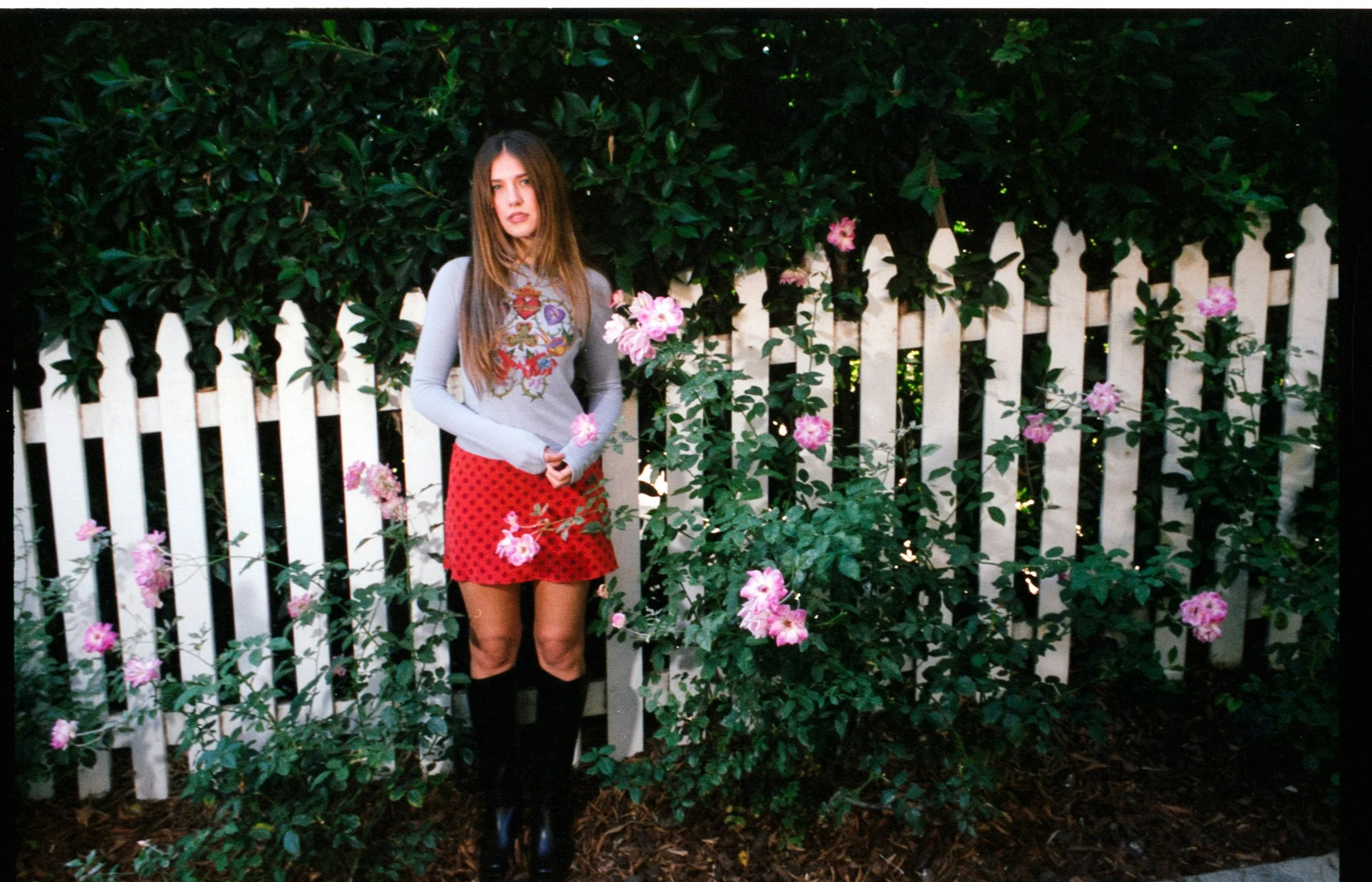
Hannah Cole has been making music her entire life. But it wasn’t until she moved out of her hometown that everything became more real. After a few steady years of EPs, her debut album finally arrives Sept. 4. It contrasts the challenges of starting out in the music industry with the familiarity of coming home. “Switchbacks” is built around the idea that sometimes, in order to move ahead, we must look to the past.
In the not too distant past, Cole spoke about what it took to get here and what it means to take your passions seriously.
Listen to this interview anywhere podcasts are available.
The following transcript was generated with transcription software and reviewed for accuracy. Minor errors or omissions may remain.
YY: Your first single in almost two years came out July 9. It's called "MMA," and it accompanied an album announcement. What have these last two years looked like for you creatively?
HC: That’s a great question. It's been really up and down. I think coming off of just creating EPs and standing in front of the idea that, oh, like I have to make an album now, this is like the biggest body of work that I've had to make so far. I think it was a little bit intimidating, and I think at first I was kind of lost, honestly, on the direction of the album and like where I wanted to go production wise in the past, I feel like I kind of worked through a couple different sounds, and I've always felt that I sat under this like, indie rock umbrella. But I think with this album, I wanted to make something that was not necessarily genre-less, but something that was obviously cohesive. But still portrayed this idea that like, oh, I contain multitudes, or there are, there are different things I can do, and I don't want to make like the same song over and over again. And some songs took, I mean, like two or three tries to really get right. And I felt that the songwriting actually came pretty easy, especially after writing "MMA." I felt like that kind of became the thesis of the record a little bit, at least at the time. And I was like, okay, I think I, I think I know what direction I want to take this. I think I want to make something that's about my personal journey with this, like pursuit of success and the complex feelings and experiences that come with that.
So a lot of just like trial and error making stuff in my partner and I's home studio together. That was really awesome, I will say. Like a lot of, definitely a lot of challenges both like just when you're making music with your partner too. That is a very complex thing. But I think when you're really comfortable with someone and you kind of speak your own language, it can be really, really fruitful. And yeah, we had a lot of fun making this record. There were so many, so many details, so many small details in this record that I'm really excited for everyone to hear, both like lyric-wise and production-wise. I felt like I, I had a much heavier hand in the production this time around than in the past, and I think that really sets this album apart from like past work of mine.
And so you and your partner have worked on things previously. This wasn't your first time collaborating together, is that right?
Yeah. That's right. We've worked on everything together since 2020, so we definitely have a lot of experience working together. And this is only my second time bringing in a new mix engineer, which was really exciting and fun for us. But yeah, he's produced my stuff in the past.
Did you learn anything new about each other this time around? I'm sure there's probably some disagreements then some violent agreements as well. I'm sure.
Yeah, for sure. I think what I learned this time around was that — Josef is his name — he's like one of the most talented people I've ever met. He's kind of like a production prodigy but he's never been a control freak. And I think you can, like, step into the studio with people who really want to just control the whole session and, you know, not let anyone else get behind the wheel. But I felt that with making this record, Josef really let me and my ideas shine, which was something I'm really, really grateful for because I think that is, like I said before, what's going to set this album apart from past work is this really, really like — I mean, if it wasn't my idea, if any of the production or instrumentation or anything, little sounds, whatever it is, if it wasn't my idea, it had to be approved by me right there. I was never not in a session. We did everything together. It was so collaborative, the most collaborative experience I've had in music making. So yeah, I think what was really cool was working with someone that let me take the wheel with most of the ideas, and it just really boosted my confidence. I think I have more confidence now in my music and just in myself in general than I did before, which is great.
You mentioned that "MMA," once it was written, it sort of set the tone for the whole rest of the album. Was that the first song that you wrote for the record?
Actually, the title track, "Switchbacks," was the first one that I wrote, which is interesting. At the time, I didn't know it was going to be the title track, of course. But I was on the way back from a run of shows on the East Coast, and it was just three of us in the car and my friend was driving, and we were coming back through these long, winding roads on this mountain. And he was like, you know, you're supposed to honk your horn on switchbacks, especially in the dark, because people need to know that you're coming or like, you don't know who's there. So I was like, oh, that's so funny. In the moment, I'm thinking, oh, this is probably a pretty mundane thing, but the image really struck me and I wrote the lyrics to that song.
It's a pretty short song lyrically, but I wrote all the words to that song down on that drive pretty quickly after we talked about that. It's funny. I guess maybe my brain knew something before before I did, but yeah, I think that's when I was like, oh, what an interesting image. I don't necessarily know what's around the corner for me. And people might not know I'm even there, but the only thing I really can control is honking my horn, making sure people know that I'm coming. So that's, I think what I wanted to do on this record was like, oh, this is, this is what I'm doing. I'm letting people know that I'm here. It's my debut record. I don't know, does that make sense?
Of course. So you didn't know at the time when you came up with the idea of "Switchbacks" that it would eventually become an album. And you mentioned it earlier, you put out like three EPs, I think in like two years, and there were a few singles in there. What made you decide to finally, like break the cycle with an album?
I think with my last EP, I thought I was making an album actually, which is interesting. I was going into it with that mindset and the the more I was kind of writing, and my managers also had some, some great insight too. And they were like, you know what, maybe let's have this one, one more push. Let's let this be like the last push. And then I think you'll be like, ready for for a record? And at the time, I was kind of like, oh, damn. Like, do they not think I'm ready for this? And it was so wise because I think at this point in my life, I just feel so much more confident. I feel a lot more aware of myself and my place in the industry. I feel like I have a much better view of, I don't know, just my — I think my brain is more developed. I think I'm just like older and I've been through a couple more experiences and seen things in a more 360 way, if that makes sense. Like I think before, you're growing up and you're, and you're kind of just writing about relationships or — I would not say things that are shallow or anything.
I think it's like some of the best music is, is, you know, related to that. And I even think that my record, if you don't know that it's about, you know, this pursuit of success or whatever, i think you could even listen to these songs and think it's about a relationship. But I just think I'm a little, I'm just better now than I was before. I know what I want to sound like. I think my inspirations are, are better now. I also kind of looked to the past a little bit. I think in previous releases, I was always really inspired by like what's happening right now. And I think that was not necessarily a mistake because like, there's so there's so much awesome music right now, of course. But I think that for me, when I was making a record, I was thinking, let me look back at some really awesome records, full records that were amazing for their time. And how can I make something that's my version of that for the present? So yeah, that's kind of how I knew I was ready. There wasn't like a specific moment.
So it was worth the wait, in hindsight.
Yeah, for sure.
When you look back on these albums that can really be — or should be — enjoyed start to finish, do you see this album as something that you can just push play on track one and it'll take you all the way through?
Oh for sure. I love this record. Like, I really do. I think that it has also this really strong arc and this really, it takes you through this story. I'm thinking like, for example, "Switchbacks" into "MMA." I mean, maybe I'm like a crazy person that reads way too far into lyrics and details sometimes, but I hope people see the connections between the lyrics and different production moments. But just for example, like "Switchbacks." It ends with this line that says, "I'm ready to go home." And then the opening of "MMA" is, "Roll my ankle on the stairs up to the house." So now I'm home. It's kind of all supposed to flow together in this way. Hopefully people see that, but I've listened to it so many times all the way through to, to make sure that people can, can bear it. So I would hope, I would hope so. I mean, I think so, but I'm also a little bit biased.
And speaking of content, I wanted to single out a song like "Pitcher," for example. I understand it deals with the paralysis of perfectionism. And so it obviously made me think about, you know, the process for this album. How did you move past that paralysis when making the album, and then similarly, how did you know when it was finally done?
That's a great question. I think that the thing that got me through the paralysis was, was writing about it because you're correct about the meaning of "Pitcher" and how you're thinking about so many different things and planning so many different things. Do I need a team? Do I do this all on my own? Like, do I even make this record? Do I even do music? Like, what am I doing? You are in front of this big beast. And sometimes you fight, flight or freeze. And I would just freeze. And so I wanted to write about that. And then after writing "Pitcher," I was like, okay, wow. Like every time I wrote a song that was going to be on this record, I had a clearer and clearer vision for the whole thing. I know that like, sounds kind of obvious, but with each song, each song kind of opened a door to a new experience that I had or wanted to touch on for the record, whether it was like, okay, here, here's "MMA," here's this song that's kind of about the way that the music industry feels like this competitive thing where these powerful people are trying to make me feel like I need to compete with other people and stay vulnerable and, and think that I have bad luck and think that I'm in order to keep on this cycle.
And then here's "Pitcher," that is like, oh, how am I going to get past this if I'm such a perfectionist, if I don't know what I want? And then that opens a door to a new experience of, I don't know, like questioning, like, do people see me as, as an equal to my partner that does music as well? It kind of just opened up a new question. Every song opened this like, I don't, I don't know, this new door. And I guess I knew that the album was done whenever we finished "Every New Day," because I knew that that was going to be the closer on the record. Because I knew that I wanted to end the record with — well, I guess I didn't, I don't know. It's kind of just, you write the song and then you know. But I think after "Every New Day." I was like, you know, this feels like a closer to me. I knew I wanted to make 10 songs. It just felt like a solid number to me.
Yeah, it's a nice round number.
It felt like a moment, a big moment to end the record with. It made the most sense to end this record with the message that, yeah, you can do all of these things. You can experience immense success, you know, commercial success, or you can just make music because you love it your whole life. And in the end, it doesn't really matter because in hundreds of years, no one's gonna care. So you might as well just do this because it's fun and do this because you love it. And that's really all that matters in the end. And and knowing that at least you tried. At least you tried to to do this thing. That's all that really matters. So that's how I knew it was done.
This whole record is kind of circular. It's autobiographical in a lot of ways. You've been making music pretty much your whole life, and from what I understand, it really became a real thing after you moved to Nashville. But when you look back, what do you think about when you're looking back on yourself just starting out?
Yeah, that's a great question. I think I look back and just try to remember how it feels to do music for fun. Even coming to Nashville, I still didn't really have this big idea that I was going to pursue music as my career. I didn't know that my whole life, up until a couple years ago. So I think it's really inspiring for me to look back. When you're young, you just don't think about all the pressure of, you know, having to make a career out of the thing that you love or your hobby or your passion. You don't think about, you know, money and insurance and all this stuff. You don't think about record deals, or maybe you do. But growing up in such a small town and kind of being one of the only people that did music, it felt like this really special, fun, pure thing. And I think what I'm thankful for is to have that now to look back on, because every now and then I kind of have to snap out of this, this reality of kind of like, like a grind mentality of like, you, like cannot stop. You have to be constantly making things. And while it's so fun to make things, you have to just remember to have fun. And that might sound really cliche, but it really is true. Like you really have to bring yourself out of that pressure and that intense, like competitive or scary feeling, you just have to remember why you fell in love with your passion in the first place.
And that's really what I wanted to touch on with this record and with "Switchbacks" is like in order to go forward, you have to go backwards. You have to look at your past, look at your history, in order to move forward. And there are dreams that are goals, and there are these dreams that are your memories, that are the past. And you have to combine those two in order to feel this success. Success isn't a real thing. It's just this idea. And I think I'm really lucky that I get to look back on just a life of doing music because I love it. And now, of course, I want to be able to make a career out of music. And I think I'm on that path. But I think it's long. And I think in order to go forward, I really do need to look back at those memories of just having fun and it being simple and sweet.
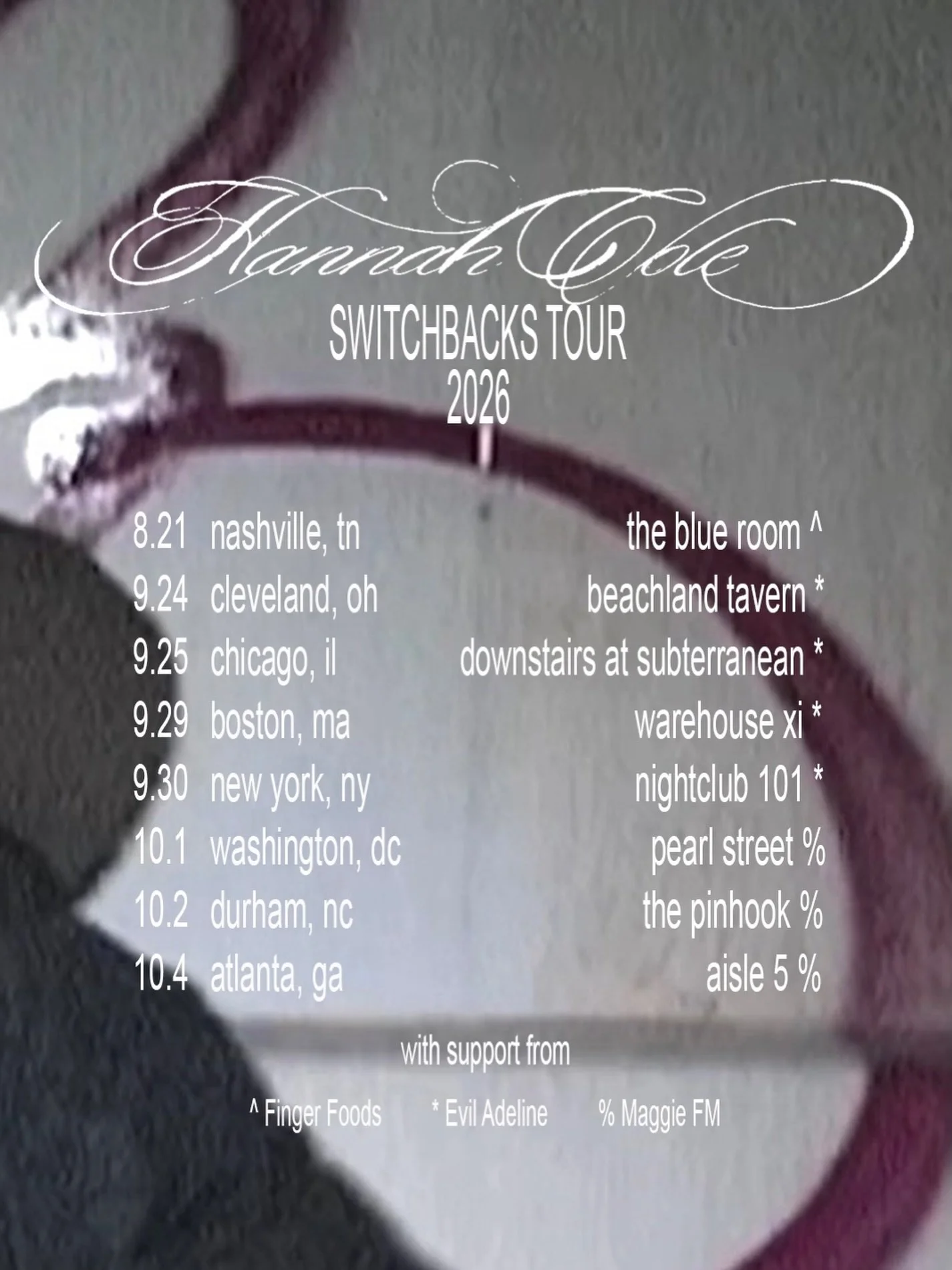
SUPPORT Hannah Cole by listening, streaming, following. Support all artists mentioned in this interview. Support all artists.