
Sweet Water
From their origins as second-generation Seattle punk pioneers to their major label tenure in the 1990s, Sweet Water has maintained a decades-long career rooted in collective trust. Their latest album, “Shine On,” represents a creative pivot toward complex, layered production that intentionally moves beyond the band's previous intuitive songwriting methods.
In this interview, frontman Adam Czeisler discusses the technical discipline required for this evolution and the logistical challenges of translating dense studio arrangements to the stage.
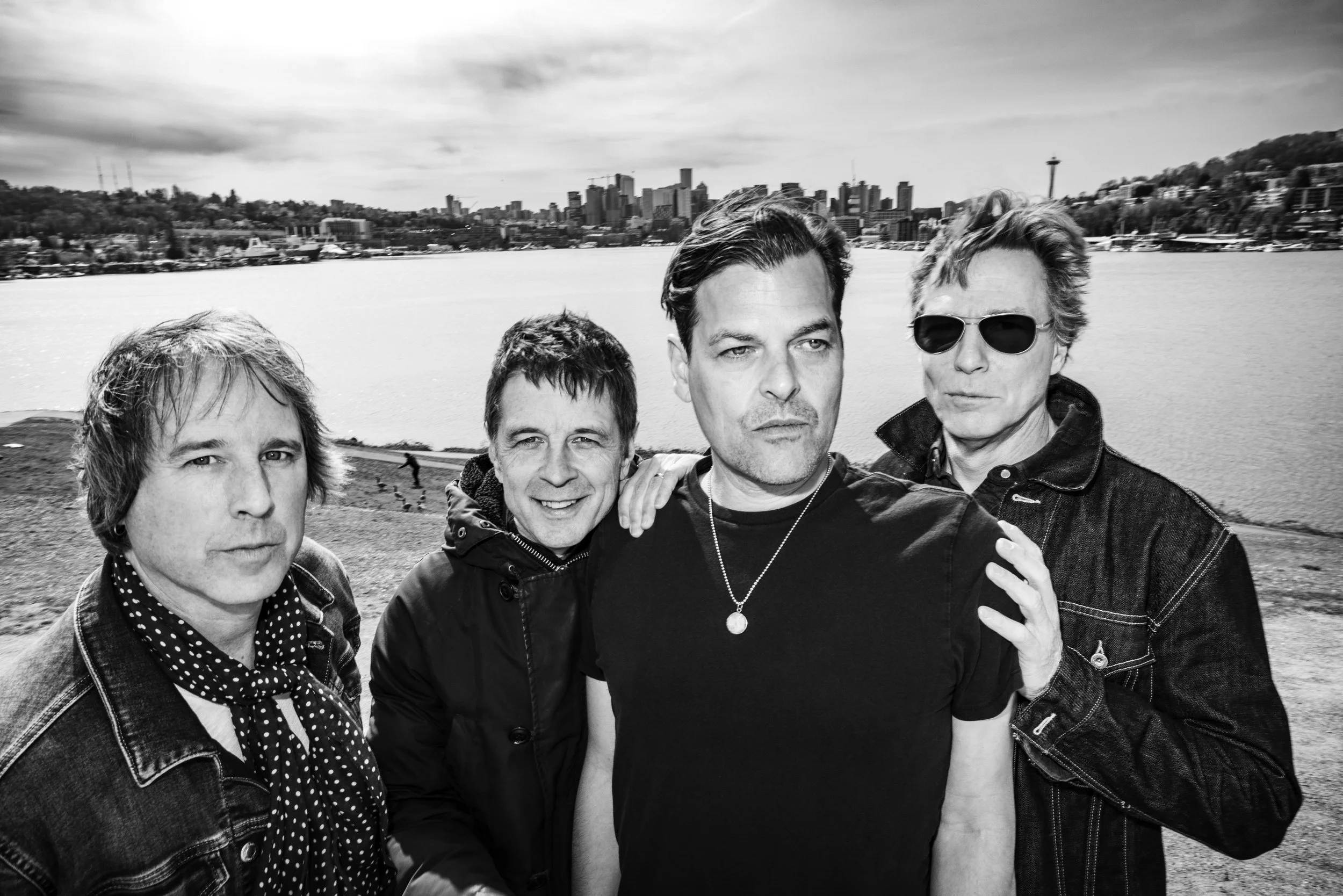
YY: You've said that "the true strength" of Sweet Water is tied to the history you share. Has the decades-long foundation of these friendships ever acted against the band or gotten in the way of its success, or has it only ever been a positive attribute?
AC: It's hard to say since I don't have a lot of experience being in bands that didn't have those friendships, and I can't think of a clear example where those friendships directly got in the way of our success. On the positive side, one of the most powerful things a long-term relationship builds is trust. And trust is super important when making art. To be creative you need to be able to stretch and try different things, and have some of them not be great, maybe even be terrible. When you have a lot of trust in the people you are working with, that freedom for experimentation and growth all comes naturally.
As SGM prior to the name change, you cycled through several meanings — Shot Gun Messiah, Such Good Music, Spontaneous Generation Men, etc. Looking back on that era, which version do you think best captured your musical identity at the time, and why?
Cole, our bass player, actually created that name when I wasn't in the band so I don't have all the history, but I think the whole initials band name thing sounded modern and edgy at the time. Looking back, I think it probably should have stayed simply SGM without another meaning behind it, kind of like REM. As far as our musical identity I see that era as a time of transition for all of us and for rock music in general. We and a lot of upcoming bands were breaking away from the glam-metal influences of the 80s to something more authentic and raw, influenced by 70s punk rock and hard rock. This would become the 90s grunge music with themes about personal struggles and experiences that people all over the world could relate to, and intense and passionate music played by real people who wanted to express themselves and connect with their audiences, not just become famous.
I read that mixing engineer Phil Ek advised in the recording process for "Shine On" that "sometimes more is more," effectively changing the approach the band took toward crafting the final cut. When applying this philosophy, how did you balance adding new layers without settling, ensuring that these additions still contributed to a final product you could all be happy with?
Yeah, that's definitely the main worry about adding more layers — will it make the song better, worse or just different? In the past, I think partly born from that whole ethos of the 90s I talked about where we first and foremost wanted to make sure our music was authentic, I had an idea in my mind that if we can't play everything we recorded as a band live, we shouldn't record it. So, this philosophy naturally pushes towards simplicity, which is always a cool approach, but over the years I came to see that in some cases it doesn't allow the song to be fully realized, especially from the point of view of the listener. So, for this record, and especially with Phil Ek's encouragement, we changed our approach.
In this record we tried to do everything in our power to write songs and produce recordings that created an immersive and captivating musical experience for the listener. It didn't matter what could and couldn't be recreated on stage, the entire focus of the effort was to make the recording as good as possible so the experience of listening to it took their mind on a journey and made a lasting impression. Of course this is easier said than done, and we didn't always succeed but hopefully that explains the difference in the approach.
BTW, for our last EP, "Firebird," we took essentially the opposite path. That record has almost no overdubbing. Everything is recorded virtually live with one guitar, one bass, one drum kit and minimal background vocals mostly sung by the other folks in the band. I was proud of what we did with that record and I think it stands up with time, especially when other musicians listen to it. But "Shine On" was even more fun and challenging to make and I do believe we succeeded in creating those immersive musical experiences for most of the songs.
You've also said that the vocal approach to "Shine On" was more deliberate than on some past releases, which were more intuition-based. Can you point to a specific moment on this album where that intentionality led to something you couldn't have achieved by instinct alone?
Great question. The first moment that comes to mind is in the song "Redemption." In the second section of the verses of that song, I layered first three and then four-part harmonies to the main vocal to try and give it a thick, church-like vibe. In the past when writing harmony parts, I would record myself intuitively harmonizing against the main vocal with whatever counter-melody came to my mind as I sang it. Afterwards I might tweak it a bit but the part came mostly from the top of my head. But that 'winging it' style kind of falls apart once you try stacking three or especially four vocal tracks together. So I had to tackle the harmony writing in a more structured way. Instead of starting with the melody, I started with the chords in the accompaniment, splitting them into their parts and I had each harmony part start with a component of the chord and follow the melody in that space without deviating. Once I got the hang of it, it was pretty simple to execute but getting to that place took a lot for me — I had to break old patterns and ultimately have more discipline.
The arrangements on "Shine On" are complex, often including a mix of acoustics, strings and thoughtful layering. In what ways have you been adapting these songs into live settings?
This has been a challenge for sure. Like I was saying above, we purposely didn't constrain ourselves to thinking about this problem while we were making the record but now we are having to figure it out! Luckily we have a super power in our corner who is helping us named John Hage. He did all the string arrangements for the record on songs like "State of Grace," "Shine On," "Kids" and "Lush Trees," and played piano and other keys as well. He has performed with us in two shows and it made a huge difference. One of the shows was an acoustic set we did for the release party for the vinyl pressing of the record. At this show we performed the entire record from start to finish and everyone in the band including me played acoustic guitars with Rich and Cole moving to electric for a couple of songs. John played many of the string parts on a synthesizer, he also played the piano and other keyboards and he is an awesome singer, so he was able to handle a bunch of the harmonies as well. It's not quite the full experience of the record and we will keep working at it, but it is getting close.
"Shine On" aims to connect with both longtime fans and new audiences. What might be some examples of creative decisions you made to bridge the gap between your early roots and today's listeners?
I think the themes of the songs remain similar to many themes of our earlier songs. "Superstar" reminds people that you probably already have what you think you want/need in order to be fulfilled ("Do you want to be rich? Do you want to be a Superstar? Well baby, you already are. You already are."). "State of Grace" has a similar theme although it is more about seeking fulfillment and health of the mind – ("I've been lying here for hours, traveling in place. I didn't know I had the power, to live each second in this space, I put my mind in a state, of grace").
"Shine On," which came out Sept. 18. What are your thoughts and feelings post-release, and what can we expect for the future of Sweet Water?
One of the things I am most excited about is the amount of engagement we have had with this record compared to our other releases. For example, on Spotify eight of our current top 10 songs are from "Shine On," which is amazing to me! The other two songs are "Superstar" from our second record and "Head Down" from our first release. So, it does seem to be connecting with some people, and this is tremendously encouraging. Although I love the process of making music simply for the experience of creating, ultimately, I want to make an impact on other people and ideally help them in some way through the power of music. So this awesome reaction gives us more motivation to continue making music and you can expect we will have more to come in the future. We will probably make the next record a little bit more rock-focused but still use some of the lessons we learned making "Shine On" – especially not settling until we feel the track is jumping off of the recording and straight into your brain.