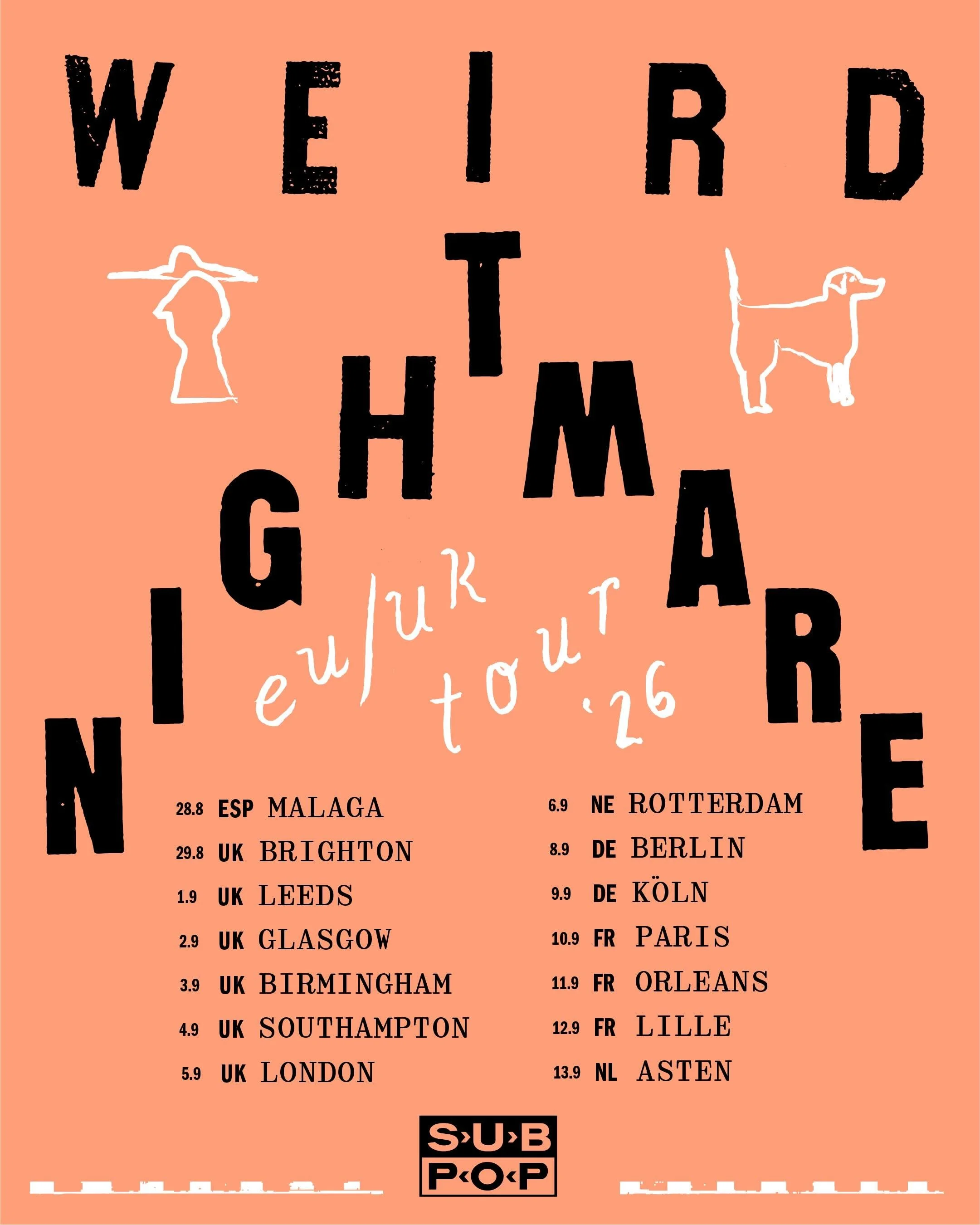
Weird Nightmare
After a debut album that hung in the shadow of contemporary indie records, the solo project of longtime METZ frontman Alex Edkins is finally getting the recognition it deserves. With “Hoopla,” its latest release on Sub Pop Records, Weird Nightmare has garnered a well-deserved worldwide reach — a long way from where the sophomore album was conceived in Ottawa, Ontario.
Now, after playing in Canada and the U.S. earlier in the spring, Edkins is taking the band to Europe at the end of the summer. In this interview, Edkins discussed everything from the record and the impetus behind it to the shows and music still to come.
Listen to this interview anywhere podcasts are available.
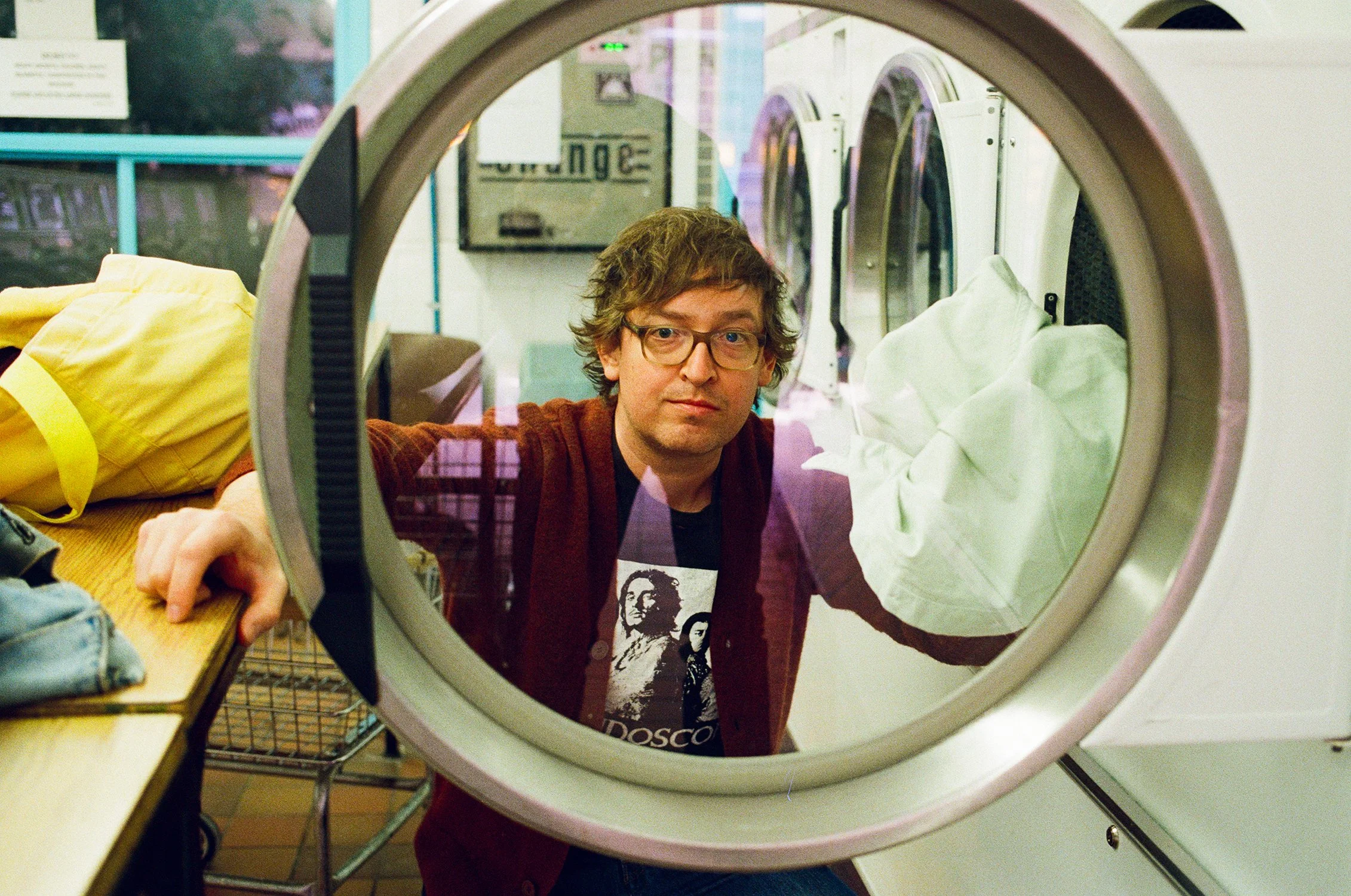
The following transcript was generated with transcription software and reviewed for accuracy. Minor errors or omissions may remain.
YY: When you recorded your first album as Weird Nightmare, I know the project was intended in many ways to sort of be an outlet that could be separate from everything that METZ was doing at the time, and being able to step outside that box was in a lot of ways, like very freeing. And so now that that second album is out, does the project still feel that way for you?
AE: It does. And maybe even more so because I think, you know, we just allowed this record to take its own shape. It even surprises me sometimes, you know, where we ended up. I love all these songs and I love how it sounds and I love the feeling it kind of hopefully portrays and gives people, you know, like, I think it's a quite musically an optimistic record. And it feels very far away from what I was doing with METZ. So yeah, absolutely. It's definitely, you know, it feels like I'm in a different musical universe.
And speaking of your first album. I know it was released sort of on the heels of the pandemic back in 2022. I think it was before — yeah, because METZ went on hiatus in like 2024. So, you know, a couple years before that, so did this more recent album feel like it was a little more coherent to you than the first one? Because I know there were like some older songs on that first record that had been sitting for a while. So does it feel like, I guess Weird Nightmare might have like a clear direction now than it did before?
It's funny. I don't know where that direction will lead, but but yes, to answer your question, like the first record was more cobbled together from material that spanned many, many years. Some of it was written intended for METZ and some of it was written and just kind of put aside for another day. And so yeah, it was very much a product of the situation. I was just trying to stay productive and, and kind of enjoy myself, and this record was created all at once in one week in this beautiful, kind of really fun environment. Very, very different situation. You know, the pandemic was a dark time for everyone. And this was polar opposite. And the, I think a lot of the content, a lot of the tunes too, were just way more up and optimistic.
I'm curious to know because I didn't realize that some of those songs on, on the first record were maybe originally intended for METZ. I know, just speaking from my own experience, before I knew what Weird Nightmare was, I was actually like at the time when it came out, I was like at the Sub Pop store in the Seattle airport. And I genuinely just picked it up because I was like, oh, this looks kind of interesting. And I loved it. I thought it was a very coherent sounding album. And so I'm just curious to know, what was on there that you thought that you knew for sure, oh, this is, you know, going to be something new, and what were you maybe planning on originally saving for METZ, but didn't eventually?
Well, songs like "Oh No" that Chad VanGaalen plays on, that I remember very distinctly, you know, running that with METZ and seeing if we could turn that into something that, that we all, you know, liked. And it never got there, but I think it was close. That happens all the time when you're in a band, especially, you know, if you pride yourself on being, you know, mostly democratic, you know, we want to get everyone involved and, and make sure it's ticking all those boxes. But yeah, so that's one song — it's called "Oh No" — that definitely was a METZ sort of idea. And then there's a song "Holding Out," which is the last song, which, written during the METZ years, but, you know, with a drum machine and, you know, a vibe that was maybe inspired by something like Beach House or something like very, very different. And I think I was fully aware that that that wasn't going to be brought to the band at the time. So yeah, a big mix. But it was usually, you know, we were always trying to push forward and be open with one another. So I would bring most ideas in. A lot of them felt like, you know, if we worked through them together, they could, they, they could become something for the band.
Yeah. I think there's kind of like you were mentioning, you know, there, there is a, there's a clear evolution from one album to the next. Where that's going, it'll just be exciting to see. And I think one thing that's unique about solo projects, well, obviously, you know, you're doing a lot of the creating yourself, but obviously you have a lot of help, especially with playing it live, a lot of times with recording as well. And so you have, you know, a lot of friends in the scene. Back in April, I did an interview actually with Jacob Turnbloom of Mrs. Magician, and they just broke a ten year hiatus. I know we talked very briefly about the shows that you guys played together in California. And so what was it like playing with them? Because I think, didn't they they opened for METZ once upon a time at some point. Is that right?
That's right. I mean, we go way back. We definitely played shows with them. And I remember a really fun time in Paris when we were on tour, just jamming their new record called "Strange Heaven" or something, or I forget what the record was at the time, but we were jamming it a lot and all. We were loving it. And so I have these memories of listening to Mrs. Magician, like in France and stuff. But yeah, it was so great to see them again and to share the stage. It's like, you know, it's a beautiful thing with this, this sort of, you know, punk rock hardcore world that we all came up in. It's worldwide, it's international, but it's still pretty small. So you end up knowing a friend of a friend and you know, it ends up being like a small world, this, this music world. So it's always a pleasure to like, bump into people in somewhere where you least expect it and or to just catch up with an old friend. So that was definitely like, you know, something that I was really glad we were able to make happen.
Yeah. I think one thing about, you know, it's a small community. It's, you know, very well connected. Something that stood out to me that you said in a recent interview, young musicians today have really no limits because they just have access to all music ever, for the most part. So I think, you know, not only are people more connected now than ever, they can also just sort of access, you know, it's all on demand. And so I forget exactly what the quote was that you said, but I was wondering, do you find, do you think that this lack of boundaries — do you think it makes it generally harder or easier for newer artists to sort of find a distinct voice? Or does that maybe not even matter so much anymore?
Well, I couldn't say. I think I'd imagine that it, it just gives musicians more inspiration and ammunition. You know, like more music the better, I think. That's the only way I can kind of make sense of it. I'd say the one thing that I hope everyone can still seek out and find, and I don't know if it's easier now or harder because maybe people stay home more or, you know, but is to get out there and to find, you know, likeminded people and spend time together. I know that's why I'm still doing what I'm doing is because, you know, I fell in with this gang of people who just were obsessed and in love with music. And it was a community. It was a family. And I hope that maybe social media can lead people to that as well. And it's not just, you know, trolling each other on, on, on the social apps or whatever. So yeah, that's something that like, certainly I think the library of music that people have access to is now like unlimited and amazing, but it can still be lonely. You know, I think you still need to find your gang. And so that's my hope for, for the people coming up is that they can find something as, as cool as I did.
Yeah, I think community is, is definitely still important. And it's not necessarily something that you can manufacture very easily.
No, you know, anyone can put a record up online, they can make a record in their room and they can put it up online. But like, there's nothing quite like, you know, putting a show together and playing that show with your friends or, you know, local people and getting that sensation, that feeling. I think that's, that's important to keep going.
Yeah. And it extends further than music too. I'm just looking for a segue here. I had a conversation recently with another artist about album artwork and how, you know, good cover art often, I think plays a bigger role than what we give it credit for. I was noticing behind you the painting, the artwork on the cover of "Hoopla" was was done by Jamie Morrison. It's a beautiful piece. What about this style really spoke to you and made you go like, you know this, this needs to be the cover of the album.
I don't know, for as long as I can remember, I've really just tried to keep an open mind and to let things show themselves at the right time. It hasn't always worked out. You know, sometimes you have a deadline and you need to get a poster done or an album cover done, and you kind of it's kind of like work. But in this case, and for a lot of things, like in this record, like working with Jim Eno and working with Seth and the band that I played with, it was all just falling into place, and it was simple and easy and kind of laid out in front of me. And I kind of take that as a sign that it's right, you know? Not to get too, I don't know, hippy dippy with it, but it was like, it just seemed okay. There it is. That makes sense. I'm not going to fight it. And it was similar with Jamie's art. He had done a long sleeve t shirt for me because I had contacted him. I liked his his paintings. I had seen he had been doing you know, sort of bootleg rock and roll t shirts like Wipers and Ramones, things like that, on his Instagram. And I reached out and said, would you, do, you know, would you think of designing me something? And he did, and I loved it. And then it just once again, it just seemed like I had, I had seen a bunch of his new paintings and immediately loved them and connected with it. And then in this scenario, which has been rare for me, but I was able to send him a finished record to inspire him for the, you know, as opposed to like, hey, I like this painting. I think it goes with my music. Can I use it? It was more like, can you make something based on these sounds? And so that was really fun. And that's what, that's what happened with "Hoopla" and with that painting, which I love dearly. So yeah just again, sort of serendipitous, I think the fact that I was just kind of really digging his stuff at that time when, when it was time to start thinking about a album cover.
That's so cool. And it's, it's really not very often that you get an album cover that is literally a representation of what you're hearing.
Yeah, I don't think so. I mean, I, I've rarely done that. Maybe never actually. This might be the first instance. So yeah, it felt different and exciting.
It sounds like the way the album came together and just how everything just sort of fit into place, it's kind of keeping in spirit of of the sound of the album in general. I do think it's a little more uplifting, especially a song like "Forever Elsewhere." And so I was going to ask, with METZ largely on the back burner, indefinite hiatus, everyone's kind of doing their own thing. You've been able to dedicate a lot more time to this project, obviously, all the different, you know, touring you've got going on and so on. Would you consider Weird Nightmare to be like your main thing right now? I know there's some other things you're that are sort of floating around.
Yeah, I would, I would it's, it's definitely my main focus right now. I, I tend to have lots of irons in the fire and that's just the way I like to be. And that's the case now working on a bunch of different projects producing and for film and things like that. I'm working on music for a documentary film. So it's like, it's not every day focus, but it is musically like the main focus because I'm like out there on the road, like I'm, I'm heading out tomorrow for another tour and there's a tour right after that again. And then we head to Europe. So yeah, absolutely. Number one right now.
So, sound design for film, I was reading potentially podcast as well.
Yeah. That's, that's happening right now too. So lots going on.
Yeah. You're a working musician and, you know, but at the same time, I feel like those sort of technical processes can be — I feel like they can be so far outside the typical methods of, you know, creating your standard three minute pop song. So what's been like your biggest or most rewarding challenges with those other sort of sonic endeavors?
Wow. Well, yeah, you're absolutely right. It's so completely different. Some of it was a total struggle, you know, but I've had the opportunity to sort of get out of the comfort zone for a long time. Like I remember when METZ was asked to do original music for Grand Theft Auto 5. You know, that was the first time where we were like, what the hell kind of process is this? Yeah. And, you know, we dug our, our heels in and we made it happen, but it wasn't second nature at all. So things like that. Sort of gave me a taste of that world and it's been something I've been doing ever since, since I guess, you know, 2013 or so. And I do have a, you know, Graham Walsh, who's worked on many METZ records with me over the years, i work with him in that realm. So he's a very talented engineer and musician. So it's a, it is a tag team endeavor most of the time.
With all of the stuff you have going on, I know you also recently moved. Is it back to Ottawa after living in Toronto for a long time?
Yeah, that's right. I'm in Ottawa right now. Yeah, it's something I never thought I would do. I'm being honest. It was mostly well, it was a whole bunch of things. My wife and I, our families are here. My wife took a teaching position. That's kind of the main impetus for us actually getting the nerve up to leave the big city. But yeah, we had been there for 20 — she had been there for 20 plus years — and together we were there for 20 years or so. So huge change. I think some of the songs hit on this urge for change, and this need to sort of flip the script on certain things. And so we did it and it feels good. I gotta say, I recommend I recommend sort of going for it even if it feels uncomfortable.
Yeah. Do you think that the different environment — because it's different, but it's familiar, you know, because you've lived there before — do you think the change in environment continues to sort of differently affect what you create, or have you not really noticed it much?
I think you can't not influence, you know. I definitely think your head's in a different place when you're in a different location. So Certainly. I'm not sure I could put my finger on what the difference would be, but I would think that your surroundings are definitely influencing what you make on a daily basis.
Yeah. Speaking of Canada, I'll just ask one more question here. But, you know, looking at your tour schedule, you mentioned you leave for another run of shows tomorrow and that's in, you know, for the most part in Canada. And right after that, you've got a couple shows with Golden Apples in the northeast there. And then the Europe dates that you mentioned. There's a lot going on. I know earlier I was reading something where I think you were, you were just a little bit anxious maybe to start touring again, or at the very least, just hoping that everything went according to plan. And so now that you've sort of had that experience, you did a US tour. And you've got, you know, just more coming up. How is all the touring been for you? It's been a lot and you still have more to go.
Yeah, I mean, it's been great. I think I think what I was probably getting at is I've never done this amount of touring outside of METZ. And you know, you're, you're, you become so accustomed to a way of doing things and you're like this finely oiled machine. Yeah. Which I think we very much were. So yeah, it was there's so many unknowns, you know, but it's been a pleasure. It's been like really, really fun. The fellas playing with me in the band are awesome. And we're having a blast. And the shows are going great. So it's, you know, I'm super thankful. But yeah, you know, touring is always difficult, I would say. And I think it even it's getting tougher and tougher. So that's, you know, the reason to do all of these musical endeavors is because I think, you know, touring can't be the only thing. I think it would, it would drive you nuts if, you know, you finish a tour and then you have to go straight back out there because that's the way to, to pay the bills, you know? So I love getting out there and playing, but it's not my everything anymore. It's definitely just a part of it.