Joudy
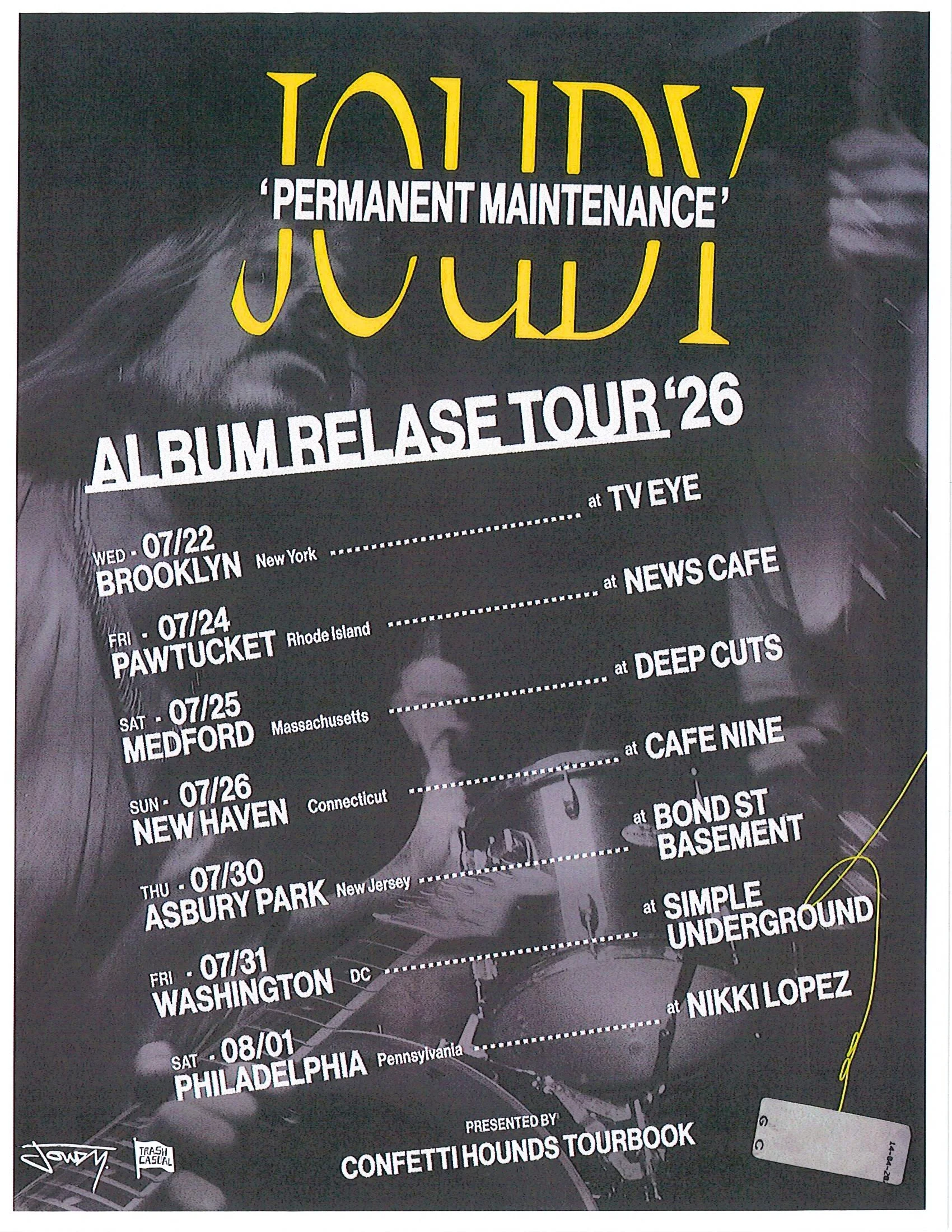
The Venezuelan-turned-Brooklynite trio Joudy is counting down the final days to their new LP, “Permanent Maintenance.” Out July 24 via Trash Casual, the record marks a departure from the band’s previous mystical epics, opting instead for a more visceral and unvarnished approach to grounded human experiences.
In this interview, frontman Diego Ramirez delves into the the making of the album and all that went into capturing the intensity of the band’s current era.
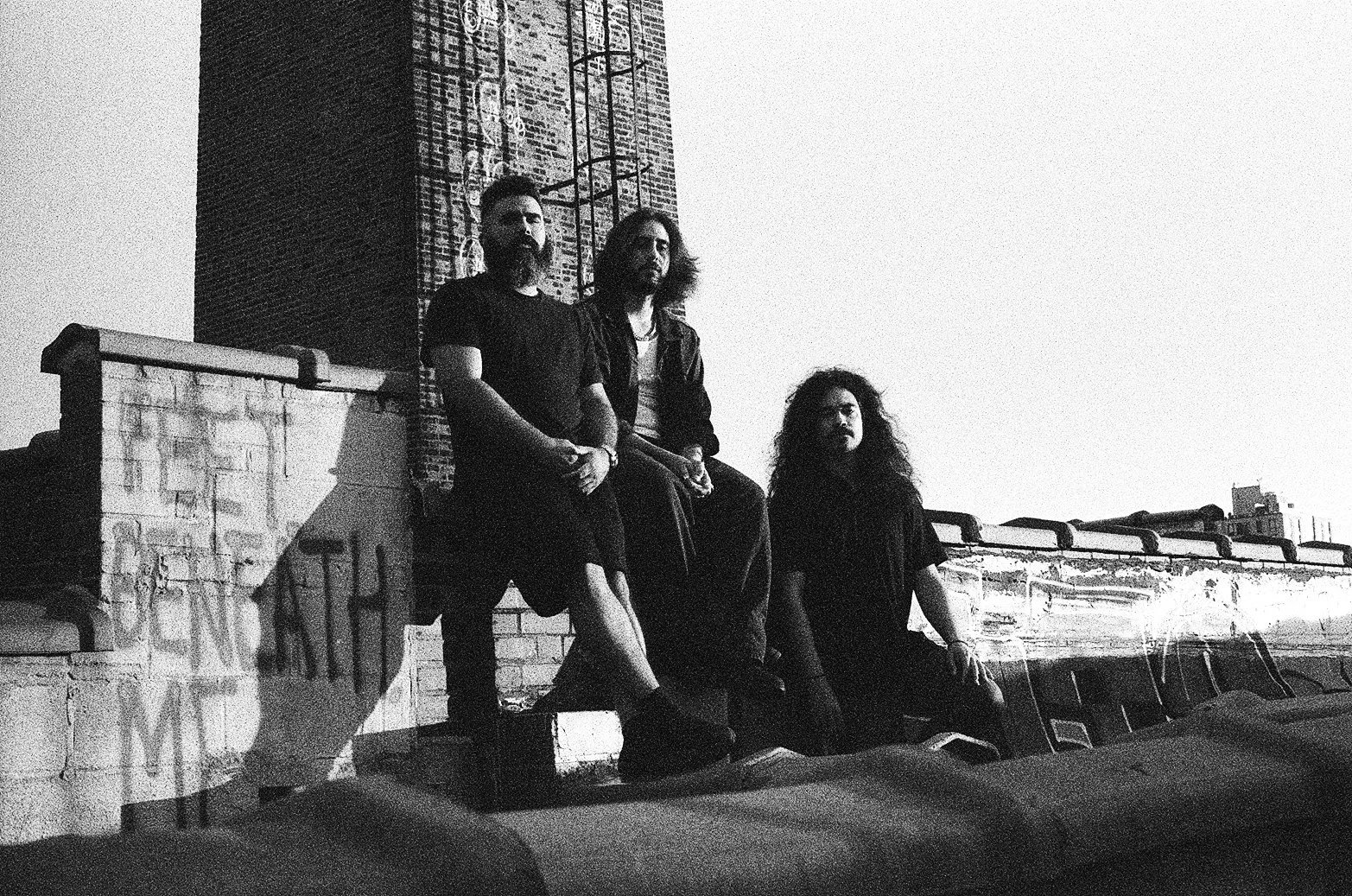
YY: How has the transition from a five-piece band in Venezuela to a trio in NYC shaped your current sound?
DR: Being a three-piece has made everything much simpler. When we were a five-piece, we had to plan a lot because there were so many moving parts. Now it's much more natural.
It made the band rawer, and we can focus on the live energy instead of overthinking everything. We want to give people an experience they won't forget by pushing them to the edge a little. It's fun when nobody knows what's going to happen, not even us sometimes. That unpredictability makes every show feel more real and keeps everyone present.
Your recent music videos are very theatrical. How do you view the role of music videos in the production and release process?
I’ve always viewed Joudy as an audio-visual experience. The live performance is a huge part of that. You need to come to a show to really get the full picture of what we’re about. The music is important, but adding the visual element takes it somewhere else. We like to create something that engages more than one sense and makes the experience feel deeper.
How has the band changed as a result of becoming a real part of the Brooklyn scene, and how do you think it's changed the band's future?
I think becoming part of the Brooklyn scene has made us more confident as artists and more comfortable embracing everything that comes with that. It’s given us the freedom to be ourselves, to experiment, and to not be afraid of being different. Being surrounded by so many creative people has reinforced the idea that creative freedom is what makes a band stand out, and that has shaped the direction we want to take Joudy in moving forward.
Your signature drop tuning approach is reminiscent of some 90s grunge greats — does this era or any of its bands influence your songwriting?
Totally. The ’90s grunge and alternative rock era is what shaped us as kids wanting to make music. For years, we tried to move away from that sound, experimenting and blending it with many other influences. But at this point in our career, we wanted to reconnect with what inspired us in the beginning to find comfort there and reconnect with that inner child that first wanted to rock. As adulthood gets more complicated, we found ourselves wanting to strip things back, get rawer, and have fun with the music that made us fall in love with it in the first place.
Was the mechanical throughline of this album an intentional stylistic choice, or did it surface as the record came together?
It did surface naturally as the record came together. The songs felt much heavier compared to what we had done on our previous album, so we started giving them nicknames. “Shovel” was the first one. In Venezuelan Spanish, saying something is “pala” (shovel) means it’s heavy, so the name felt fitting. From there, we decided to complete the toolbox with songs like “Hammer,” which felt like something hitting you in the head, “Nail,” which felt like a pinch in your arm, and so on.
Then we saw the mechanical shop concept, and everything clicked. Using these tools metaphorically made the whole idea even more meaningful, and “Permanent Maintenance” became a way of describing a constant work in progress.
What are you most looking forward to about your upcoming record release tour?
Engaging with people. We want to create meaningful connections and leave an impression that people will remember.
The release of “Permanent Maintenance” is right around the corner — what do you hope listeners take away from this intense new collection of songs?
We hope listeners can use this record as a way to release whatever they’re carrying inside. Music has always been a powerful outlet for processing emotions, and we want people to feel like they can channel their anger, frustration, sadness or any other heavy feelings through these songs. If they can walk away feeling lighter or more connected to themselves, then the record has done its job.