
ME.
ME. is an acronym for Mark O’Connell and Eddie Reyes, formerly of Taking Back Sunday. Having closed that chapter of their lives years ago, it was only a matter of time before they gathered together a fresh band and returned to doing what they do best. Their debut album, “All Good Things,” came out July 24, and it sounds exactly like what you’d expect when career musicians rediscover the excitement and authenticity of starting something new.
A few weeks ago, O’Connell discussed the record and what it was like to start over from scratch.
Listen to this interview anywhere podcasts are available.
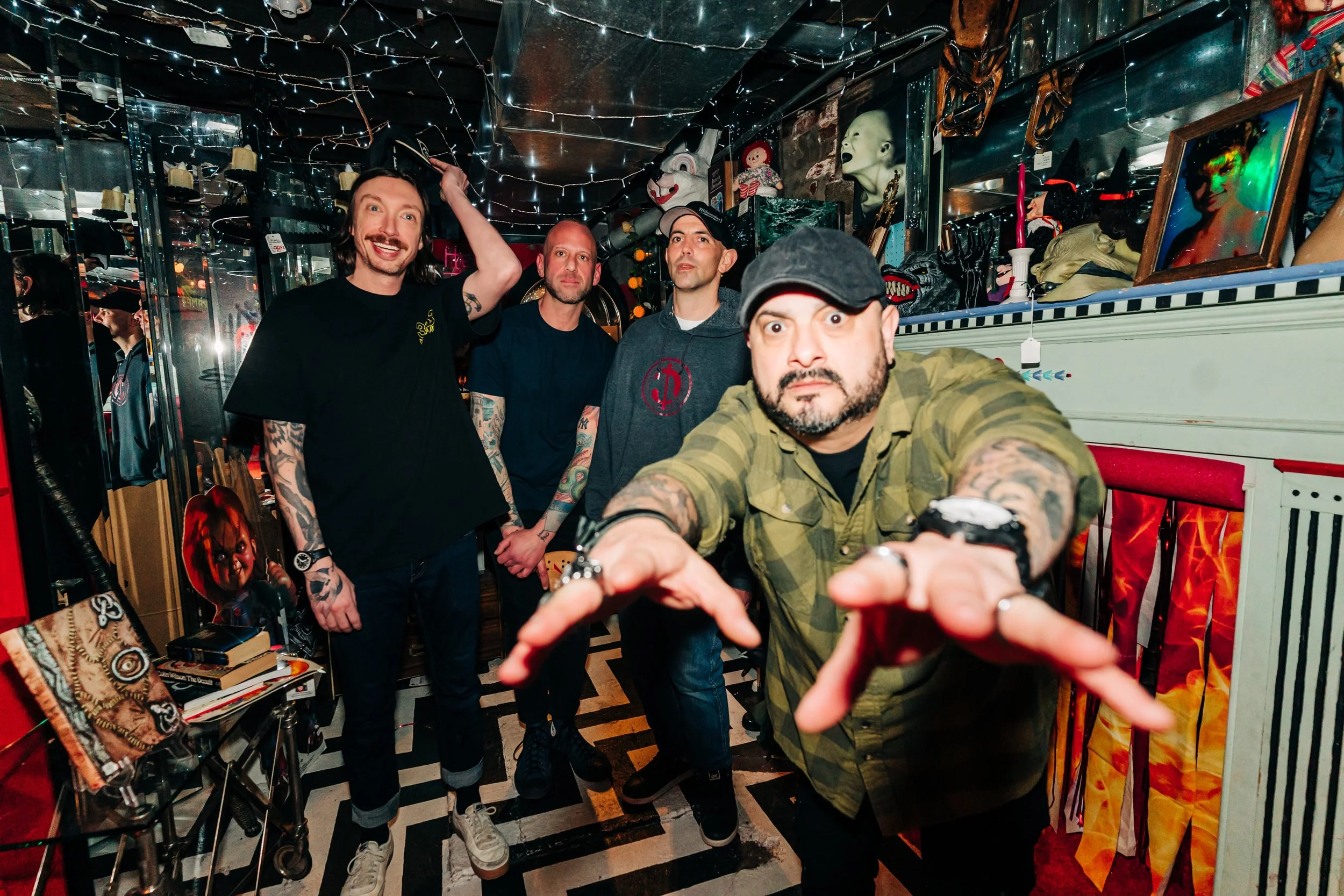
Photo courtesy of Amber Patrick
The following transcript was generated with transcription software and reviewed for accuracy. Minor errors or omissions may remain.
YY: At the time of this interview, “All Good Things” has been out for a few weeks, and you're obviously no strangers to the album release process, but it's not every day you get to start a new band and release its debut album. So how does it all feel so far?
MO: That that side of it is something that I've noted and I think about it on a daily basis. Actually, it comes to mind, like someone in my position and Ed's coming from a successful band and then two of the songwriters not being in that band anymore, and then having this shot and being enabled this opportunity and then coming through, being able to come through with it, with the final product and a full album at the end, is is wild and it doesn't really happen. And, and the fact that we've been able to, to like, we, we were man, like there was so much going into it that actually made us be able to do that like like Casey and then and just getting studio. But like, it just that fact is, is bizarre and really cool that we that we did it and came through with it.
I know like in your time in Taking Back Sunday, obviously a lot of growth happened over the years. You know, any band people change, the band changes. I would imagine, you know, starting a brand new band with a clean slate after all these years would probably feel like pretty freeing in a way. So was it this idea that sort of led you to start the new band?
You know, Casey, I met I met up with Casey and like, we were hanging out. Right. And she like taking back Sunday was her was her favorite band. And she was like, do you know how many people would want to hear you and play? And I was like, yeah, you think? And she was like, yes. Like, yes. I was trying to get it together. And he was kind of like the same way. Like we were going to hang out. And, and I had planned to go to his wedding Like him and I were kind of talking at that point, but we never really talked about getting together and playing music until Casey came into the fold and then made it happen because it was not easy. Like there was reasons that both of us didn't follow through ourselves as hard as maybe we should have, because we know we knew what came along with it, which is a lot of stuff that's outside of making music, you know what I mean? Eddie and I in the studio and all the other horseshit is out and we're just creating. That's what we did it to find out.
And like, right off the bat the first day, what the music is for “Violent People,” we had that day one. And then by day two the song "Bloodsport," the first song on the album that was day two. So we had those two songs without vocals. In the first two days that Eddie and I were together and like, what had come of it was magic. It felt like magic. Like we just did it again. Like, because you know, when we recorded our first album, like “Tell All Your Friends,” like it was before the success. So there was ideas and egos were so much less, you know what I mean? So it was way easier to just get down a song. And that's what we, Eddie and I, that was our promise to each other. Like, okay, we have these two songs, his girl and my girl both saying like, no, you both need to go through with this. His son, my daughter saying, no, go through with this, make this happen because it's special. And and we did, it's it's wild.
You and Eddie have been friends and collaborators for decades at this point, so, you know, I'd think you'd know each other pretty well. Have you learned anything new about each other since you started this project?
Well, I mean, I had I had heard when I wasn't talking to him that he was sober, but I didn't know that for a fact. And I got sober three and a half years ago, about three and a half years ago. I knew that if he was sober and I knew my sobriety was was 100%, that that would be the thing that would make it possible even a little bit. And that's what it is. That is what it is. So that is what that that's the biggest thing. Like, okay, this dude is sober. We are sober. You know, we smoke a lot of weed, but you know, there's no alcohol. None. Not a drop. I don't want it poison. It's garbage. It'll ruin everything. And it's not even an option. So that that was awesome. When I found that out.
Was it almost like getting to know each other all over again?
He's exactly the same, you know, you get the real version of him. Like that was, you know, the drinking, the acts, you know, it was it turned, we turned. I was a kid and then all of a sudden “Tell All Your Friends” was a really big album. And then when you're young and then you get money and all that, you do all the things that you would think a person would do. That's what you did. And it only lasts for so long, you know? So I knew him. I knew that version of him that wrote one finger riffs that are so good. Like that was the version I wanted back so badly like that, that version, because there's other versions of Eddie and there's other versions of me that both of us don't want to know or have anything to do with. It's wild to think that we were the same people when, you know, it just got out of hand with the drinking. It was just stupid. So yeah, no, like I got the version of him that I hoped to get back. That is still a huge pain in the ass, to be completely honest. But I love that version. I love him, you know, he's he's a brother.
And you just compared writing this album to the early days of Taking Back Sunday. How do you think that nostalgia or sort of memory manifests itself in the album. And, you know, how do you think it finds its way into your creative style if that's even something that you've thought about?
We I agree, we've been asked that before, and I think that the reason that it came out as well as it did and, and like kind of natural as it did, like, you know, nostalgia wasn't a thing that ever came up for him or for ME. actually, like if we had gone and been like, okay, there's money to be made in, in, in, in nostalgia 100%. We want to sell this. But like that wasn't the idea. And the idea was like our creative freedom had been kind of yoinked away and not even streams like I the first day in the studio, we were talking like, this isn't for streams. Like we can get no streams, none. But like, we have this outlet now to where no one can come in and fuck with us. So like, that was actually the rule. Like whatever musical track we make, it's completed and done. And like, whoever sings on it, you can't play with it. That was what we wanted to do. Like that was the first goal, like make music that was under our control.
And I was reading some recent interviews that you guys did surrounding the album. I believe it was Mike mentioned that even you guys are still sort of figuring out what this band sounds like, and so, you know, why not let listeners do the same thing? Now that this album has been out for a few weeks, have you noticed anything in terms of like early reception? Is there anything unexpected that you've that you've heard people say?
Yeah, like our number two city, you know, like, like Tokyo you know, Japan, Germany, like Germany is really. "Nuzzo" is popping off like a single. And that is so cool. Like, so hopefully we we, I think we're reaching different people that's outside of Taking Back Sunday. Like I think that people that don't know who Taking Back Sunday is might also enjoy this if they don't, you know, that's what it's looking like anyway through like analytics.
Yeah. Like a new generation almost maybe.
Yeah. And see with the nostalgia thing, that is why we like this. It has that hint of nostalgia because we went in being like, no one can fuck with like, if we have a simple beat and it sounds like something that we've done personally before, you don't have to go back and go and change it. Like that's you, man. Be like we. So that was our promise. Like we can be ourselves 100% of the time. You can hear the vulnerability, you can hear the, the like kind of being musically liberated and, and like without anyone just fucking micromanaging and just taking the soul out of it. Because when when the soul gets taken out of a riff or a drumbeat, and it's not what it was supposed to be, even if even if the way it's strummed or, or the way the feeling behind it, every little dynamic really counts for every part, if you want it to be real. And sometimes just the original thing is what it should be, man. Like going down that hole with music, it'll, it really just just takes everything out of it and makes it not special. So we did the exact opposite on this album and just let it be real. Let it be free.
As I understand it, every song on this album does have some real meaning associated with it in some way beyond, you know, just the fact that it's its own song and sort of work of art. And so do you have a personal favorite or favorites on the album, or is it just, you know, too hard to choose one?
You know, it goes, I go back and forth. But right now, like I, I usually like to say "This Is What It Feels Like To Be Normal," which is the last song on the album. But right now, I'm not going to say that I'm going to say "Bloodsport." Like "Bloodsport" is dope. Like, like that fire man, that doesn't sound like men in their 40s. I'll tell you what that's got. It's got that kid energy behind it and that's dope. So "Bloodsport." Yeah.
That's cool. And the fact that it changes is, you know, proof of a good product I would think.
Yeah I agree. Do you like the — have you listened to the album?
Oh yeah. I listened to it a few times as I was sort of, you know, prepping for this. And I really enjoyed it. I actually, I saw Taking Back Sunday open for Third Eye Blind in Maryland in, I want to say 2022, maybe.
I was playing drums at that time.
That's cool. Yeah. So it was just cool seeing, you know, that version of that band and then not really listening to Taking Back Sunday for a few years and then hearing this and it was just cool to see the difference.
That's. That's really cool. Yeah. Wow. Man, I hope you keep on listening.
Yeah. Me too. I noticed that your album release show was in Amityville on Long Island where Taking Back Sunday began. And so how did it feel to play there as a brand new band? And then I guess, can you speak a little bit to what the place means to you?
You know, it was the right place to do it. And it was it felt amazing the way this band was formed. It's so new. Like it was a very natural progression of making a band. But the way that we did it is unlike how most bands are made, I think. It was almost like making the “Grown Man” band, pun intended. The whole album was done and we still never played in the room. I used to make a joke and go like, hey guys, we should play like sometime. Because we never even played in a room together. So it was just bizarre. So like getting to the first show, like it's just weird. Like the, my first show with Taking Back Sunday, you just get in the car and you go to the place that's, but getting, getting to that. I guess it was just a relief. It was a very big relief because this has been a very, it's been incredibly fun, but it's been incredibly hard work and tedious and not knowing. You never know. So that's how it felt. It was like a relief. And it was good that it was on Long Island because the comfort level was higher.
Do you have any other shows on the horizon?
Not yet. Like I have a lawsuit that I'm dealing with with Taking Back Sunday. That is is also like a big like my main thing. So like once that is done, I then I think we're going to start really booking shows and getting moving.
I read something that you said recently about how starting this band from the ground up felt like a second chance at a dream, but one that sort of feels like more earned this time around. And so, you know, looking at the path you and Eddie especially have taken to get here, how has your idea of success changed for you in the last, like, you know, 25 years or so?
What I have learned in the last three years of my life. Okay. I'm 45. I got 45. I know now that I didn't know. One of my friend's dads, a long time ago in the 90s, he was like, Mark, one thing about you is you don't know shit about shit. Right. When he said it was horribly inappropriate and weird. But like, I thought about it through the years and like, why he said that to me and it's because I didn't. But my whole happiness is king. Happiness, being around people that love you, people that respect you, that talk to you like you have value to them. And that is the most important thing. And that is what makes you rich. That's what I've learned. And then believing in yourself, betting on yourself every single time. And like when I was out of taking back Sunday, like I was just out and having that be part of my identity for so long, and then knowing my worth and knowing what I contributed to Taking Back Sunday, even if nobody knows it, maybe the songs that they're hearing might not be the people that you think it might be someone else. You know what I mean? Like, I, I know me, I know what I did, and I knew what I was capable of and I, I put my money where my mouth is.
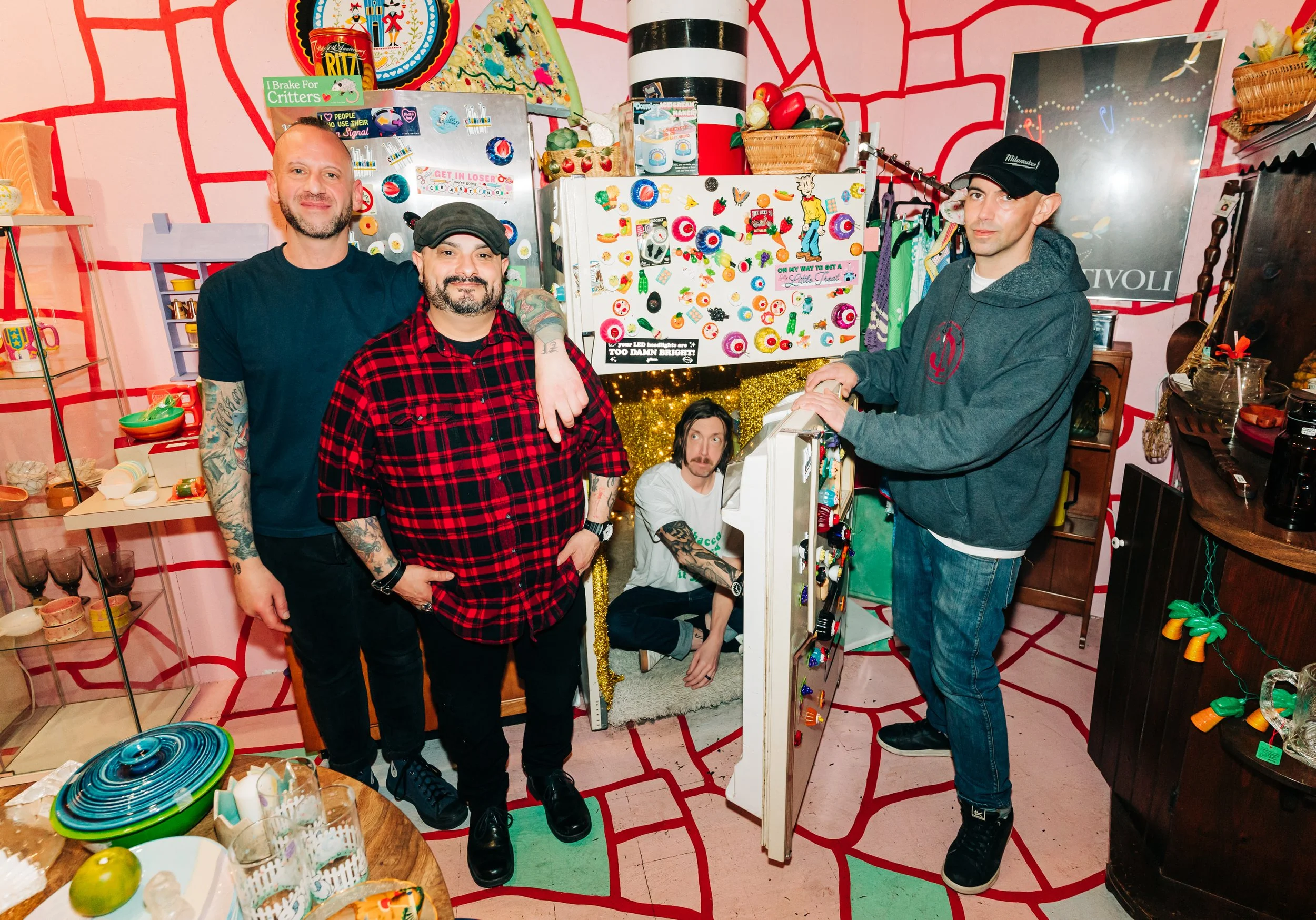
Photo courtesy of Amber Patrick