
BODEGA
This year marks a decade of prolific New York City band BODEGA. Their latest record, “All Inside Aquarium,” is due out Oct. 9, and it’s arguably their first body of work that doesn’t contain one central message. Rather, each song is its own artifact with a distinct story to tell. The album puts fear and wonder on the same rail, and that rollercoaster is the singular through line tying these 12 tracks together.
Recently, founding members Ben Hozie and Nikki Belfiglio spoke about the making of their latest body of work, the ideas that shaped it and the creative impulses pulling the band in new directions.
Listen to this interview anywhere podcasts are available.
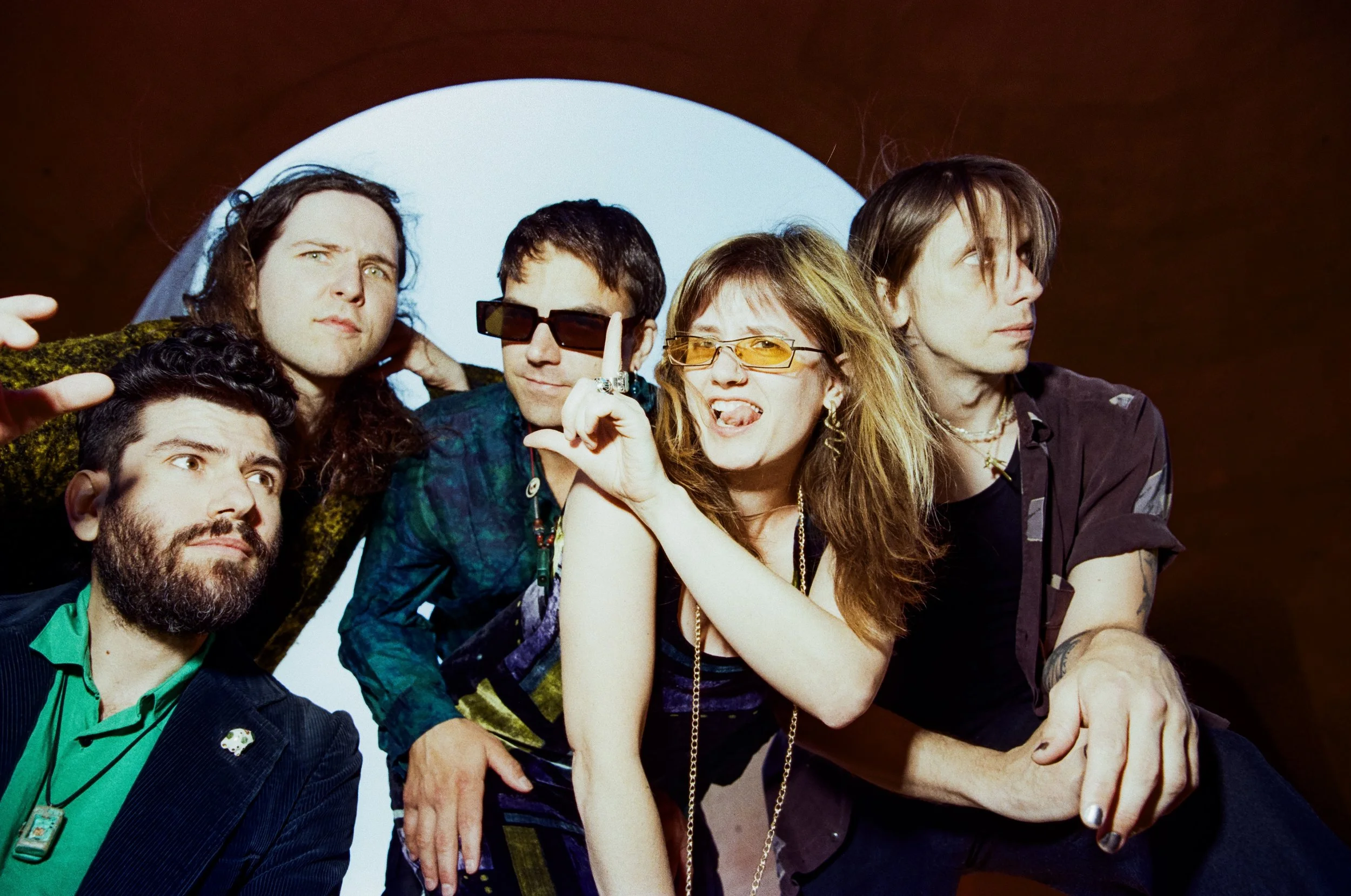
Photo courtesy of Pooneh Ghana
The following transcript was generated with transcription software and reviewed for accuracy. Minor errors or omissions may remain.
YY: You announced "All Inside Aquarium" earlier in the summer, and like your previous records, its first few singles have been generating some positive reception, but it's also different from your other records in that there was more of a focus on, I believe the word was "poetics," so can you speak more to that and how your approach to this record was maybe different from some of your last?
BH: It's really our first record that's not a concept album, where all the songs are not organized by lyrical meaning or lyrical themes or whatever. So I guess by poetics, we just meant it's more abstract, where there's more focus on melody, there's more a focus on personal songwriting as opposed to sociological observation.
NB: Yeah, I think beyond just the subject matter of what we were recording, like the music itself that we were trying to maybe, like, in "All Inside Aquarium" Ben has a lot of references to Jane's Addiction. So we also harped on the musicality of like, those were kind of more sounds that we want to explore instead of what may be considered the post-punk sound, although that moniker is just thrown around left and right, regardless of what we put out.
BH: Yeah, we're not a post-punk band. It's just that's what people are going to call us always, because of the first single we ever put out. But, you know, it's always been a goal of ours to push back against whatever people expect you to be, not necessarily just to be a brat and say, "whatever you say I am, I'm the opposite." It's more just being true to our own tastes. For this album in particular, we really leaned into an alternative nation kind of sound, which is kind of '90s, but really it's late '80s. I think it's like the sound of alt rock in 1989. I guess that's the key thing is, I don't want us to be an indie rock band. We're just trying to be a proper rock band and all that that connotates. That's also why there's more guitar solos on the record. I want to get outside of indie rock's precious little bubble and actually play proper rock and roll.
Was it more liberating in a way, to focus on each track as its own idea rather than adhering to a singular theme?
BH: Yeah. Another thing about this record is the songs are longer than we've ever done before. We always, especially in the beginning, say on the first album, "Endless Scroll," we're trying to do this almost like haiku style of writing or really, you know, it's associated with with the Minutemen or Wire or Guided By Voices. Any of these bands that kind of made an art of making short, almost like minute-long songs. And we were certainly doing that for a while as well. But it's not exactly like a prog rock record. But there are many bridges. There are many. The song structures, you know, they all change keys in different ways.
NB: Our record label, Jeremy of Chrysalis, he listened to the album, and his one critique was that there was more bridges than Venice when we originally sent it. And so we're going to name our EP that's accompanying this that title because it's just funny. I think it's a funny idea of where we might be going — poetics and prog.
BH: Although somebody pointed out to me Venice actually doesn't have that many bridges. Hamburg has, has like —
NB: That's the poet part.
BH: Hamburg has like eight times as many bridges as Venice, for example. But more bridges than Hamburg is not really a great album title.
NB: Yeah, you gotta come up with a different H.
So it's somewhere between Venice and Hamburg, basically.
NB: But Hamburg actually has a place in this album, artistically, because we also make all the art for, like, everything that you see is made by me and with help with conduction with Ben. And Hamburg has this place called the Wunderland.
BH: You ever been there?
I have not.
NB: It's a miniature wonderland.
BH: It's the world's largest model train exhibit, basically.
NB: No, it's not just model trains. It's literally just like, they have concerts, they have an airport, they have, like, London or Paris or I don't know. Las Vegas, they have.
BH: Yeah, but the tie in is, their tagline is "we're the world's largest model train exhibit." But yeah, but it's not just trains though. They have a whole city. And what's amazing is the lights are timed, so the sun sets every 10 minutes or so.
NB: Yeah, and then you get the nighttime.
BH: Every time we play Hamburg, we have to go. And we've been quite inspired by it. And I think the reason why Nikki brought it up is because our album cover is a miniature world that she built.
NB: Within the album, you know, using the album as a reference.
Yeah, I didn't want to get into this until later, but I'll mention it now because you brought up the artwork. Ben, I understand that the song "Astro Night Ride" is about your mother and processing her death years later, and it has this roller coaster motif. And of course that's shown up on some of the single artwork as well. And so I was going to ask about how the visual language for the album came together — was it mostly just inspired by that miniature city?
BH: Yeah, it was that, but also, I should say the song "Astro Night Ride," I was having these dreams, these recurring dreams a lot where I was, I guess, back in the '90s or in some kind of alternate timeline, riding roller coasters with my mom as if she was still alive. And they were always really blissful, extremely peaceful, just absolute wonderful visions where I feel like it was sort of my mom visiting me from the astral plane or something, and I would always wake up with tears in my eyes. And then through having those dreams, I kind of became a coaster head. I mean, I was always into roller coasters when I was a lot younger, but I got back into roller coasters. So I thought that the music we were making kind of had a coaster-y motif. BODEGA always tries to make records where you feel like you're the dog sticking your head outside of the moving car window and the breeze is blowing your hair back. That's what I want our music to feel like.
NB: Ben has this necklace that I made at the beginning of this album cycle, and we've been playing with this idea between fear and wonder, and how these two faces can look so similar, but refract such different feelings and ideas. And it's always kind of straddling that line, and I think that also — maybe because the Wunderland — the idea of wonder in this world, when the scales of fear are tipped more. It was just trying to find balance within that. And that was just like a poetic afterthought.
BH: The structure itself of the song "Astro Night Ride" mirrors that of a roller coaster. This is definitely the most ambitious track we've ever done. It's literal tone painting, where in the intro there's the lift hill, and then there's many, many tempo changes. When there would have been the first drop on the coaster, we ramp up and launch into the first verse. And then far later on in the song, when there's sort of a key change and acoustic guitars come in, we're way out there in the woods. And then when we finally hit the brake run, the song goes into half time where you get that sort of euphoric, your adrenaline has now subsided, and you kind of have this high of having completed the coaster, but you're sitting there on the brake run. That's kind of the outro. So yeah, I don't know why I'm explaining that song so in-depth, but then Nikki made this model coaster that just felt like a fun visual language, not only because it refers to the song, but just, I don't know, it kind of feels like what the music sounds like.
NB: It's fear and wonder. I think a roller coaster is fear and wonder. And it just kind of scatters out from there.
BH: That is the high of a roller coaster. Yeah, exactly. In a simulated fashion, you confront your own death and then come back elated.
NB: And I think it was kind of poetic or ironic in a way that we also recorded in a church in the Nave, which has been deconsecrated. Neither Ben and I are religious, but there's still that element of fear and wonder within that space. You know, that's the thing I like to observe in religion, of seeing like, those two elements. And you probably can keep going with this metaphor if you want. But yeah.
BH: But all the other things in the miniature album cover, some of them refer directly to songs. Like, for example, Nikki wrote the song "Olivia" about her cousin, who passed away many years ago, and there's Olivia's tombstone, you can see that. There's also a more playful things, like, for example, in the song "Pick up the Check," I make a goofy, playful pun: this date constantly is hitting the nail on the head — "Hellraiser," like Pinhead from the "Hellraiser" movie. So there's like a a Pinhead-looking guy in one of the rooms. There's many little Easter eggs too that refer to other albums of ours.
NB: One of our biggest Easter eggs is that, I kind of mentioned this in the beginning, but Ben is also a filmmaker. I guess, me too. I join him in it. And one of his films, "Private Chat," is a poster outside of the theater. So we're trying to always tie in all of our references and things that are going on in our lives.
You've got these songs like "Astro Night Ride" almost juxtaposed against "Olivia," and then there's a Bob Dylan cover on this record as well in your sort of own rock style. Nikki was saying, I was just reading that you took a very eclectic approach to this album because that's how you listen to music. There really isn't one easy lane to to put it in. And so was it at any point a challenge to assemble these songs in an order that felt cohesive, or did it just sort of fall into place?
BH: I mean, it was a challenge because we wrote way more songs than are actually on the album. And in fact, early on, I had this idea that it would have been another concept album. I was writing a cycle of songs about time and memory, and a lot a lot of them, maybe because I grew up in the '90s, were evoking a sound from the 1990s, but also just a nostalgic kind of thing. You know, I've been reading Proust, so I was kind of thinking of "In Search of Lost Time." But then it became clear that that deserves to be its own record, where there are only songs about time and memory.
And then, you know, because we had all these other tunes, we kind of decided to split them up into two camps. So the "All Inside Aquarium" tracks, and then later on we'll make that as its own record. So those songs haven't been recorded yet, but "Astro Night Ride" and "Olivia," and probably "Backbeaten," certainly those three songs in my mind were supposed to be for the the memory project, but it's okay that they're not, because they're kind of big rock tunes in their own way, and they'll kind of be a hyperlink to that record. I always think that with bands — I don't know, maybe you've noticed this in your own music listening — I always find that usually bands have that one song on the record that kind of is a hyperlink to where they'll go next, whether they do that consciously or not. So those songs are going to be hyperlinks into that other project.
NB: Also, Ben is a bit of a tracklist Nazi, you know, he's always going like, "everything must be in its place." And sometimes he gets more intellectual and I'm like way more intuitive. And we definitely clash, being like, "this feels better here. But no, it doesn't make sense because of this way," you know, like that's the biggest where we clash. But I do feel like we found a really good rhythm within this track listing.
BH: Yeah, it's kind of, it's all over the place, but still, you know, the songs all kind of have a feeling. We almost talked about it as if it's just sort of like a comp. It's not a compilation. Obviously they're all from one session, but you could think of it as like, you know, it's an imaginary greatest hits from some fake band, you know what I mean? In the sense that we tried to make every song, except for the ballads, obviously, kind of feel like a single, you know?
Right. I love noticing little things like that with bands, you can kind of see — especially listening to maybe someone's discography in relatively close succession — you can pick things out from, you know, previous records. Was this record recorded live? Like the whole thing, or just parts of it?
BH: Well, we laid down the basic tracking, but then there's tons of overdubs. You know, we would do pretty much how most records are, I assume, are made when you when you're not like super rushed. We recorded it in Leeds with this producer, Matt Peel, and he has a studio in an old church, like what Nikki said, called the Nave. And, we really were able to take our time. We tried to focus on just one song a day. So in the morning, we would try to lay down the bass and drums and my guitars, the rhythm guitars. And then usually we'd break for lunch and then we would start to do the lead guitars, any kind of keyboards, and then the vocals. And so when we leave at the end of the day, we had one song basically done, ready to be mixed for the most part. And then of course, sometimes we would go through a whole day and inevitably we kind of realize that the song isn't working for a number of reasons. So we would, you know, we did two sessions. Two basically like multiple-week sessions. And so they were like six months apart. So in the second one, we retracked some songs with new arrangements or a new approach.
NB: It was kind of cool. We've never done that before. We got to record in the winter, and funny enough, they're probably the more dancier songs. And then in the summer we got to record again. So it was like, I don't know. I feel like it does matter — the seasons that you enter into a studio in. It was cool. I felt like we got to encompass a whole year of feeling, because then we mixed in the spring and in the fall.
BH: No, we mixed in the winter. I was in Brighton in December.
NB: Really? Okay, never mind. It sounded cool like that.
BH: Nikki's right, when we were tracking, we were walking through several feet of snow on our way to the studio every day. And then when we went back for the second round of tracking, it was like super hot summertime.
I have to imagine the season has some impact on what you're creating, regardless of where you are in the process. But I understand that this was a great opportunity for you guys to be able to have some dedicated, consistent studio time, which is something that you haven't had before with previous albums. Is that right?
BH: That's true, yeah.
Obviously there's a lot of good that comes with this, but is there anything in particular that you especially appreciated about having this opportunity to just go to a studio and get it done?
BH: Well, the way we made records in the past — and this wouldn't be our first record. Our first record is just like us totally playing live in like two days, you know, as most punk bands, like, that's how their first record is just for money reasons, right? But then our second and third album — those records were done really piecemeal where we would do, let's say, all the drums in like 48 hours, all the bass in 24 hours, all of my guitars in 24 hours, all the lead guitars in 24 hours, all the vocals over like two or three days. And then, you know, of course you're gonna have to spend a bunch of time comping. Actually, I would say our third record, you know, I did spend a ton of time in the studio, but it was just with me and this guy Adam Sachs, who was the mixer and engineer on that record. And so probably spent about the same amount of time, but without the band because we're trying to save money. So it's just like, you know, I'm like trying to make sense of what everybody did with Adam Sachs.
Whereas this time we had the entire band together in the studio for over a month. So people really can refine their parts because, you know, if you're the drummer and you're listening to your drum tracks throughout a whole month, you can be like, "you know what? I can do that, feel better, and then quickly go in there and punch it in," or "you know what? Actually, what we thought was the the bridge, that's actually the chorus. And we should, you know, put that earlier and then get rid of that other bridge." And, you know, Matt Peel encouraged us to really think more freely with the arrangements. And funny enough, like, for example, the song "Backbeaten," what is now the chorus used to only happen once and was kind of like the outro. And what I used to think was the chorus isn't even in the song anymore. So it's like, you know, we kind of workshopped arrangement stuff.
NB: I forgot about that.
BH: In a way that I don't think we would have if the whole band wasn't there, just hearing the songs over and over again. And really, you know, it's like summer camp, where everybody's living together and just deeply immersed in the process.
NB: I prefer that too. I feel like there's so much more inspiration you can bounce off. Instead of you working manically alone and then being like, "this is how it's done." And people are like, "can I comment on this?"
Right, it's like, music's your full time job for that stretch of time and you're only focusing on that. Just comparing the recording process for your album, I wanted to draw attention to this: I think July of this year marked 10 years since your first show as BODEGA. And so when you started the band — I was reading a very old interview — you made a real effort to sit down and really talk about the kind of music you were going to create, and that's changed over the years as you got to know each other and felt more comfortable making music together. But when you look back on 10 years, what are the biggest changes that you see?
BH: Well, the biggest changes are more the world has expanded. The first record was really minimal by design. We came up with all these kind of rules, like there's going to be no distortion on the guitars. It's not entirely true, but it kind of is true. Like if you hear, for example, the song "Can't Knock The Hustle," it sounds like the rhythm guitars are distorted, but they're not. They're clean. They're just hitting tape so hard that they're clipping. So, you know, we had all these funny rules of like, okay, we're not going to be like other bands. We're not going to rely on effects. So there's no effects on the guitars. There's no effects on the voice. Let's just be really dry and direct and kind of play with negative space. Whereas actually, I think the band has kind of evolved.
This record is, there's no negative space. It's kind of like the platonic 90s alt-rock sound to me. It's like the Butch Vig records. I'm talking Sonic Youth "Dirty" Smashing Pumpkins "Gish" and "Siamese Dream" and of course Nirvana "Nevermind." And those records are just like bricked with guitars and huge drums, and we wanted to kind of make a record that kind of plays with that, where even though there's only maybe two or three guitar parts, there's like 16 guitar tracks on every song because we're doubling, tripling, sometimes quadrupling rhythm guitars and any kind of melodic thing. We're doubling that for sure. This is the first time we've had the resources to try to go for it and make like a big rock record. So we try to go for that, you know?
Yeah. We're pretty much out of time. But I did want to ask about your filmmaking real quick while I have you. Ben, I know you're an accomplished independent filmmaker, you've got a few feature length films out. And I think this latest one that you're both working on is called "Jack London Calling." I was reading that it's going to be starring some actual local musicians, and you said you're about to begin shooting?
BH: Yeah, we're filming in three days. The first scene, we're going to shoot it piecemeal. So we're only shooting like, let's say like the first 25-ish pages of the script for this before we leave for tour. But but the movie stars Katie Alice Greer, who is in the band Priests. Do you know them? They were a DC band. Amazing band. I'm a big fan of Katie and her music. She releases solo records. She put out a solo record earlier this year that's really fantastic called "Perfect Woman Sound Machine, Vol. 1." Giving it a quick shout. But also, yeah, Tarra and Vram from the bands Gustaf and Tea Eater are also in the band. Nikki is in the band. I'm in the band. Tom, who used to be in Bodega Bay, which was the earlier version of our band, he's playing bass in the band. So the band is called Jack London Calling. It's a movie that follows this fictional band, and we're also writing original music for the band in the movie. So yeah, I would tell everybody listening, check it out when it comes out, but it won't be out probably for two years. But we're we're making it, you know.
NB: Keep your eyes peeled.
BH: I love movies that feature, like, they're musicians in the movie, but they're actually musicians in real life. It just adds a whole other layer. I think that's really cool.
NB: Promoters who are pretending to be, you know, or like managers, like a lot of people kind of mirroring their lives in it. The whole industry.
BH: BODEGA's manager, this woman named Helena, who's the closest person to the BODEGA world that's not actually in the band, she'll be a music industry person in the movie as well. So, you know, there's a lot of fun stuff like that. It is really, in many ways, it's a documentary of our own life, even though of course it's fiction.
Well, I'll ask I'll ask one more question here, and it relates to your filmmaking and your music. You have these creative outlets — you guys are very much just career artists — how do you ensure each outlet gets the time and the attention it needs without leaving the others behind?
BH: Hah, what a good question.
NB: Yeah, I mean, we've been talking about this this year, because it's probably the busiest we've ever been in our lives, where every second is scheduled. Like, Ben just got off a call to get on this one. I had just finished making a poster to get on this. And then there's another one, you know, like you just do it. You just force it to happen. There's really no planning. You can plan, but obviously like things are just going to happen all at once, no matter what you try to do. And you just, like, have to accept it.
BH: Everybody says they're busy in the modern world, and everyone is busy, of course. Capitalism demands that we all act like little doers, and every minute of the day must be accounted for toward productivity. But I think a big part of that is people lie about how productive they actually are, because that's a status symbol. To say you're productive is a positive. It's an attractive attribute, right? So people always pretend to be more busy than they are. I certainly do. I pretend like I'm busy when at least four hours of the day I'm reading books or hanging out online or watching movies or whatever. And I've realized, you know, I could be writing way more music, or —
NB: I think people use it a lot in an emotional sense, because of the world that we're in.
BH: Oh, they're distracted?
NB: It just feels like there's no, like, they're not meditating in their off time to fit it all in. It just feels like you're just trying to grab a piece for yourself.
BH: Yeah, but what I was arguing is actually, most people don't properly use the time that we have in the day. You know, it's like, "oh, I'm so busy, which is why I couldn't respond to your email for a month." It's like, you could have done that in 10 seconds on the toilet. I mean, I understand, like, maybe your brain was cluttered, or you just didn't get around to it or whatever, but I don't know. I have a friend who wrote a book, for example, and he always says, you know, "I'm having a hard time even getting my closest friends to read my book." And I know what that's like. I've definitely sent people scripts or records or whatever, and they just don't have the time to listen to it. What that really means is they don't have the interest in it, because if you have the interest, you can read a book in four hours. You know what I mean?
NB: I don't know. I mean, yeah, maybe. Because I'm also this person where I just feel emotionally overwhelmed to the point where it's just like, I can't start this.
BH: But all you have to do is open it and get started.
NB: I don't know. Sometimes I think it's easier said than done.
BH: It just means you truly don't care. If you had any interest in your friend's artistic output you could find four hours. Anybody could. I mean, someone who runs a company could find four hours. All you have to do is get up an hour earlier than you thought you were, and just knock off the first 50 pages.
NB: I don't know, this might be getting into the manosphere for me.
BH: I know, I'm sounding like I'm sounding like —
NB: "Get off your ass, and get to work."
BH: I'm sounding exactly like that, like, Dr. Doer? Yeah, I'm sounding exactly like Doctor Doer.
NB: You're not wrong though, I'm just saying there's sometimes things outside of our control, and it feels like it's controlling us, and we try to like —
BH: Well, absolutely. But I mean, philosophically, your time is all you have. This is your life. How do you want to spend it? Do you want to be scrolling for four hours? Or do you want to read your friend's book for four hours? This is your life. You can choose. I mean, I don't know why I'm being so aggressive about this. I guess I'm feeling bad on my friend's behalf that people won't read his book. He spent years on this thing. You know what I mean?
NB: And you feel the same when people don't read your script.
BH: I really don't mind, personally. I guess I'm just saying I found that even though I have the same 24 hours, I've done more in the last two weeks than I had in the last six months because I had to, you know?
NB: Well, it's a great reminder.
BH: Yeah, but I also think having space to do nothing is so important for an artist. You have to be able to daydream. You have to have the time to let ideas gestate. So you know, I think maybe I'm not advocating for people to live like Dr. Doer.
NB: No, you're advocating for people to a lot their time differently. I relate to that, like, a lot of my time I allot to things where I am dissociating, that are not intellectually engaging or not emotionally engaging. And I perhaps do that a little too, much because I do feel a little overwhelmed and overstimulated in life. I do think that there is a path forward, and it's a great way to bring a different kind of system, a different kind of life, where you do find pleasure in engaging intellectually and emotionally with the people around you's art. Instead of just this constant feeling of like, "oh, I can't because you know, I have to watch this Netflix thing for four hours to feel like myself." There's a way I think you can equate the good feelings of that to engaging.
BH: Yeah, exactly. Yeah, that's all I'm saying.
NB: Okay. I don't know how we got here, but.
There's truth to both trains of thought, I think. I've definitely felt that way. You know, "listen to this interview I just did, or read this thing that I just wrote," and, you know. Yeah, I get it.
NB: Maybe that's the headline of this podcast, you know, we're pleading with you to engage with this.
Yeah, "please!" That'll go over well.
BH: You have to tell somebody, not to engage with it. Be like, "you're the kind of person that doesn't like stuff like this." And then people be like, "oh no, I want to." You could be like, "yeah, we're throwing this party. But yeah, it's really exclusive." Then people want to go, but if you invite them and said, "we would love to have you at this party," they'll be too busy for it, I promise.
NB: No, that's like the negging thing again.
BH: No, That's just human psychology. People don't want to be told what to do. They want to find stuff on their own.
NB: I think there was a time for that. I think the way forward now is to be like, "oh, if you listen to this, this is like the future. This is the new system. This is the way that we should be going forward, past a capitalist society." Like, I think you've got to give someone a new thing to be like, "this is the new way of how we're going to live and how we're going to improve and get past this time."
BH: What are you talking about, though?
NB: I'm thinking of like how all systems are collapsing, and it's like —
BH: What does it have to do with this podcast though?
NB: Well, I'm saying, I think the best way to advertise going forward is — because people don't want to be advertised to — how do you then get people to be engaged? And you have to make it seem to me that not only is this going to change your life, it's going to create a huge new system for you to live a better life and that we can build off of.
BH: So his system, his podcast, is going to create a new system to fix society's ills?
NB: Exactly.
BH: Okay, good.
NB: I think that's art in general, I think art needs to start doing that. Like, that's the way forward a little bit. I mean, I'm obviously overpromising.
BH: That's obviously what all podcasts platonically are at their best. They're space for free intellectual thought. And, you know, they'll create new vistas and new ways of thinking and new POVs towards the world.
NB: So we agree.
BH: Yeah.
Beautiful.
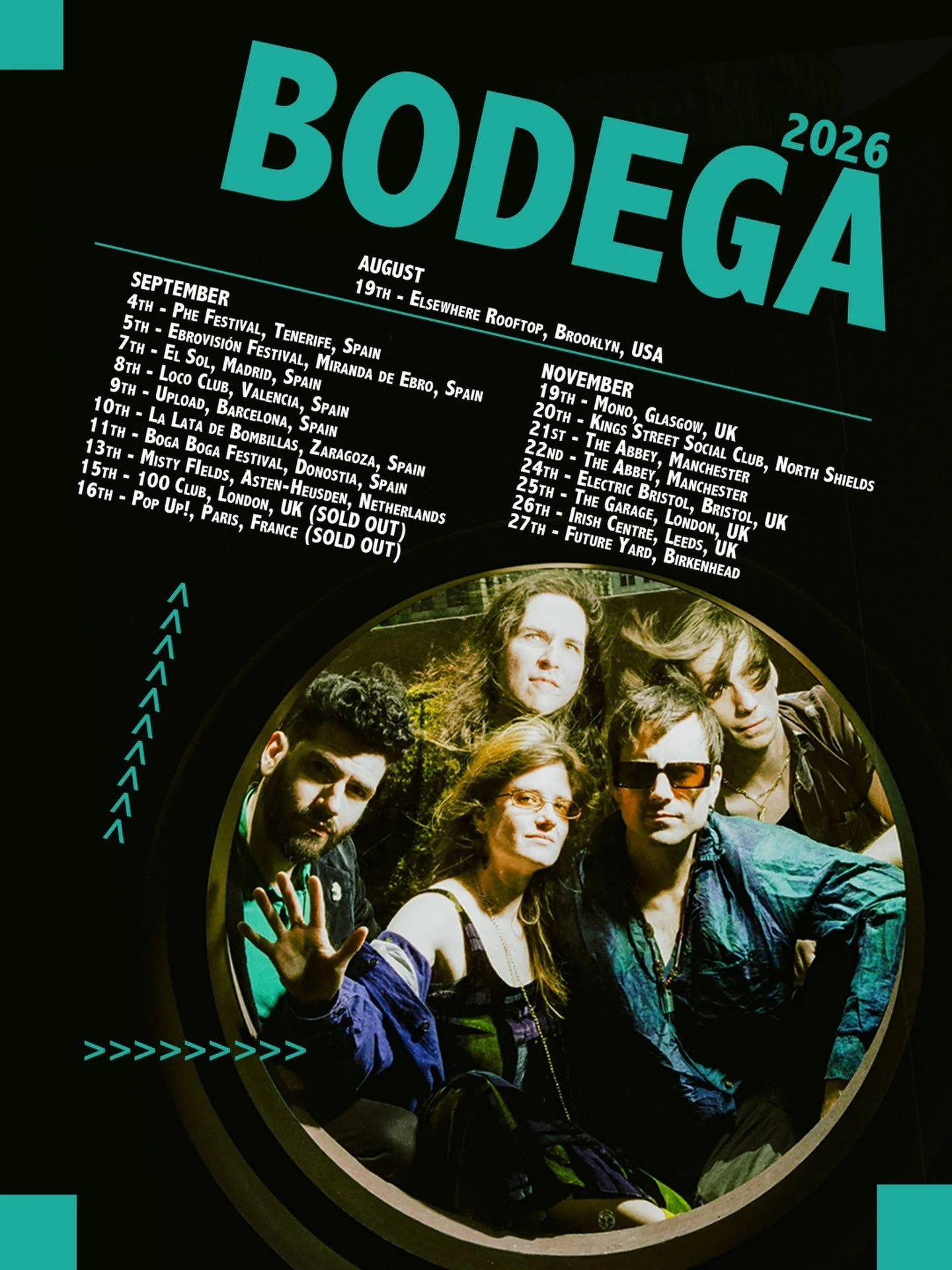
SUPPORT BODEGA by listening, streaming, following. Support all artists mentioned in this interview. Support all artists.