
After years of buildup, Radio Free Alice has finally released an album. These 11 tracks see them expand upon their earlier releases in a way that wasn’t possible on the explosive 4-track EPs they had come to be known for. With “What’s In Between,” the band has made a record that reflects just how far they've come in such a short time. This interview was recorded a week before the Oct. 30 release date, but our first conversation happened over a year ago.
Here, vocalist Noah Learmouth and guitarist Jules Paradiso reflect on those last 14 months, the making of their first record and the inexplicable route to success in the modern world of music.
Listen to this interview anywhere podcasts are available.
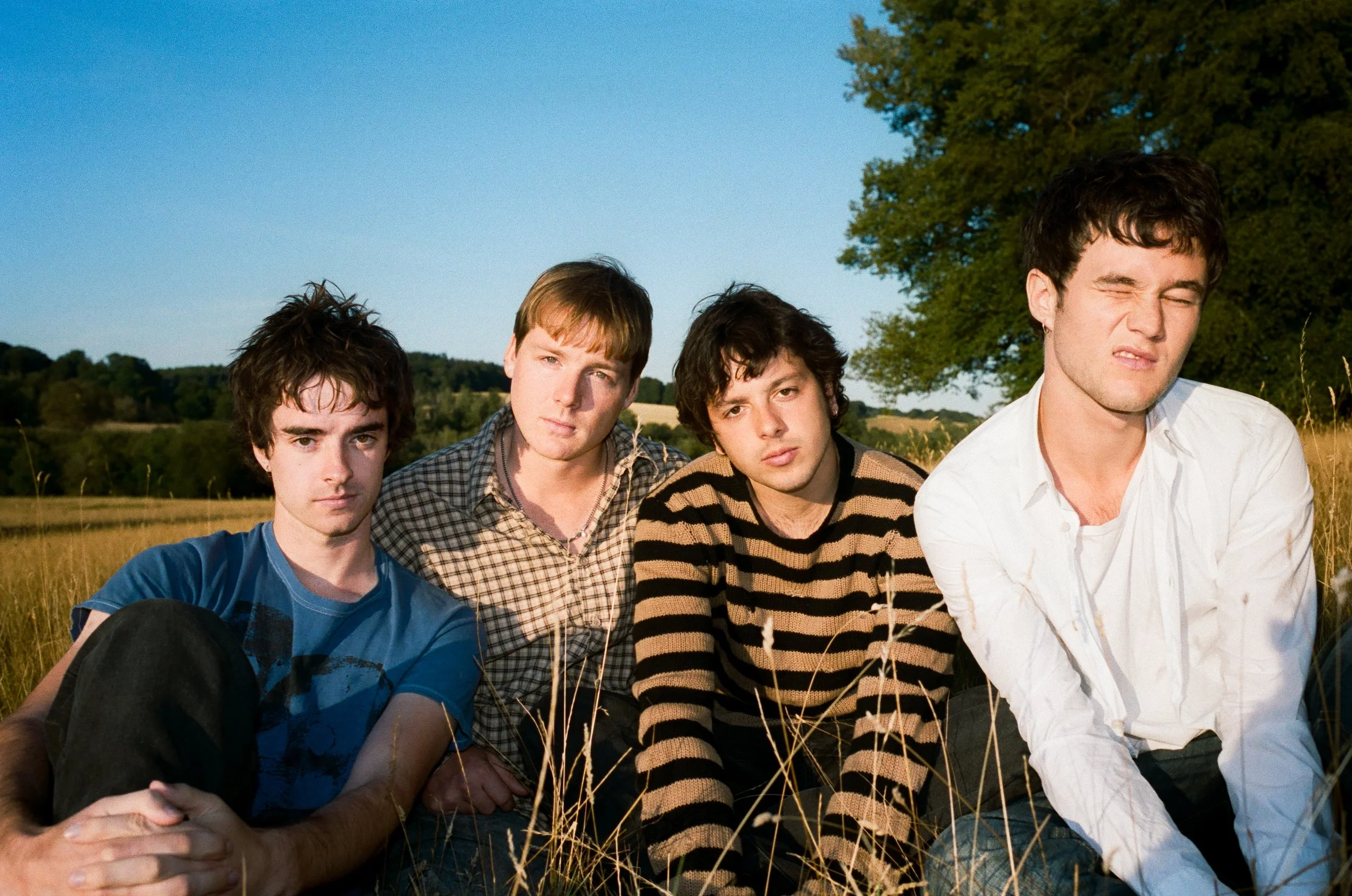
Photo by Imogene Barron
The following transcript was generated with transcription software and reviewed for accuracy. Minor errors or omissions may remain.
YY: Your debut album is about to finally see the light of day, and I understand that you've lived with these songs for a while, and so how old are some of these songs, and what about them made you want to save them for the record, rather than just throw them onto one of your earlier EPs?
JP: There's a few on there that are over a year old, maybe almost two years old. I'd say like "Lunch Money," for example, which only came out as a single, that was sort of the first album single that's been around for almost two years now. I guess there wasn't much thought into which ones we save, which ones we don't. But I think the nature of the way we write, because it's so consistent and we're sort of always writing, treating it kind of like a job. We kind of got to the album rollout and we're just like, all right let's have a look at our catalog of ideas and songs we've kind of finished, not finished, whatever. And just what are like the 11 best, what are the 11 strongest? Not necessarily considering cohesion as much, and also quality of the music, I think was more a priority than being like, all right, do they always work together? That sort of also came after in the production. But yeah, it was kind of just, you know, what are our best songs, and yeah.
Speaking of songs, the last single before you released the album, that song was "Big Ideas," it featured Rachel Brown from Water From Your Eyes, and you've been fans of theirs for a long time, and I understand that you knew very early on that the song needed a second set of vocals, and so did you immediately go to Rachel Brown, or was there some debate over who you would ask for that song?
NL: It was quite a spontaneous idea in the studio that we had. We were sort of talking about who would be good. And we've always been a fan of Water From Your Eyes and Rachel specifically, and we sort of reached out. But yeah, it was kind of like, there was a few ideas we were thinking about in terms of people that could be good. They very sweetly agreed.
JP: Yeah, it's funny, we actually had in the studio initially there was a girl at the studio that we were recording at and I think we had the idea then. I can't remember when the idea of having the other vocal was, but this girl who just happened to be working at the studio jumped in and did like a take of the vocals, you know, of Rachel's part. Before we had the idea of asking Rachel and I don't know, it just sounded really great, like something about the call and response and the idea of the extra set of vocals was really good. And then we were like, you know, we love Rachel. We're a big fan of theirs. And we were like, fuck, Rachel would be a great, let's throw it out there. And we were so surprised in a way that they said yes.
NL: We kind of went, well, this is sort of like a kind of a duet. I mean, it's not really a duet, really. I mean, if it was a duet, I feel like I would have got Rachel to sing the second verse and I do the response that Rachel does, and make it a proper duet rather than just a kind of back ups. But anyway, when we had the first person singing it, it was great, but we thought, oh, this is kind of, it could be a fun opportunity to ask someone who's sort of, kind of interesting.
Yeah. I feel like a lot of people who are fans of you guys also could be fans of Water From Your Eyes. And so I think it's a pairing that makes sense to a lot of people, even if they hadn't thought of it before.
NL: That's nice, yeah.
JP: I feel like I'd like to think that there's there's some crossover because, you know, we're such massive fans and it was kind of even just for us, it was like a cool idea to kind of collaborate because we'd never really done that before, you know, collaborating with another artist. So it was kind of a fun moment to be like, you know, and especially when you're such a big fan.
You'll have to get Nate Amos next. That guy would be crazy.
NL: Yeah, exactly.
But yeah, that track, it marked the end of what I was reading you said was a creative lull, despite the fact that you were writing a lot during that time. And so what about that song made you be like, we finally have something here?
JP: Yeah, I feel like that song in particular is a very old one too. I think it was after we'd come back from tour and I think we were kind of in a period, you know, we were kind of slightly burnt out from the tour and we're exhausted. And you know, we were kind of like, all right, we need to sort of get back on the horse. We need to start writing again. Let's get back into the routine. And something about it felt maybe a bit forced. And you know, I just remember it was kind of a period of like, oh shit, we've lost our touch.
NL: Did we ever have a touch?
JP: Did we have a touch in the first place, but have we lost it more so? And then I don't know, I think just for us, you know, we started with "Big Ideas" and it kind of came out of nothing. And then it was the first song in a while that we were like, okay, there's definitely something here. Let's hold onto it. And and then the idea for "Big Ideas" wasn't fleshed out till much later. That was a very old idea that we didn't flesh out honestly till just before the album, really.
There are a couple other songs — "Kick In The Shins" and "Crying With You" — that came from what was originally two different songs that you combined together. And I'm sure it's hard sometimes to change the direction of one song, let alone two, and I guess in this case, at least four on the record. At what point in the process when you're putting a song together do you know something like this needs to happen?
NL: Most of the time. Most of the time when we're writing ideas, writing songs, we just write in ideas and we kind of gather them, and then we sort of pair them off. That's sort of our process. So yeah, most of the time, I mean, if I go through the album, I would say almost most of the songs were like completely separate ideas. That's sort of our process.
JP: Yeah, it's funny, like I remember recently reading this thing about Thom Yorke, about songwriting. And he said one of the most important things of being a good songwriter is being a good librarian in the sense that you're constantly being really good at organizing ideas and categorizing ideas and like keeping them in a place that you remember and you kind of, I suppose, storing them like you would books in a library and then knowing when to pick certain ones out and piece them together. And I just thought that was, I mean, not to compare us to Thom Yorke, but I just thought that was a good take. Because it's kind of hard to write a song on the spot fully completed, you know, it's quite a daunting prospect. Very rarely does that happen with us. It's always like, we have two things or three things and you go back to it.
NL: I think the issue with writing songs fully on the spot is if you've got a good idea for a verse or a good idea for a chorus, and you go, okay, I've gotta write the verse. You can tend to rely on the fact that the chorus is good, and then you sort of write a filler second section. But I find if you do it our way, every section is sort of good in its own right.
Yeah. And I'm sure you still have other ideas that are left over.
JP: But that's the thing. Most of the ideas that we have are like not very good at all. They're terrible. But I suppose sometimes when you piece them together, they work again. They feel better, you know?
So is that a lesson that you've learned, that you need to hold onto everything, even if you don't like it at the moment?
JP: Yeah, exactly. Exactly. And you go like, I'll pick that up later.
I think the last time we talked, you were about to start your first headline tour of North America, and I remember you were eager to see if you would be received there the same way as the U.K. And so I think this is kind of cool. A year on, what's the verdict?
NL: We definitely have a different crowd in the U.S. than the U.K. Smaller crowd, to be specific. But yeah, I mean, it's different. The main difference is it's smaller. There's less people in the rooms.
JP: I guess because America is so big, when we're touring America, you're kind of tapping into so many different little pockets, I suppose, which is kind of interesting. I think for me, the most exciting part about touring America is the actual touring between the place. Less so the shows. I mean, the shows are great, but it's kind of more so like touring America and traveling around America. It's uch a beast of a country. It's so fun and eclectic. The people you meet are all so interesting. But yeah, I mean, it's funny, we get that question a lot about the difference in shows. It's hard to say.
NL: Yeah, it is hard to say.
JP: It's kind of like if there's energy at a show, it almost doesn't matter where you are.
NL: I would say our crowd in the U.K. is a little bit, even compared to Europe, it's a bit boys-ier.
I think it's probably just that, you know, the U.S. Is more spread out and there's a lot more differences in scene types I think. I don't know.
JP: Yeah for sure. I feel that too.
You guys are in the U.S. right now. You're in New York. Correct me if I'm wrong, but you're doing a show next Friday at Rough Trade, is that right?
JP: Yeah, that's kind of like the album launch show. And then we're playing another one the next night in Tompkins Square Park for Halloween. We're doing like a pop-up show, but then we're playing a few shows earlier in the week next week too.
Your pop-up shows, from what I've seen, have gotten kind of a lot of buzz. You did I think your first in London, and then you did one in LA. You've done some other free shows here and there. I don't know what you'd call a pop-up show versus just your standard free show. But when you started that, was there any concern over whether anyone would even show up?
NL: Every time. Every time. Something about the pop-ups is people rock up either exactly on time or late. Right before it you're looking out and you're going, it's a sad one. It's going to be a sad one. And then you start drinking and stuff. And then it's sort of like 5 past, you look out and it's always fine, but there is that moment of sheer terror, like about 10 minutes to you're like oh my God, this is "Spinal Tap."
JP: To be honest, we could be playing a sold-out show in Madison Square Garden, and my neurosis will be a small voice in my head saying like, "oh, it could be sad though. You know, maybe no one's going to come. Like, I'll never quite get rid of that thought, that terror.
NL: I wake up and go "today could be sad. Even without a show."
I mean, that way, if the days or the show is not sad, then—
JP: Yeah, it's always a win, exactly, when you set the bar that low.
Yeah, exactly. You can't fail.
NL: You say that though.
Let's see, it was South by Southwest that you played last year, and you just came a few weeks ago from Austin City Limits. I know you're saying your audiences are typically smaller in New York, but I think Austin City Limits is a pretty big deal. And you've had some other festivals as well this whole year. It's a major step up. What were your biggest takeaways from all of these festivals? You've played so many.
JP: The nature of the festival shows, they're so stressful and they're so just run-and-gun, you know, you get kind of a very dodgy soundcheck with dodgy everything, you know, and anything and everything can go wrong at any point. And you're kind of always terrified of that. So I feel like being very adaptable and being quick to, you know, plug in a loose cable on stage or, you know, turn your amp back on because the fuse blew or something. I'd say it's just like once you can do a lot of festival shows, I feel like you can kind of do any show, you know, they kind of really put you through the works.
Yeah, I'm sure the pop-up shows by comparison just seem more chill.
JP: Yeah. Because I suppose any time you have preparation, it's ideal. Otherwise, you can't really prep at those festivals. So you're really just hoping for the best.
This past year since your last EP came out has been insanely busy for you guys. You've been all over Europe and the U.S., of course Australia as well. You've played a ton of festivals, and then your debut album is finally coming out. When you reflect on the last year, what all comes to mind?
NL: I feel really lucky. I mean, I kind of, to be honest, I just sort of can't believe we've gotten away with it for as long as we have. And I want to just keep getting away with it. Sort of a miracle we've made it this far, you know, to make it any further is just more absurdly ridiculous. Miraculous. So that's how I kind of see it. I mean, we were just in Melbourne and I was with friends and a lot of them are much more talented than I or we are. And they're not in the position where they can tour overseas or play these festivals or whatever, that kind of stuff. And I see that as just very, very, very lucky. And I'm sort of a bit nervous. At some point soon people are going to realize that we pulled the wool over everyone's eyes.
I mean, you're doing something right.
NL: Thanks, Jack.
JP: I'd say honestly, I kind of agree. I feel lucky as well. I also feel quite relieved too about the album thing. It is a big sort of pressure and a big weight, these songs and this album, and as excited as I am to put it out and tour it, I'm also very relieved that at least that chapter now is kind of over. The prep and the anxiety and the production of the album is kind of over. So it's kind of quite a relief to now be like, we can now in a way, I mean, obviously we'll have to tour it, but in a way we can move on from that.
Yeah, I was watching the KEXP session for Death Cab for Cutie. I know they've done a bunch, but I think they did one more recently. And one thing that Ben Gibbard said at the end was that they feel so fortunate to have come up in the era that they did, because nowadays it's so much harder for bands to be noticed. And so, I don't know, I just think that there's obviously a lot of luck involved. But, you know, it takes skill as well.
NL: It is a tough time to come up.
JP: Of course, it is a hard time.
NL: In many ways.
JP: And there is so much great music out there, like Noah said, that isn't being recognized. So I guess in that way, I suppose that's where we kind of feel lucky. It may have been easier, you know, a few decades ago, but there's differences.
NL: That's a big that's a big conversation. But you tour a lot more now because there's no money in the recorded music. And then you tour more, so you kind of write less. And yeah, it's a completely different game. But yeah, the positive, to speak on the positive, is that with Spotify, you can be a band from Australia like us and suddenly you can have people in Europe listening to you and maybe you can have even enough people listening to you that it makes sense for you to go over there and that can happen just randomly because the algorithms can just pick you up. And people kind of are so critical of Spotify, and fairly, that is kind of amazing.
I think that's the positive spin to put on it, because there are benefits about making music now versus back then.
NL: There's one, to be specific. I think that's the one. I think I named the one.
JP: Yeah, it's easier to be discovered in that it's easier to like promote yourself and put yourself out there. So in that way you're more discoverable, I suppose, but it's harder because it's so saturated, I guess, because everyone has that opportunity now, it's harder to be the one that pokes through, I suppose. Yeah, but I say ultimately it's a good thing, I think.
I hope so. I mean, it's what we got, right?
JP: Yeah, it's all we have right now. Until some robots are doing it all for us.
Yeah, and then everything's just easier.
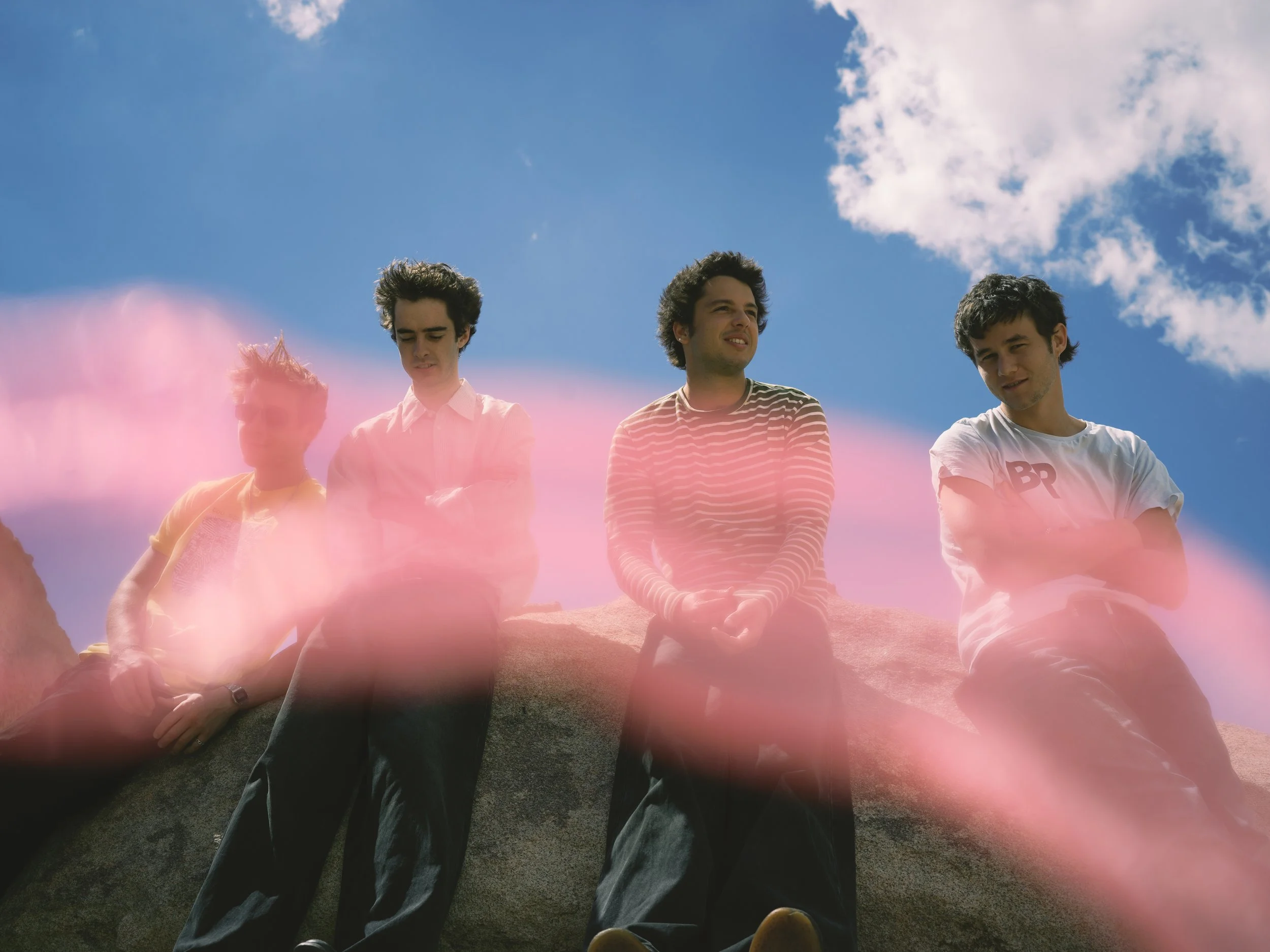
Photo by Sasha Eisner