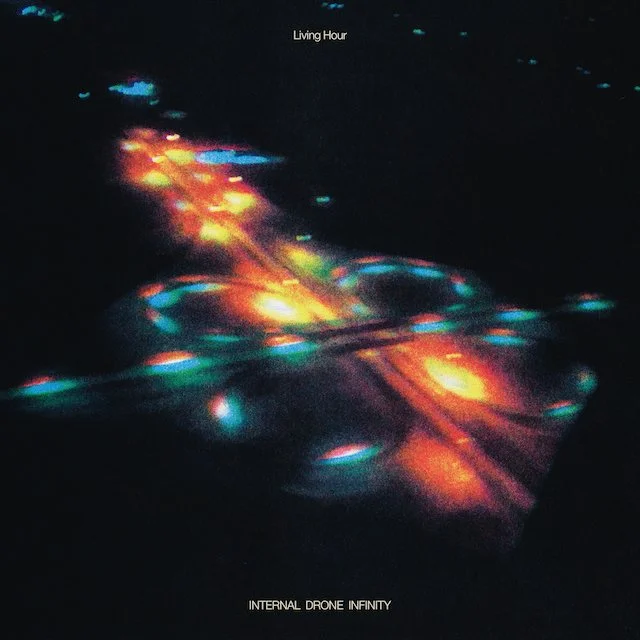
Living Hour
Any songwriter can muse on their environment. But Living Hour’s Sam Sarty takes the environmental approach ever deeper, seamlessly tying emotional meaning together with places, feelings and the abstract. The band is lauded as one of the better contemporary shoegaze acts, purveying their lovingly tailored “yearn-core” to all who dare to yearn.
Paired with Sarty’s hauntingly vivid lyrics, the group’s signature sound is quite possibly at its most captivating on “Internal Drone Infinity,” their newest record, which came out Oct. 17. Recently, the band was kind enough to answer some of my questions about the album critics are calling their “most compelling release yet.”
YY: I understand the album was in part framed by this idea of the body being a “projection room” of sorts. What is the clearest “movie” or internal scene you felt most compelled to project onto “Internal Drone Infinity?”
LH: I worked at a theatre for 11 years as a projectionist. Being in the dark projection booth looking out to the screen, seeing so many images over the years, it really sunk in to how I build up ideas or thoughts when it comes to making music, or anything. For “Internal Drone Infinity,” there were a lot of images that came up, like the specific light grey sky that happens in the winter here and how it's the same colour as the highway during the day. Usually there is a thin layer of snow blowing across the road.
I thought about my messy dresser when I was a teenager, and how I always wanted a pink hair straightener, but never did my hair really. I thought about walking everywhere in Winnipeg without a car, staring at the melting river, garbage sticking out of snow or electrical outlets on the sides of buildings. Streetlights, sirens, brake lights on cars without my glasses on, so the lights turn into diffused orbs. There are more images, but they all swirl and linger around when writing these songs.
The sound of Living Hour has been self-described as “yearn-core” — rooted in memory, longing and “the quiet magic hidden in everyday life.” How do you use that emotion to fuel the creative process without allowing the focus on memory to slide too deep into nostalgia or creative paralysis?
We simply love to yearn. It breathes a bit of life into things that otherwise feel limp or ordinary. I see it as a tool to "dig deep,” sit still and get into the work that would otherwise be skimmed over with too much thinking. I keep journals and notes, usually to fend off the overwhelm of nostalgia by piling everything up into a pile to look at (in my head or ripped up on paper or written out on a huge piece of paper) and look at the words, phrases, observations as pieces being put together. Kinda how I feel about time, it's just an assembly of things happening and then noticing them.
“Waiter” and “Texting” both stem from the same long-distance “yearn-ship.” What was the core conceptual or emotional distinction you aimed to capture in each song?
Both songs hold a lot of themes beyond relationships. "Texting" is describing Winnipeg to someone over text, observation of everything around, feels like a prayer, or expression of thoughts into text, or a long text message, how-do-you-ever-tell-anyone-how-much-they-mean-to-you-in-words. While "Waiter" is also about the idea of waiting, and what that means in a life, how waiting around for something or someone won't always work or happen. When is the right time to do anything.
“Internal Drone Infinity” marks the band’s second collaboration with Melina Duterte (Jay Som) as co-producer. How do you think that established trust allowed the band to take more risks in the recording and post-recording processes, if any?
Melina is a genius producer and musician, and it was so fun to hang and get to do this record with her. We're all on really similar wavelengths when it comes to references and what we want things to sound like, so it was super easy to experiment and get into things when we were in the studio together and when we were mixing. We felt like a really good team and definitely explored and moved around the songs sonically in such a great and exciting way thanks to Melina. It was really nice to be in a musical space with her.
Beyond the recent tour supporting the new album and some future shows opening for The Pains of Being Pure at Heart, what’s next for Living Hour?
We're touring around for sure, Sam is working on more music videos, hoping to release some new remixes and songs in 2026 and we're messing around with some old voice memos for new songs later on, maybe soon.