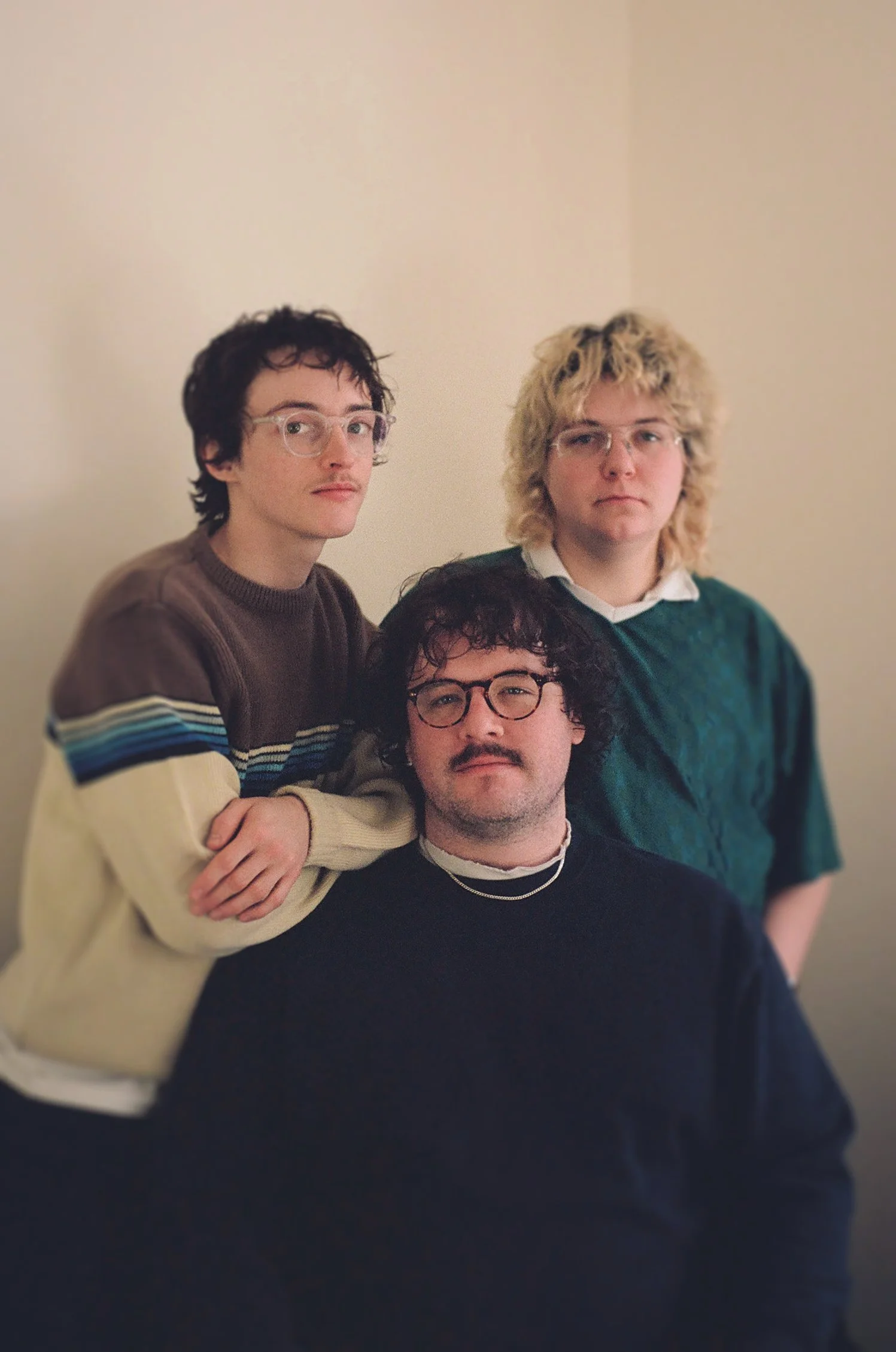
knitting
Montreal’s knitting returns this week with their sophomore album. While recent singles provide dark foreshadowing, the heavy, existential subject matter of the record doesn’t come without a few glimmers of hope.
Out this Friday, “Souvenir” was written, recorded and produced entirely in-house. What we’re left with is a thoughtful and deeply personal body of work that serves as a worthy follow-up to the band’s 2024 debut. Recently, front person Mischa Dempsey and guitarist/engineer Sarah Harris spoke about the record and everything else the band has in store.
Listen to this interview anywhere podcasts are available.
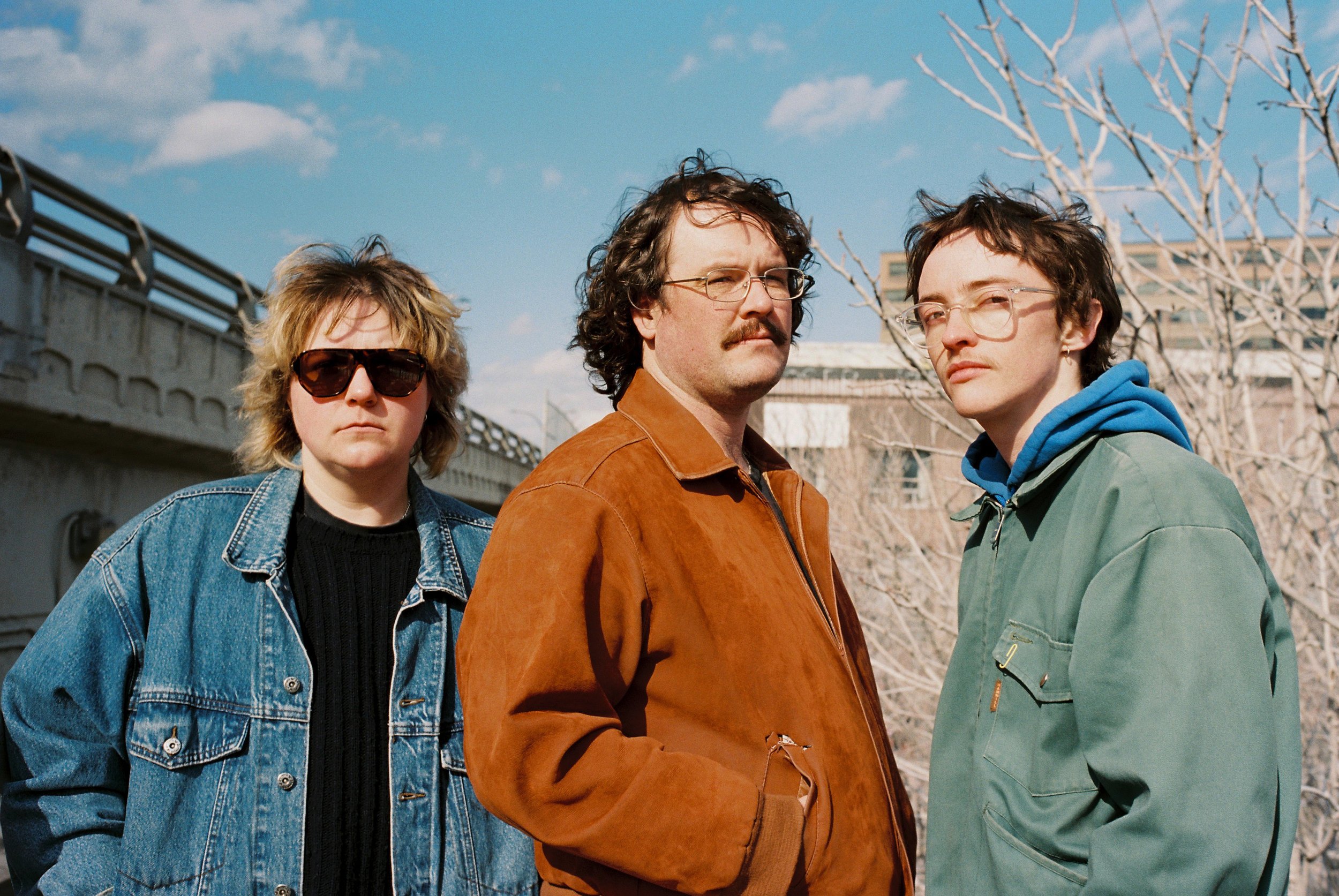
The following transcript was generated with transcription software and reviewed for accuracy. Minor errors or omissions may remain.
YY: It’s cool to be talking to you guys today because your new single, "I Wasn't Fully Cooked," just came out. Will this be the final single before the album?
MD: It is, yeah, it's the last one.
And so you wrote that it might be the band's favorite knitting song yet, and I was wondering if there's a particular reason for that.
MD: That's a good question. I really like the way that it turned out. It was also pretty collaborative. Obviously, we, we all write songs kind of together like, but I feel like everyone really had a hand in like making it the way that it is. Like everyone kind of has a hand or they're like little parts that stick out in my memory as like someone having contributed that and being really stoked on it, I guess.
So pretty much every song is like a collective, "everyone works on it together?"
MD: Yeah. Like I'll kind of like start with a riff and maybe a melody and then we'll like workshop it together to get the arrangement and the sort of structure down.
Okay. And the song that just came out, it has some fairly existential undertones to it. And I understand that's sort of the theme across the whole album. And so I was wondering if you could speak a little bit more to how this song fits into the overall sort of framework of the album, and then, yeah, how it fits in with like the other two singles that you have out right now.
MD: Yeah. Awesome question. It's definitely the most existential out of the three singles that we put out for the album. Like the second one, "Here Comes," I think is like a lot more kind of lighter in content. And "I Want To Remember Everything" is like a little bit less like looking down in a spiral kind of, and more kind of forward moving, I guess when I was trying to come up with ideas for what to write about, I was just like fishing from specific moments of fear, of dying or ways of I've thought about, I don't know, like death or dying or whatever, and kind of like tried to write songs around each of those, like moments or experiences or thoughts. So definitely the song like encapsulates like one specific experience I had with like fear of Dying and sort of like what that pushed me to do in my, in my life. And I think that, you know, while the song is like, really, like you said, existential and like sad sounding, ultimately I think that the fear was like a like a push for positive change in my life, which was good. Yeah, there's definitely a couple other songs on the album that deal also with death and dying in like a more explicit way too. But I think that this one deals with it in sort of like a reckoning way.
So when you set out to write these songs, was it more like, "oh, there's this feeling and I need to, you know, channel it somehow?" Or was it like, "I kind of want to write a song about death?" Like, how did that sort of start?
MD: Yeah, I actually think the first song that I wrote for the album lyrically was the closing track on the album called "Exit Desire." That is just like wanting to kind of get out of here a little bit and really trying to, like, rein it in and not have it be all about trying to get out of here all the time. So yeah, I wanted to just like, I guess that was the first song. And so I was like, there's obviously a lot more I have to say about the topic. So I just kept thinking of ideas for things to talk about and wanted to be a little bit more intentional with like, I don't know, not necessarily making a concept album, but like, you know, having themes that kind of like are more correlated than just being like, from my brain.
I was reading about, I was reading the track-by-track that you wrote for this album, which was very helpful, by the way, when it came to coming up with questions. I think it's the song "Shuffle." It's almost I don't want to say the antithesis to these other songs, but it's definitely a happier sort of more uplifting, I guess the focus material is a little bit happier. Would you call it a love song?
MD: I feel like it's kind of like a, an optimistic song or like, I don't know, maybe not optimistic is the right word, but just like it's definitely, yeah, I feel like a love song in some senses of being like wanting to be better, which I think is like a form of love.
And just while we're still talking about the album, Sarah, I know you took more of an engineering role with this album in your own studio, and so how do you think that allowed you as a band to experiment with different sounds? Like I know the last track specifically that you just talked about, like drum machines, synths. How do you think you might have been able to experiment in ways you you might not have been if you were working like with an outside engineer on like a tighter timeline.
SH: Yeah, totally. I mean, it's exactly that just having more time to do the production and you know, you can take a lot of time to do one thing. I think there are a few sessions where we did like, I don't know, six hours on one song or something, and then just trying to get things to a place that we were happy with. So yeah, it's really just time as well as being able to control every aspect of the, the sound within the abilities of the studio and, and the engineer, I guess.
Okay. Do you think the recording process for this album was like, vastly different from the last one?
SH: I would say yeah, it was like a multi-location kind of thing. And we did it like we did the bed tracks in July, and then I think finished the rest of the production in November and January. So it was pretty spread out, whereas the last one was like four days and then a couple weeks of vocals. So yeah, definitely very different process. Not necessarily better in terms of like spreading out the production over like five months. But yeah, we just did what we had to do with our schedules and stuff.
Do you think that made it harder to find more of like a thematic through line for the album? Because I feel like it's, it's fairly cohesive. And yeah, I'm surprised to hear that it was recorded in a longer stretch of time. It almost sounds like it was recorded in like, you know, a session or two pretty close together.
SH: Nice. No, I don't think it makes it harder. Okay. If anything, it lets you have more perspective over the course of the project and just work towards a finished product that's sounding good. And also, we did a lot of writing in studio as well. Most of the parts, at least that I played like the leads and the extra guitars and stuff weren't written at the time of recording bed tracks. So it was kind of just like bit by bit produced.
And I think similarly, you guys chose to have the album mixed by another friend of yours to sort of ensure that the record benefited from this casual rapport rather than rather than like a prestige sort of thing. So why do you think it was so vital for this specific collection of songs to sort of stay within your you know, personal network?
SH: Personally, I think we had the resources within our band and within our close friend group to make like a really good recording and a really good mix and something that we're happy with. And we thought we would just keep it close to home because we could effectively do so. And also it was amazing to work with Reese because we have like a dialogue and it was easy to give feedback and sort of just like the right time to like work with them on a mix. And yeah.
MD: I think when we were talking about the mix, like talking about getting a prestige versus a friend mix, you said we have that at home.
SH: Yeah. Yeah. Well, the mixes we were talking about, we were talking about getting someone we don't know to mix it that maybe had like a portfolio of other bands were interested in. Yeah. Because there's like two kinds of appealing things about working with someone. It's like you really like their music and the work that they do. But then there is like the temptation, especially as an independent artist, to like work with someone because of their portfolio and maybe what kind of attention they might bring to the project. But we decided to keep it tight and just work with someone we trust and and know well.
So you had it at home. I know you guys have spoken about the Montreal DIY scene being a major inspiration for the diversity of sounds on the album, and so what parts of your environment do you think tend to influence you the most? Is it like purely other bands or is it just like, you know, living where you do?
MD: I would say a lot of like other bands for sure, there's like specifically in the last like five years or since people started playing shows again, like since the pandemic started, there's been like a real, I'd say like explosion of people not necessarily even moving to the city, but like people in the city who may be played in bands in the past or whatever, or wanted to start something new, like starting new stuff or ramping up their project or stuff like this. So I feel like there's, there's just like a lot of people making stuff. There's a lot of enthusiasm around, like making stuff and trying new things. And I feel like seeing other people like push themselves and to like, make things in ways that they hadn't made things before was like, I don't know, kind of like challenges you to push yourself too in like a really good way, like not competitive at all, but just being like, oh, they're doing something really cool. I want to see what we can do also. And also then just like the, I feel like support of each other, that's kind of crucial and awesome.
I know, speaking of Montreal, you guys have a tour, a Canadian tour coming up pretty soon in the next few weeks, sort of, you know, after the album comes out. But you guys have toured all around the world, is that right? Or at the very least, I know you've been to Europe.
SH: Yeah, we did Europe in the fall and the UK and between 2023 and 24 we did quite a bit in the States in the East Coast and the Pacific Northwest.
Okay. So what is there something that stands out that's very different, doing like a Canadian tour versus something in Europe or the States? Is there like a difference that that really sticks out?
SH: It's different. I think there's two main things is one, you usually like know a bunch of people in the Canadian city that you're going to, so you get to hang out with friends. Like every time we go to Toronto, there's like a bunch of friends that we hang out with. But then also Canada's really big and has a pretty small population, so you have to go pretty far to to get a show. And not every show is very well attended. I'll say.
MD: Yeah, definitely. Like the barrier of entry to like touring Canada is like comparatively low to touring in the States or touring in Europe. I feel like because we can just like, in theory, like get in the van and drive to Toronto or drive to wherever, like we can, we have our, our own stuff and we could theoretically just drive there. But yeah, like Sarah was saying, like the drives are like significantly longer than in like most other places that are like in. Yeah. Other than in like the US or like in Europe and small population means it's like hard to fully support or sustain a scene sometimes.
That's interesting. I was talking to an Australian band recently, and they have really pretty much the same things to say about touring in Australia. It's funny, you know, big country, small populations, so it's cool to see that connection.
SH: That makes sense, yeah.
Well, I'll ask one more question here. So "Souvenir" is out June 26th. Just mentioned the tour dates in Canada to follow. Do you have any parting thoughts as you get ready for the next steps or any plans for the immediate future that we haven't covered?
MD: We are going to start pretty much getting right back to it. We're trying to start working on another EP pretty much this summer, in between shows and stuff, and just to sort of like keep the momentum. I feel like the, the like working on stuff over such a long period of time kind of made it feel almost like a regular thing, like a reoccurring, like we can just go back in and make some more stuff. Kind of it made it part of our regular lives. And yeah, trying to play more shows. We're going to go out west in the fall in Canada and back to Europe in January.
Are you going to be back to Europe like on your own, or are you going to be opening for somebody?
MD: I think mostly on our own.
Okay. Do you like, have a short list of countries that you need to hit up, or do you already have plans in place?
MD: We just started working with an agent who's going to book for us over there, which is awesome. So I feel like I'm, we're, we're pretty hands off of the, the booking process for the first time ever, which is like maybe the best feeling in the world effectively, but excited to go back.