
Max Hanley started Humane The Moon as a solo project in 2023. But as the music evolved, it demanded permanence. Now, just a few years later, it’s a five-piece band known only as Humane.
On Nov. 16, after a run of shows supporting Radio Free Alice in Europe, Humane released the single “Qualia.” The new track, along with its B-side, “Pebble Dash,” offers a glimpse at what lies ahead for the East London band, starting with an appearance at New York’s New Colossus Festival in March.
Recently, Hanley, guitarist Jim Fodder and drummer Jude Watson spoke about how they got here and where they’re headed next.
Listen to this interview anywhere podcasts are available.
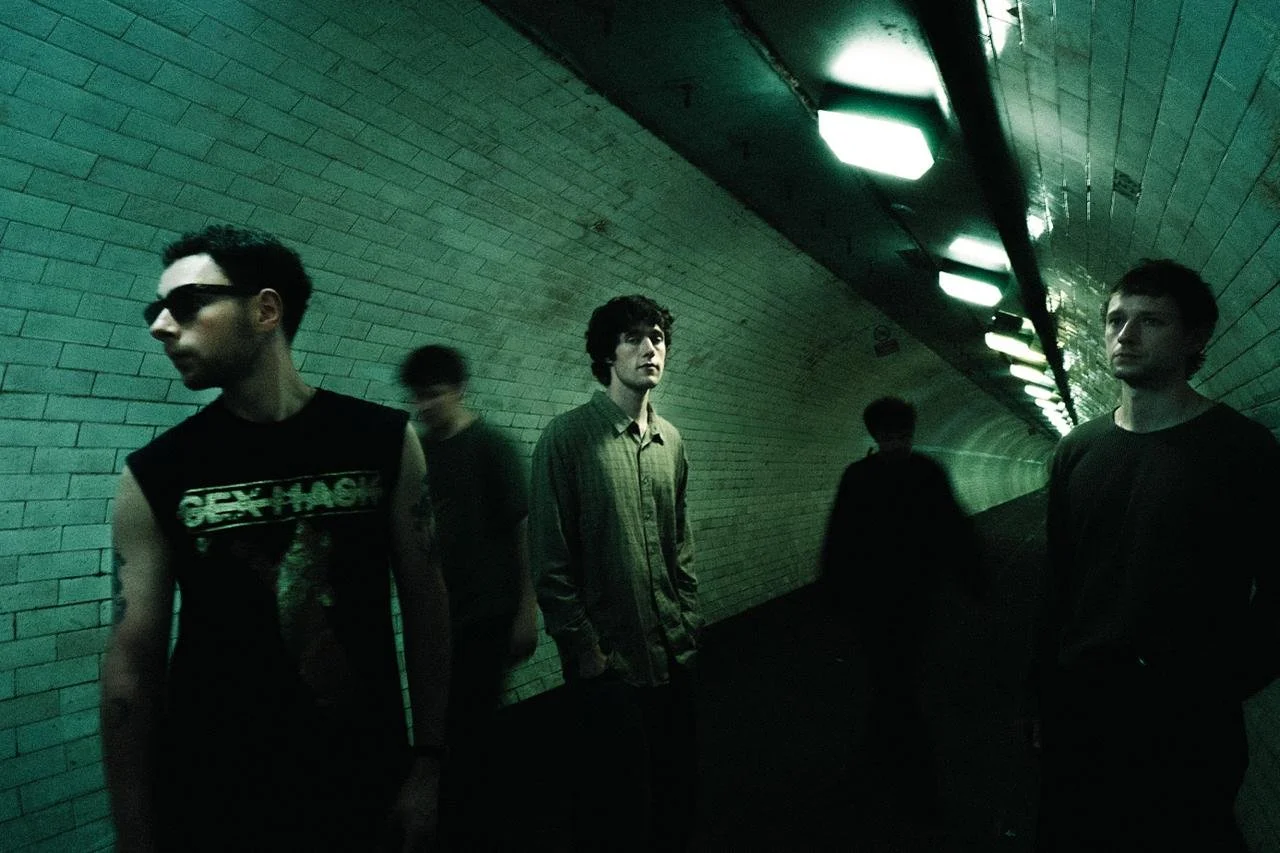
Photo by Hannah Murrell
The following transcript was generated with transcription software and reviewed for accuracy. Minor errors or omissions may remain.
You recently returned from a run of shows with Sex Mask, and you're about to go back out with Radio Free Alice in November. Lineup wise, these are really great pairings, your band and theirs. What did you take away from that last tour, and how are you planning to approach the next one? I know you've played with Radio Free Alice before.
MH: Well, I think you learn a lot from from each tour, mostly like how to function as a group of people together and keep morale up. And it's quite an intense period of time. And I don't know, learning how to make it function, I suppose, is the thing that you get more attuned to. So the more we do it, the better we become basically because you have to pick and choose your moments to be sensible and not be sensible and whatnot. The last one with Sex Mask just now was wonderful. We got to go to a lot of places we hadn't been before. And yeah, get reception that we weren't really expecting, which is great. Really looking forward to going back to Europe with Radio Free Alice because we did UK with them last year. So it would be fun to go back to these places and see how it goes.
And you said that you were a little bit surprised about the reception on your last tour. Was there anything in particular that stood out?
JF: Particularly, we played Leipzig. And because of some logistical kind of issues, we weren't quite sure if we were going to be able to make it, but we did. And it was a late show. It was midweek, we were the support and we weren't on till like 10:15. But the reception and the kind of energy in the room was just incredible. People singing along to music we released like a few weeks back. Such a good crowd, like the German crowd are incredible. So yeah, that was really fun.
MH: I agree. Yeah, Leipzig was definitely a highlight of that string of shows. Definitely.
And you also have some US dates still to be announced for next year. And that includes New Colossus in New York, and then something else I don't think we can talk about, but will this be your first time playing in the US?
MH: Yeah. First time. Over the moon about that. It's going to be really, really fun. I mean yeah, we can't talk about the other one, but New York itself I'm really excited about. It looks like a really cool festival, sort of playing in random places across the week. Yeah, we're all very, very excited for that.
JF: Yeah. First time in the States for me. And it's just going to be a bit of a bit of a dream come true, really, going across the pond and playing those shows.
What are you guys most looking forward to about playing over there?
MH: Probably going to McDonald's, getting a massive burger. No, I don't know. I'm not sure. I've been to New York before and I didn't do that. So that's not really, I think yeah, it's just exciting. It's one of those things that you grow up and you see on the TV. So I definitely felt like that when I was in New York last time. It just doesn't feel, it feels a bit made up, but it's also quite similar to London, which is obviously where we are from as like the energy of it. So you kind of feel at home away from home there.
JF: I'm quite looking forward to the challenge of it in a way. Although we're kind of seen as very similar in lots of ways, the kind of British music scene and the American music scene, like trying to go and perform to a crowd in the States is going to bring its own own challenges. And that's going to be quite exciting to try and see how we how we match up to that.
I will say as an American not from New York, it is overwhelming for me also.
MH: Yeah, I suppose I think that's what people always say when they go to New York. It's just madness. It's just mayhem. But I felt like when I was there, I kind of find that comforting a bit. You know, when you're like in a massive crowd. I think maybe being from here, you kind of understand that or know how to maneuver that slightly better. But yeah, no, you can't compare it too much, you know?
I agree. And speaking of festivals, you've played quite a few festivals in Europe before. But of course, every festival has its differences. New Colossus especially, they really make a point to host bands from all over the world. And so is there anything that you're maybe anxious about going into these festival dates next year?
JF: I guess the kind of environment you're in, and it's kind of a good anxiety in a way, but when you're surrounded by really excellent bands and bands from all over the world, and it becomes an international stage from only really mostly performing in the UK and Europe, there is that added pressure that you've got to kind of step up to that. And even like on the recent tour with Sex Mask they're such an incredibly tight and good performing band live that it really pushes you to bring the best out of yourselves. So I guess probably a good anxiety that's hopefully going to push us on a bit. You know what I mean? To like really try and try and excel. But yeah, that's kind of my own personal anxiety.
MH: Yeah, I agree. When you're watching, when you're watching bands who have done, you know, hundreds and hundreds of shows and sort of found their footing in a way that you haven't or you don't think you have yet, it sort of forces your hand to like try and get better, you know? It's a good thing. But yeah, it can be anxiety inducing, I suppose.
I know a lot of good creative material sometimes comes out of situations like that where you're maybe in a new environment, there's some unfamiliar anxieties. Do you tend to write much on the road?
MH: Yeah. I mean, we didn't really on this last tour just because it was so mad. I think it would be lying to say that you wake up and you have loads of time in the morning to sort of do loads of things. You sort of get back, play and then you're up early and then you're off. And I don't know, I suppose we could try a bit harder maybe, but usually you just want to sleep and just hang out in the van kind of on the way to the next place. But yeah I think there is something about writing whilst moving, which is just quite nice. Like I often write lyrics, you know, if you're driving or if you're flying or if there's something about that which makes it kind of flow a little easier. I don't know, some alchemy, but yeah, we didn't really record any demos or anything whilst we were away just now. Maybe next one.
JF: I almost feel like as well, when we're touring, you're kind of really locked into the music you're playing and the album that is going to be coming out, but quite often when you record it in a studio, it feels and sounds a certain way. And it's only through touring and playing it live that the songs really kind of come into themselves and you feel like you really understand them. And I feel like rather than necessarily writing, I felt like the kind of music itself had a coming of age where I kind of understand what this song is and how it's meant to sound live.
MH: Yeah, definitely.
Max, you mentioned different environments to write in. You said something about driving. Correct me if I'm wrong: your most recent single, "Penny Let Go," I think you came up with the lyrics when you were driving, and then you got to the studio and it came together in like, under two hours. Is that right?
MH: Pretty much, yeah. That happens quite a lot. Like when I'm driving is probably when I write the most I'd say. I don't know why. It's like, because your mind is elsewhere, especially when you're on the wheel, you know, you're focusing on one thing and then it sort of just comes seamlessly, but it sort of can just, you can just get these bursts of inspiration. And that was definitely what happened for this latest track because yeah, I sort of just had that tune in my head. And just got to the studio and Ed was there and we sort of figured out like the pace and the chords and then had pretty much the full song structured and almost finished within the hour. And then it was just about tweaking it and getting the verses tight.
JF: And then you came to me with it. And then the riff was just really simple and the chorus and I just sort of thought, this sort of sits nicely on it. And that was basically it.
MH: It was actually that day you came in after that.
JF: Same day, yeah.
MH: So it was pretty much done, within a couple hours, yeah.
JF: I've said it to you before, but there's a lovely Bob Dylan quote that he says that when you write, it's a bit like with working with wet clay where it's like you get this initial idea and you have to mold it into a shape it's going to take. And when it dries, you can chisel away at it and chop away at it. But ultimately the shape is there, the form is taken. And I don't know, it kind of rings true for this song, at least. It was done quite quickly.
And a song like that, you didn't even really have time to think about any sort of meaning, and some songs are like that, but surely, I'm guessing you have those songs that you really just stress over just to get perfectly right. How do most of your songs take shape? Do you have more time to think about it?
MH: Well, they sort of come about in, I wouldn't say in a set way, but they almost always come from either one or two of us sort of like getting the idea down, and at that point, whoever's doing it, it's not like we're not trying to make it the finished thing. So it's just like throwing things down. And if I have something to put down on the vocals, I will, but almost never will I have thought about what it means or whether the meaning of it is there yet. And that often comes within the next day or so. I'll spend some time writing to that. A lot of them sort of just come in their own sort of way. I can't really explain it. I wouldn't say it's a conscious effort a lot of the time. And the ones that are usually are the ones that I end up not wanting to release because it's too much, you know, spent too long and they've become too much of a, they've become too meaningful. And we've had a few songs like that where Jim loves but I can't listen to now because it's just too much, you know.
JF: There's definitely ones we've sat on for a long time and kind of over kneaded the dough, you know, I mean, we try and change it and change it. And actually it just ends up being maybe a bit inauthentic to what we initially meant it to be or what Max or whoever came up with the initial idea meant it to be. And particularly the latest singles, the later additions to the album, I feel like they were quite quickly written and and recorded. And that felt maybe a bit more natural to our process. I don't know if you'd agree with that, Max.
MH: 100 percent. Like, we didn't overdo them, sort of left them in the state that they came.
It's a very collaborative process, but I know the band started as a solo project. And so what's that evolution looked like? It hasn't been a very long time, right?
MH: Yeah. It's been very, very natural because we've all played together for years, like in different iterations of lineups. We've all played music together since we were kids. So yeah, Humane The Moon I sort of started alone, but we were already playing as a band together, playing the songs live, and it was just very normal for us to write together. And it seemed a bit ludicrous that it wasn't a band, it was a solo project, but it didn't feel like it was. So it was very natural. There wasn't any things that had to feel forced when when we changed it to a band, so to speak. It was always that.
I was reading that your upcoming music that hasn't been released yet marks the start of a darker and more expansive turn for the band. I think earlier you hinted at an album, and so can you speak more to that evolution of your sound?
JF: I guess a lot of the early tracks and a lot of Max's stuff is quite drivey, quite kind of post-punk. And there is still that element like, you know, "Kill Time," one of the tracks, still kind of follows that mold a lot more. I think there's a more kind of expansive, fuller guitar sound, maybe slightly more complex, like structures of songwriting. And then we have different people that can play different things in the band. So some of the tracks, particularly some of the non-singles, have different parts in, you know, like we have some double bass in there, we have some keys and some synth in there. We've got some six string bass in there. It's just a bit more of a kind of a fuller, slightly more maybe like a bit more matured sound, incorporating all those different elements that everyone else sort of brings into the fold.
We've talked a lot about the immediate future for the band, what's in store. There's a lot of exciting things coming up. What are you guys most looking forward to?
MH: I think releasing this project will feel unbelievably good. We were writing it over the course of two years. I suppose it was like two years of songs from start to finish, to have it mixed and mastered and ready to go. I'm excited for it to be not ours anymore, for it to be out in the world. That's what I'm most looking forward to.
JF: I agree with that. And then I guess the extension of that is then sharing it through the live set, you know, next year when it drops, just touring, hopefully some festivals in the summer getting a bit of engagement with people and connection.
I noticed Jude is on. I don't know if he can hear us, but.
MH: Hi Jude.
JW: Hi, sorry. These guys are absolutely smashing it. And I joined a bit later on, so I kind of felt awkward jumping in, but I guess what I would say I'm most looking forward to coming up, definitely the shows that we'll be playing overseas. For me, touring and playing shows is definitely one of the highlights that comes with doing this. Also, releasing the music that we've been sitting on for so long and that kind of only us and our team have been able to enjoy, and finally getting that out into the world and feel like it's not just us that are able to enjoy it, I guess, for lack of a better phrasing. Yeah. Just kind of getting it out into the world. It feels like a little bit of a weight on your shoulders having all this work and having been doing it for two years and writing this for two years and then kind of just have that weight off your shoulder and kind of have it released. But yeah, I'd say the upcoming shows for sure. And then the release of all the music that we have is what I'm most excited for.
MH: Yeah. Which is good and bad. It's like, now it's no longer in our control what happens. Our parts that we're in charge of are kind of finished. So we've just got to see where it goes.
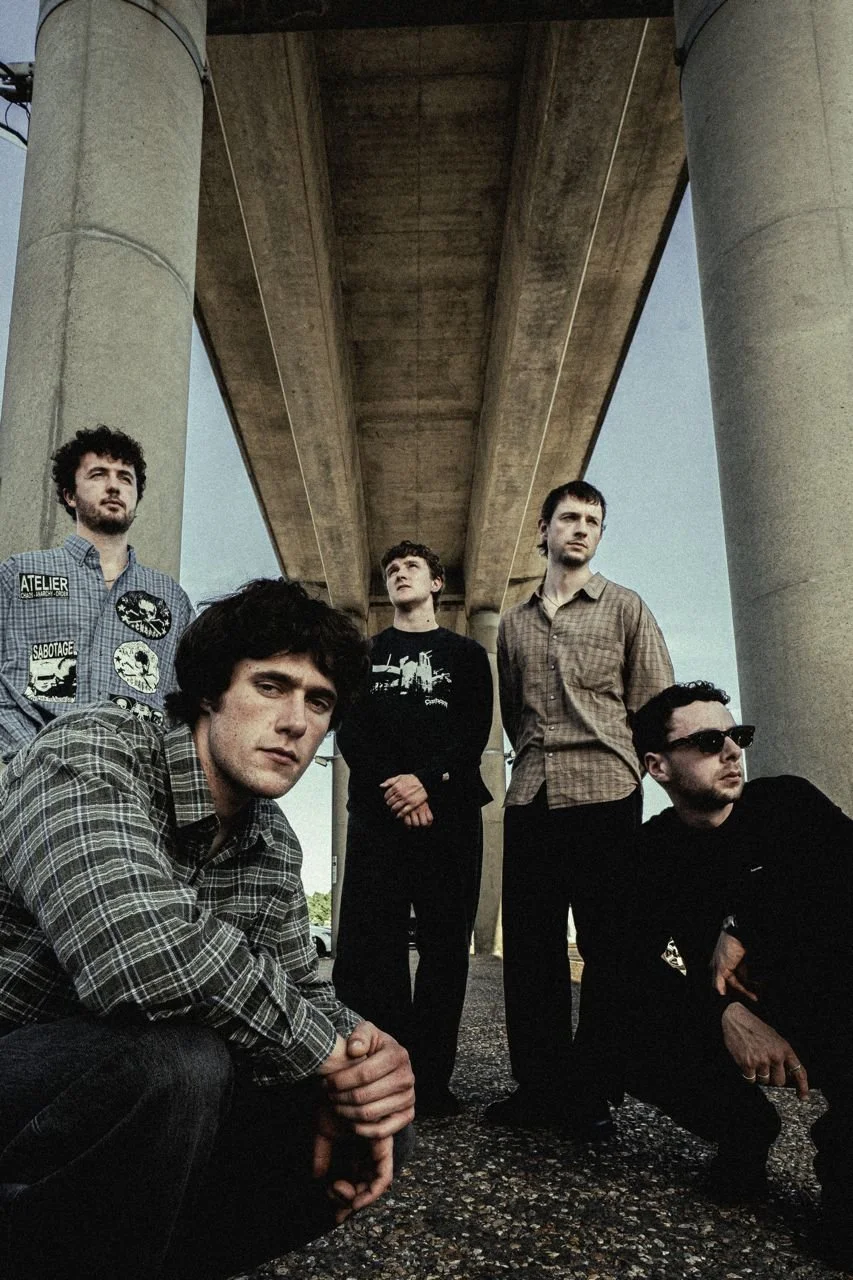
Photo by Hannah Murrell