LONDON — Hiding Places released the single “Paradise” Nov. 13 following a brief run of shows in France and the UK. The band’s first new music since their album, “The Secret To Good Living,” in April, it sets the scene for what’s to come in the new year. After appearances at Pitchfork Music Festivals Paris and London, the band spoke on their latest record, the new single and the future of the band.
Listen to this interview anywhere podcasts are available.
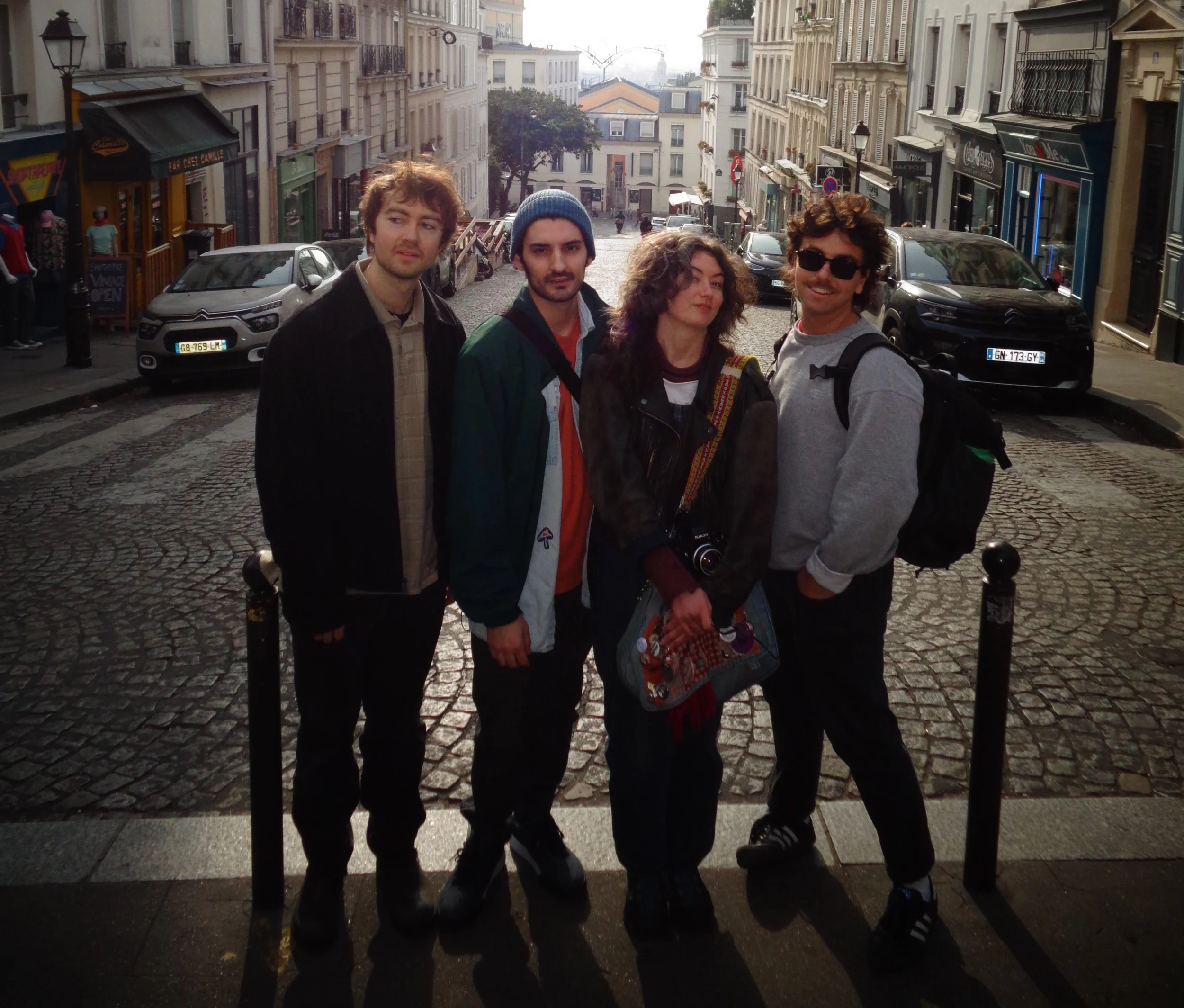
Photo by Tali Lagano
The following transcript was generated with transcription software and reviewed for accuracy. Minor errors or omissions may remain.
YY: You guys already played, and unfortunately, I was stuck in the line for such a long time, but I caught your last song. I enjoyed it, but how did you guys feel about how it went?
Michael Matsakis: Pretty stellar.
Audrey Keelin: I felt like it was a lucid dream.
Henry Cutting: I felt great. I felt very connected because we played in Paris yesterday and it was the same set, so it felt like we got a good dry run at a much smaller venue. So to play EartH Hall was very cool. It's probably like three times as large. So it felt like we were just naturally kind of building up.
AK: Yeah. That's one of the biggest venues we've ever played. I think. One of the biggest crowds I've ever played for.
HC: I imagined them all naked. So it was very small to me.
Nicholas Byrne: That would be so distracting. I felt good though. I feel like, yeah, we got to play last night. And so that was like, we were really tight last night too, but it was a smaller room and you could hear like the mix in the room, essentially like bouncing off the walls. And so in here it was bigger and I couldn't hear the mix bouncing off the walls.
MM: The mix on stage was kind of you were in a vacuum.
NB: Yeah. Which happens with the bigger stages.
MM: You gotta trust that it sounds good out there, I guess, that they know what they're doing. If you don't, you'll freak out.
You talked about Paris yesterday, being in London now. Was it fairly uneventful getting out here from the States? Anything crazy happen?
NB: Yeah. Two nights ago, we went to this awesome Chinese restaurant in Paris called Ravioli.
HC: Ravioli means dumpling.
MM: Yeah. We learned ravioli means dumplings.
NB: It was charming. We were having an awesome time. We had a pint of beer, we had some dumplings and broth and all this stuff. It was excellent vibes. And then we were going out with our friend Tali taking some photos afterwards. We stopped first near a sex shop called Paris Sexy and took some awesome photos there.
That says everything you need to know.
NB: Yeah yeah yeah, it was a lot of laughs. You know, we were really loving it.
Are those your new press photos?
MM: Yeah, pretty much.
NB: We needed press photos bad. We still do probably need more.
AK: I don't know if we're gonna use the Paris Sexy ones, but we'll see.
MM: We could. We could use a couple of them. Not all of them.
AK: We didn't go inside. There was a guard that came out.
MM: Yeah, we weren't gonna go inside.
NB: But then but then we had this awesome idea to go to this corner store that had these mannequins like four mannequins in a row.
MM: But just the legs.
NB: And so we were like, you know, we put our gear down over to the left of the photographer and then had our torsos above the legs. We're smiling, having a good time. Took the photos. One minute of taking photos. Go back to pick our stuff up. I look down, I grab my guitar. I don't see my pedal board.
MM: In a different case, yeah.
NB: I think, "I've been robbed." And I was robbed. My pedals were gone. We were kind of like running around like rats trying to figure out, like, if we could find this and it was like, did we misplace it? Is it there?
MM: We were like, do we have any photos of the pedals? And we traced them. They were definitely stolen here.
I thought there'd be a happy ending to that story.
MM: No, there's no happy ending. We spent a lot of money.
NB: But there is a happy ending.
MM: In a way, yeah, we got a new pedal board. But we bought new pedal board.
NB: Yeah, but you know, we were like looking at the same spot over and over again. I feel like all of us were like, is it there? It was there. But it's gone. But then we were lucky. There was like this awesome pedal shop in Paris called La Pédale.
MM: It's literally a whole shop that just sells like a thousand different guitar pedals. It was godsend.
They were the ones who stole your pedals.
MM: Honestly.
NB: It actually was like the most diverse collection of pedals that we could possibly stumble upon.
AK: Yeah. And knock on wood, your insurance is covering it, right?
NB: Hopefully my insurance will cover it.
HC: Yeah, yeah. It's crazy. Get renter's insurance.
MM: Shout out renter's insurance.
NB: The silver lining was that it was mostly inconvenient. It was like, now I have no pedals and we're playing tonight.
MM: It was kind of fun to shop for the pedals. I enjoyed shopping for the pedals. It was fun. I think the new pedal board is slightly nicer than the last one.
NB: I think it's elevated.
Especially if you get that insurance check.
MM: Yeah, yeah.
HC: The other thing when we were coming over here, my uncle who's pretty conservative kept being like, "well, you know, the protests." And I was like, "do you think I've never protested? What do you think protests are?" And then he texted me last night during our set, and I looked down and I saw my phone and I just smiled because he was like, "seems like everything's going to shit." Like, "are you okay? And I was like, "I'm literally fine. There's nothing going on here."
MM: He's just glued to the TV or something.
HC: Yeah. Otherwise, everything's been good, right?
AK: Yeah.
Yeah. Sounds like mostly it's fine.
MM: Yeah. It was a wonderful time in Paris. Yeah, we were treated nicely. Which is not the norm, apparently, but.
AK: Yeah, I did find that a couple of people that I talked to in Paris. Well, first of all, people in Paris make great eye contact is something that I learned. But also, I did find that a lot of people were willing to speak with me in French, even though they knew they weren't sort of, you know, understanding that I barely knew French. They would give me a chance, for the most part, which was cool.
NB: I would like to think that they appreciate trying.
MM: I think a lot of cultures do.
AK: There was also a lot of good nonverbal interactions that I had in Paris. Just like old lady needing help off the train. She's like reaching out for me for help. And then I, like, helped her off the train. She's like, merci. That's like the one word that was exchanged. You know what I mean? It was a vibe. Anyways. I love Paris.
Yeah, it's cool being in Europe. Of course you're based in New York now, but you're from Asheville originally.
MM: Two of us are.
AK: Yeah. Two of us are from Asheville. And Nicholas grew up in Athens, Georgia. And Henry grew up in Wilmington, North Carolina. But we met in Chapel Hill, North Carolina. The three of us. And then I met Michael through an Asheville mutual friend. So it's definitely a southeast kind of vibe.
Sure. I was gonna ask if you still consider yourself an Asheville band, but only two of you are from there, so.
MM: Yeah, we never really were established in Asheville, I don't think. So I don't know if, like, we've played shows in Asheville, but as a band, i don't know if y'all ever existed in Asheville. We haven't since I've joined.
AK: Yeah, I guess I lived in Asheville during the first year that we, I mean, yeah, during the first year that we were a band, like during the lockdown times, like I was in Asheville and Nicholas and Henry were in Athens, and so I think there were maybe like some sort of one-off shows, like an era of time where not many shows were happening, but I was playing like solo or duo sets with my friends or whatever could happen in Asheville. And sometimes when we play in Asheville and I'm like coincidentally there for like visiting family or something, I'll like play a show. And sometimes the venues say that I'm a local band, which is kind of funny. But I'm just like playing a solo set. But yeah, we all live in New York now.
Of course, the press tagline is like "New York City via Asheville."
MM: Yeah. Asheville's trendy.
NB: I think it's hard to put it in like the, the press bite where it's like, we are ourselves and we are from the South and these different places. And we met here and we live here.
MM: It's more nuanced.
NB: But I feel connected to all these places and the music scenes. The music scene in Asheville I feel connected to through playing shows there. And for them being from there. And then also in the triangle, you know, from going to school there and then coming down there and playing shows and then of course New York and Athens. So I feel a part of all the music scenes. Yeah. And, and these places.
A lot of good music coming out of Asheville for years. Do you think Asheville has a particular sound? I know there's a lot of different bands.
AK: I feel like there's something about being in a mountain range that has inspired me. I can only speak for myself. When I lived there, I felt privileged to be able to like, drive around and just like, you know, go into a forest and like, start playing guitar alone. And I feel like having that ability is really a privilege. But you can also do that in New York. Like there's a forest in Queens. And I have a backyard, which I'm also privileged to have in New York, so I can go outside and be alone and play music whenever I want. So I think just, yeah, any place where you can spend good alone time and spend time with nature.
MM: Yeah. And I would say also that we don't really feel rooted in Asheville as a band because I feel like if the sound of Asheville is anything, it is sort of like leaning towards, I think a lot of the newer bands are leaning towards this alt-country kind of J. Mascis stuff, or like just really heavy all the time, which is cool. Nothing wrong with that. Where I feel like the mountains and stuff inspire us more in like a softer, like, folky way than a country way. We definitely have connections to country rock, but I think we're more so trying to find like, what it means to make folk music when we're making music, which is about like studying heritage and the people and more so connecting to Asheville and thinking of times I was at festivals or places with giant dance halls and there's contra dancing and like all these other sort of more folk centric music. I know other bands, they're like very obsessive with the Jason Molina aesthetics and stuff like that. And we love Jason Molina, don't get us wrong. We love him. But yeah I don't, I don't think of us as like an Asheville sound in the sense of like, Asheville is one sound. I guess there is an alt country side to it.
NB: Other people can say what they want to say.
MM: But I mean, yeah, you guys are a New York band. I think the great thing about being in New York is that you can all be together in a professional studio and record at the same time. And your album that just came out was the first body of work to be recorded in this way. So I think a lot of what you've come to be known for is like an intimacy in the recordings. How did you preserve that character while being in a professional studio?
NB: I mean, up until this album, Audrey and I and Henry were recording it ourselves and don't have like a ton of experience. Took some classes in college, but we were really doing it ourselves in that way. And then when we met Michael, and Michael joined the band, we kind of translated this, you know, us doing the production into, you know, someone who actually knows what the fuck they're doing. And treating that same intimacy you're speaking to with real technique beyond feeling. I'm proud of the recordings and stuff that we did for sure. But it's cool to like take it to another level where there are things that I don't hear that Michael hears and that like become a part of the project at this point, which is super cool.
MM: Yeah. To speak to the transition of the bedroom to the studio kind of progression, when they came to me, I listened to the recordings. I had listened to a few of them, and I honestly didn't like how they sounded. Which is fine.
NB: Thank you for being honest.
MM: I don't know, it's just like, they're good songs. And I was like, there's something that we can do from here. And I think I like thinking of small details, but I'm also a big picture thinker. So when they were coming from this bedroom kind of sound angle, almost and we wanted to go to the studio, it started out, I'd say like the, the crossfade into it was when they came to me, they already had started recording some songs in the same way they were, and we picked a few of those to include on the album and then the rest I think we ended up redoing entirely. And then I don't know exactly at that point when the songs were written, I think most of the songs were written before I joined at that point, and so I didn't have much of a hand in writing it, maybe in terms of producing and arranging a bit, but it was half the songs on "The Secret to Good Living" are like, if not a little less than half are like half the original stems from the bedroom demos that they had. And so I saw that as like, they're not bad. It's stems, we can work with this and we can replace some other things that weren't recorded as well and kind of meet somewhere in the middle. And then the end of the album ends, it starts very dark and it's like distorted. And we recorded everything through this 24-track tape machine, we just blew it up for like "Dead Dove" and "Holy Roller," and then by the end of it, it gets through all the bedroom stuff and it ends in this like really hi-fi, like you're outside, it's not dark anymore. And I considered that to be just like setting the stage for like, we can kind of go anywhere from here. Like, we came from this darkness and now we have this hi-fi sound, like the vocals in the last track on the album are probably the most hi-fi the vocals have ever sounded on any song on that album, at least. The whole album, the vocals are much more low fidelity, and then the last song sets you up to kind of go from anywhere. And then the the album, I don't know if we should say anything. What are we talking about?
NB: Let's talk about it.
MM: Yeah, yeah. Okay. So it's like the bigger picture is like, I personally don't like it when a band who was bedroom-y or like all homemade recordings suddenly sound like pristine and like refined and edited and all this stuff. And I'm avidly against hyper editing stuff. I'd rather not. Yeah, in a lot of situations with our music on this new album, we're kind of like leaning more into the hi-fi, but still tracking everything to 24-track tape this time, so it's not quite hi-fi.
NB: It's kind of mid-fi.
MM: Kind of mid-fi, but I'm always down to keep like mistakes and stuff in the tracks if it reminds the listener that these are like four people in a room playing music, because I think that's going to be the most important thing as we move forward with people. The bar of like just generating music and anything like that becomes inhuman. And the idea of making a song with an instrument could be lost, in a sense. Not to say that it would, but like, I think it's important to remind people how music is made because you don't have to know to enjoy it. But at the same time, yeah, it's like very cool to me. And so it's cool to like remind the listener if they hear something as a mistake, they're like, oh, but that was like a human. Like, I don't know. You can hear like the pick hitting the string on the first track of our album to come out. And like, I heard that in the solo, but I'm like, no, that like you can hear like the mic in the room, hearing the acoustic stuff coming off the electric guitar. Sometimes I'm like, that sounds real.
NB: I think too, like a primary difference between the EPs and the album was that a lot of the EPs, the first EP, we were learning how to write songs, writing the songs like a lot of the recordings are like first thoughts. Like the songs are written in the DAW and like essentially demos that like became the songs. And then the second EP, correct me if I'm wrong, but the second EP we recorded live like kind of this, this idea of like, you know, doing it in a room. And then the third EP was like live again, increased production.
AK: Yeah. I think something about the first album that I enjoy is that I feel like every song is honored in terms of the spaciousness of the song.
MM: The first album meaning "The Secret To Good Living?"
AK: Yeah, "The Secret To Good Living." Like, the songs that feel bigger and heavier and emotionally sound bigger and heavier in terms of space and the songs that are sort of like meandering and sort of like a stream of consciousness and just sort of like, should sound like a passing thought that maybe you hear in your head. And I think that those sound sort of like, you know, more hi fi, but also like, you can hear everything that's happening better. I feel like "Pile of Thought" and "Forget It All" are sort of like that. For me, it was a stream of consciousness based thing when I was writing the words, at least. So I think it's cool that the recording style sort of honors the spaciousness of the emotionality of the songs.
MM: Yeah. We love artists like Phil Elverum and stuff like that who can take like a poem and ambience and kind of make it into like an emotional narrative and like the effects and everything kind of coincide to make some kind of kind of more of a like, expressionist song, I guess. Yeah. Rather than like a structured, like, beat heavy song, you know. One other, one other cool example that I want to point out about our next album because I don't want people to think it's a mistake is that on some tracks we have like electronic drums. What we did though is we recorded Henry first and I matched the drums to Henry's feel and I think a lot of engineers would match the drum that I've worked with would match the drums to the perfect grid of the electronic drums and edit the drums. And so this is I did hyper edit the electronic drums painstakingly to not be perfect. So they, when they're playing it is Henry hitting those drums. Even if I'm like simulating Henry hitting these drums. So it's, it's very important.
NB: I think the tape machine like encourages this kind of thinking as well.
AK: Yeah, totally.
NB: Just because sometimes there's only like two tracks available on the thing. So it's like we're gonna do two vocal takes. because there's two tracks. And like, you can punch it if you want, but it's like kind of annoying. So you might as well just do it in one take. And we make demos on four tracks and stuff too. So there's like this kind of influence is definitely is definitely on the ups in the band.
I just always think the best products come out of situations where you don't have everything at your disposal, you have limited resources. You just have to get creative. That's the key.
AK: That's how you learn how to be restrained.
MM: Although in this day and age, we kind of do have everything at our disposal. But I think it's important too when you do have everything at your disposal to limit yourself. Because that's the reality is like, we could make everything perfect. And that, I think, is the trap that a lot of engineers and people fall into when they're making music and recording it is they have the opportunity to make it perfect. And that's just becoming more and more lame. Perfection is so lame. It's like, we could do it. We did it. We don't have to do that forever. It's like it starts to just sound like nothing to me, as a big music listener, like when something is so perfect.
And speaking of new music, by the time this interview comes out, you'll have a new single out. It's called "Paradise." It's a six-minute track that sort of builds on itself as it goes. One of you had a great quote about paradise being a reflection of either desires or fears. Of course, I'm paraphrasing, but it was a great quote. And so would you mind expanding on that distinction a little bit? And then which is it for you? Is it the fear or is it the desires?
NB: It was an inspired moment when we wrote this. "Paradise... Does that mean it's a place where all your desires ring true? Or is that place really a projection of all your fears, where every desire is an antidote? Making peace with change, that feels how I thought paradise would." Yeah, that's a beautiful quote. I honestly don't have more to say than what that was because, you know, I digress.
Which is it for you?
NB: I feel like the paradise that I imagined was like, you know, what you see in an advertisement or something like that, what you're sold and like what you think it maybe should be. And what it should feel like is an aggrandized version of maybe what it actually feels like. But I think that being able to face your own fear and become comfortable with that process with communicating with yourself and with other people, like in existing in that, that state, I think is more it's more of a Paradise than, you know, sipping a mojito on the beach. And I would love to do that too, but you know, that's kind of a dopamine moment.
MM: That's a practice.
NB: Yeah, it's a practice.
MM: It's not like a, it's not like an eternal state. It's like something you reach and leave and come back to.
NB: Paradise in the show tonight is having a little hiccup and then coming back to the moment and like, you know, sinking back into that, like, that's beautiful and that comfort that you can provide yourself. It feels like paradise to me.
AK: And the comfort that you can provide yourself is acceptance or awareness.
NB: Both.
AK: Forgiveness.
NB: Yes.
AK: I was literally writing about this today. I was feeling insecure, so I was trying to think about where it came from. And then I was writing, and I said insecurity comes from fear, and fear comes from the desire to be something, and the desire to be something comes from separateness, and separateness comes from othering, and othering comes from ego, and ego comes from what? And then I was like, okay, well, oneness leads to birth, which leads to birth. And then I was referencing the name and form thing. So it's like, if you are born, then you get a self and then you get an ego. And so I'm like, if you're insecure, it comes from ego, which comes from just being a human. So anyway, it's just a natural thing. So of course you try to reach, you know, ways to feel oneness.
MM: And a paradise is like coming down from that ego.
AK: Yeah, yeah. Attempting. Yeah. Just like being aware that I try to sell myself the concept of paradise in my own mind of like, wait a second, it just is what it is. Like, what am I talking about?
HC: I don't know if there are any Thomas More fans in the audience, but Thomas More wrote the book "Utopia," which I read in college. And the basic idea is that utopia can't actually exist, you know, in its purest form. But that's the way that I think about paradise is that it is like an abstract, unattainable sort of goal. And for me, this song specifically I guess we wrote it right after a trip that I took with an ex to Hawaii, which is literally paradise. But it was pretty much the last trip that we took together, so I didn't know that it was paradise when we took it. But in retrospect, I'm like, wow, what I wouldn't give to just kind of be there all the time and have no time pass. So that's what it's like for me, having written the drum part for the song.
MM: I feel like the for me, it's like similar in the sense that it's like rooted in nostalgia and childhood. It's like the way you thought things worked before you learned how they worked and just your assumptions before they're shattered. Or reframed, you know. But yeah, it's like, I think a lot of people reach for nostalgia because of this like idea of paradise. And yeah, leaning into like a nostalgic sound and soft sound. We were tempted to make the song get heavy at the end with it, but we were like, this is not a rock out song. Like, it has to stay restrained the whole time, and we're just gonna let the vocal kind of carry the intensity while the instruments might like slowly build and get like denser, but it's not going to like hit a distorted wall. We might do that live. But like for the recording, for the eternal form of the song that everyone will hear, that's kind of the vibe we're setting. It's eternal.
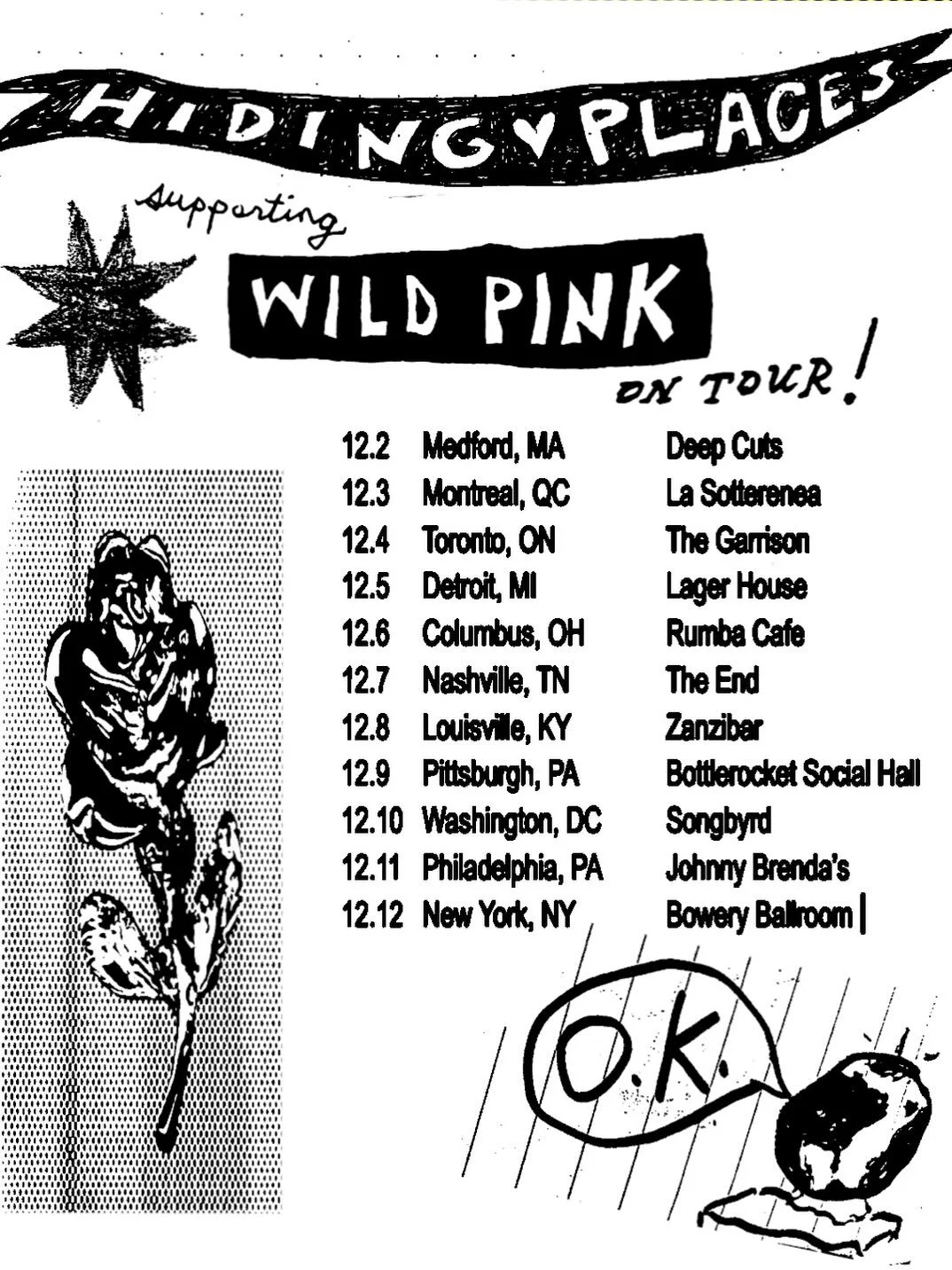
After this, you'll have a little time left in London and then a run of shows back home on the East Coast supporting Wild Pink, who's a great artist, and I think your sounds pair very nicely together, so that's going to be a cool tour, and that's in December. But you talked about plans for this next album. You have a lot of next year planned as well. Where does this where does your drive come from as a band?
AK: Well, I think if you're in a band, you kind of have to plan that far ahead.
MM: It definitely happens when you start messing with like record labels, because if you start making, we learned this too, like if you start making physical media, like vinyl, it just slows everything down. And so you were planning on like, we know when we finish this album, it's done, it's mastered and stuff, but like, it's gonna take a while to get everything done and made and then we gotta release it and there's advertising all this other shit. So it's like, it's not just like, pull up Distrokid release it tomorrow and hope that the stores get it.
AK: That was nice when we could do that.
MM: Yeah, that's an era. But now it's like, we don't get that luxury I guess, anymore. But there's a lot more thought in it. And we're even seeing like, so if it's that long form, we can be even more long form than that and we can start planning way ahead.
NB: And what keeps us going is we've got songs, like we've got lots of songs, we've got songs beyond this album. We're working on a lot.
AK: I feel like the drive for me comes from the concept of creating a band, which is a relationship of in this case, four people, that is literally like, everyone is just so committed in a very spiritual way. Creativity goes beyond so many different ways of showing up for each other. And I feel like it's so amazing that we have made these precedents for ourselves of like, we are all songwriters of every song and like, it doesn't really matter who brought words to a song, it's an equal experience, and like, it's an equitable experience and a very cool precedent to have a really communal group of people in my life that we can share these things in a radical way, I feel. So that is what keeps me going is like every day, just straight up the way that we exist as people is so different from how you're taught to exist. And that's like so sick and everyone should do that.
NB: It's a lifestyle and it's we're building each of our own processes around doing this and being able to tour and record and spend the time to practice and write and all these things. It's not normal. And there's so many people that are supporting us that we love and appreciate.
MM: I think to me it feels normal in the sense that the answer is what else would I be doing? Like, what the hell else would I be doing other than this?
NB: That would mean something.
MM: I think it's just how you define productivity, maybe, but it's like, I'm not so concerned with certain aspects of maybe mainstream productivity, but I think what it really is, is I don't think there'd be anything else I'd rather be doing than this. And so if I have free time, I'm doing this or other things that I love. Just like people love anything. You like hanging out with your family, you like hanging out with your friends? That's essentially what it's like.
AK: Yeah, just like following your heart.
MM: I couldn't imagine doing anything else with my spare time than making music.