Parlour Magic
Over just a few short years, Luc Bokor-Smith has transitioned Parlour Magic from a solitary studio pursuit into a collective venture — prioritizing the raw energy of live musicians over the programmed precision of his previous work. Drawing inspiration from his travels across China and the stark atmosphere of a former East German radio station, his latest music explores the feeling of being in transit, the frustration of failing communication and the authenticity of analog gear.
“Embassy,” the first single from Parlour Magic’s upcoming third studio album came out Feb. 20, and the full record — entitled “The Embassy” — will be available June 5. Recently, Bokor-Smith was kind enough to answer a few questions about this quickly growing project.
YY: Parlour Magic has quickly evolved from a solo project into what you’ve called a “collaborative ecosystem” – how has this shift from complete control to a shared unit altered your personal connection to the songs as they’re being made?
LB: If anything, it deepened it. I recently heard that the single most bonding thing two people can do together — even above having sex — is commit crimes. I’d posit that making a record together comes right after that. They’re not inherently that dissimilar either — the trust required, the “maybe this was a bad idea” of it all, and then the afterglow where you’re left wondering how the hell you pulled it all off.
Getting to work with Bailey and Fab and the rest of the band on this record was that rarest of experiences — the kind where, in real time, you understand that you’re doing something you’ll remember for the rest of your life. I think there was very much a lightning-in-a-bottle feeling during those sessions, and I certainly hear that spirit when I play the songs back. That alone creates a personal connection to the music that’s unlike anything I’ve done before.
When compared to 2024’s “Saturn Return,” “The Embassy” is intentionally more “earthbound” and “grounded.” What was the primary inspiration behind framing the new album as a sort of foil to the last?
I’m proud of the last record, but going into this one I was cognizant of the fact that it did ultimately sound like one guy in a dark room with a bunch of synths. It was actually two guys (me and Fab), but you get the idea. Once we started touring that album as a band the songs took on a whole new life, and were given a jolt of energy that can only come from, say, a real human hitting things with sticks. When I set out to write this record, I knew I wanted to capture that energy — I wanted it to sound like people in a room playing music, with all the tiny imperfections that come with that. The previous PM releases have been born of drum machines and sequencers, so every beat falls exactly where it “should.” This record is a little looser, with a bit more room for play around the edges.
The audiovisual language of this record in rooted in 1970s textures with a thematic emphasis on fractured communication. What sonic motifs or lyrics from the album best demonstrate these stylistic choices?
Before I started work on the album I spent three weeks traveling across China, which was certainly the closest experience I’ve ever had to being on another planet entirely. I’ve travelled a decent amount, but mainland China — especially cities like Chengdu and Chongqing — is something completely different. Western credit cards don’t work, your Google Maps is grossly incorrect most of the time, so it’s hard to figure out where you actually are, and of course they have basically an entirely separate internet over there, and the VPN apps are spotty at best.
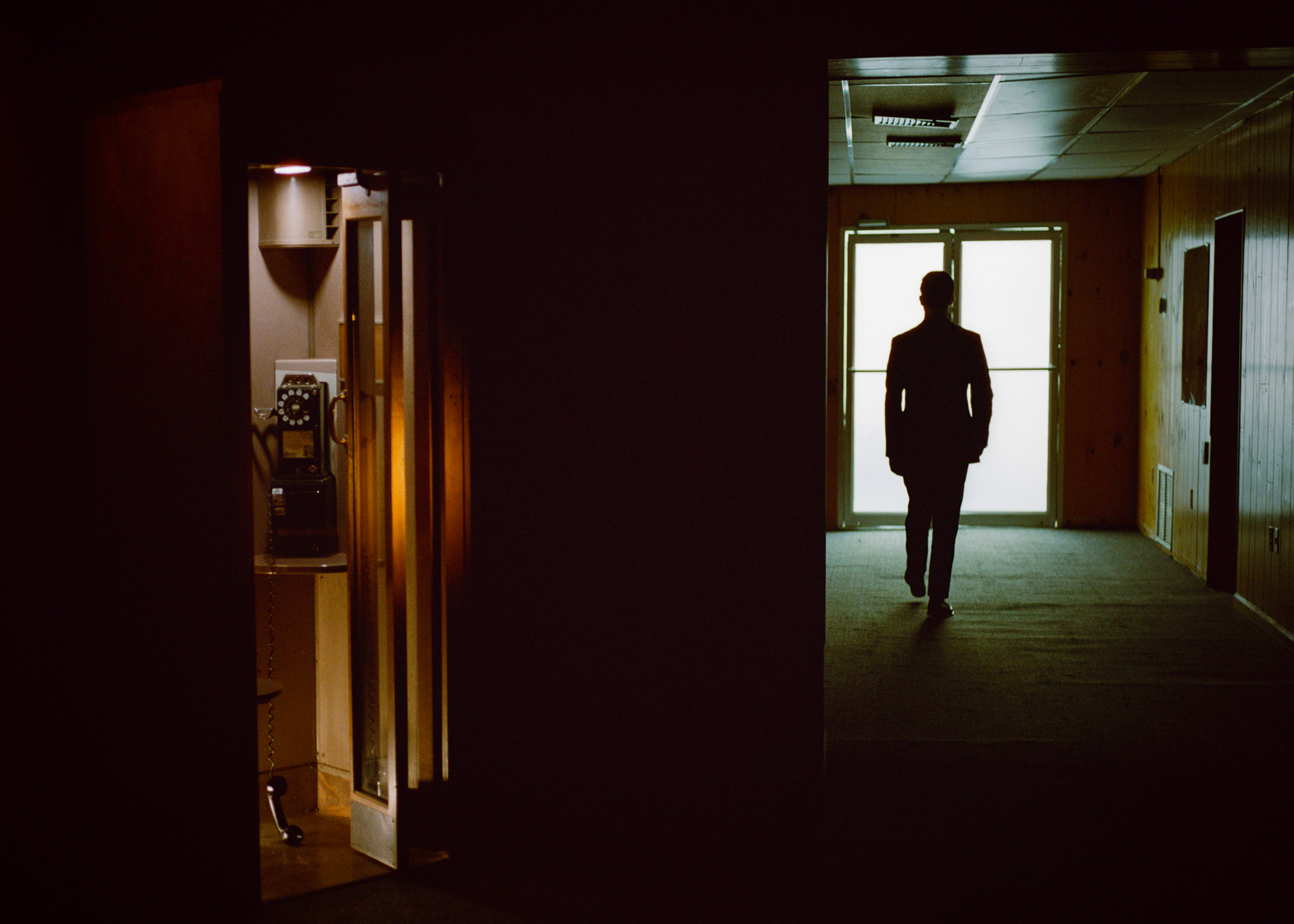
I think that trip very much established the mood that I then set out to capture. When I got back, the first song I wrote for “The Embassy” was a song called “Dial Tone,” which went a long way toward establishing the lyrical palette of the record. Those pesky signal dropouts.
A review of a Parlour Magic show in Brooklyn last year highlighted the moment a fan requested a deep cut during the encore. As you prepare for a national tour as a four-piece band, how are you designing the set to leave room for that kind of spontaneity amid an otherwise meticulous production?
He requested “Area Code!” I barely even remember that song! It was a bit of a train wreck in a great way. We played a lot of bars on the Saturn Return tour, and those shows are always super fun because there’s an improvisational element that you just don’t get in proper venues.
We also rehearse far more than we probably should. In some paradoxical way, massive amounts of preparation afford looseness once you’re on stage. I like being able to trot out pretty much anything from the catalog on a whim. It keeps it exciting — the setlist is 90% the same night to night, so the couple of rotational slots are a fun opportunity to do an older song or a cover. No matter how much the show evolves, I want to keep that flexibility.
How might using analog synths and 8mm/16mm film to explore themes of time and memory feel more authentic than the modern precision of digital mediums?
The same reason I insist (to the rest of the band’s endless frustration, I’m sure) on using finicky analog synths and old studio gear to make PM records. I believe that the creative process rewards intentionality. I think that taking the long way around rewards you in indirect ways, and I believe that everything is part of the process, whether or not it makes the final cut.
A straight line is the most boring way to get from point A to point B, so introducing the unpredictability of, say, film, into the equation simultaneously requires more precision while also leaving more room for a happy accident that might not have been there if you, say, got the “shot” as it were cleanly in LOG format.
“The Embassy” is framed as a “liminal world.” What practices did you enact in the writing process to bring this world to life in what we hear on the record?
About half the record was written at Funkhaus Berlin, which used to be the DDR’s state radio headquarters. It’s this massive brutalist building with all kinds of abandoned corridors and rooms. It’s quite possibly the final boss of all liminal spaces. I think that the work I did there with Flo and Luca solidified the aura of transience on the record that had first been established in China.
And I think when it came time for the final sessions in New York, everyone sort of understood where I was coming from in that regard. Also, the lyrics were written before the basic tracks were laid down, which was the inverse of the process I used on the first two records. So there was a clear map of The Embassy, so to speak, laid out for everyone from the jump.
With the new album out in June and a U.S. tour on the horizon, what are you most looking forward to for Parlour Magic in 2026?
This is the first PM album to be written with the live show in mind, so I can’t wait to hit the road. We have an exciting rollout planned this Spring with a bunch of singles leading up to the album, but at this point I just want to pick up the guitar and play shows again. We wrapped the last tour in December, and we got to try out a couple of the new songs in a few cities that are quite special to us, which was a really cool taste of things to come. I think this record is going to translate quite well live, because that’s how it was recorded.