
Gently Tender
Gently Tender’s latest album came out Oct. 16. It’s a deeply reflective body of work that contrasts the tranquility of the countryside surrounding London with the chaos of the city itself.
Songwriter Sam Fryer has been making music his entire adult life — long enough to see the industry change, along with his own idea of success. A few weeks before the release, he spoke about the band, the record and how it all took shape.
Listen to this interview anywhere podcasts are available.
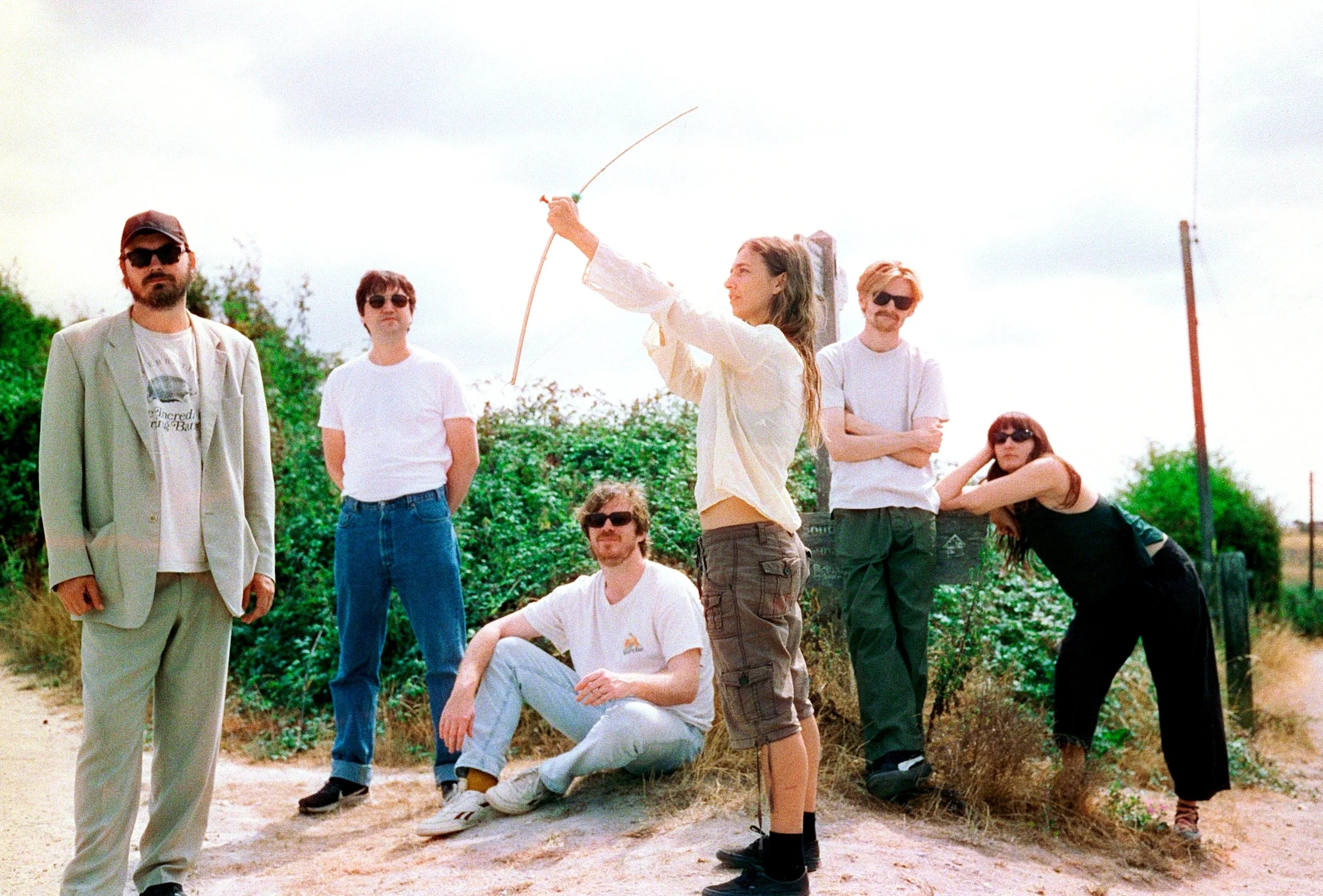
Photo by Holly Whitaker
The following transcript was generated with transcription software and reviewed for accuracy. Minor errors or omissions may remain.
YY: Your second full length album, "This Was Once Fields," was born from an EP of the same name that came out in May, and so was it always the plan to expand the EP into an album, or did that idea come about after the fact?
SF: Yeah, we signed to a label that are based in New York and Austin, Texas, called Todo Records, who are an awesome record label. But initially they were very keen to do an EP. I think we signed with them to do two EPs, but we preferred the idea of conjoining the two EPs and making it one full-length album.
And the song "A Mound A Field" has been called the song that sparked a new direction for the band. Was it the first one from the album to take shape, and how might it tie everything together?
It is definitely the first one I finished. There was quite a lot of the other songs that I had in the pipeline, but they were unfinished, and that song came together and that sparked the inspiration and the concept of the album. It really captures the beginning of the journey. And if you don't know the concept, it's basically about a walk in the fields above London, walking down towards London with the view of looking and then kind of almost walking into the city and then walking down to the central part. It's a very long walk. And that's what's inspired the whole record. And so "A Mound A Field," the song, it was very much, yeah, as I'm speaking about the beginning and the sound is very chaotic. And so it's quite a heavy album. It's probably one of our heaviest songs, and we're kind of going back to more of our old-school, heavier roots of previous bands that we used to be in. The first album was definitely a bit more smooth and a bit more softer texturally. And this, this song kind of wakes us back up and gets the crowd going. Whenever we're playing shows, it's a real, it's a real momentous song. And when I finished the song, I was, I was pretty happy with it. I could definitely tell that it was one of my favorite, favorite songs I'd ever written just because of the, the journey the pastures, the, the flute solo at the end was really something that I really, really, really enjoyed when I listened back to it.
As you said, this whole record was written almost as an escape from the at times chaotic environment of life in London. Honestly, kind of like the long walks that inspired it. Was creating the album similar to those meditative walks?
Yeah. For sure. I think definitely, even though my studio at the time where I wrote it in was very kind of dark and dingy and quite sad. I never felt very inspired by my studio. It was in a warehouse in north London and it was quite like, yeah, it's quite a sinister place. But I guess singing and making the songs about my adventures outside of the kind of hellscape of the industrial estates that I was in definitely made me feel a lot more inspired, a little bit more warm and a bit more, more grateful for the land that is around London that I can escape into and burn up my energy because I think I think it it boils down to it's definitely a lot of neurodivergence and ADHD. That's the reason why the city makes me feel the way it does, I get overstimulated by the city quite easily. So escaping is so crucial for my mental health and so on. My mental health has to be good for me to be able to write good music if I'm in a bad mental health state. I'm not writing anything good. I'm second guessing myself. I'm going down rabbit holes that I shouldn't be going down. I've got to be looking after myself, meditating, meditating, going for long walks and yeah, really, really staying on top of it all. In order for me to write the best music I can possibly can write. And so yeah, it's all linked together as part of the same self-help, really. It's all self-help. Yeah. All of my music.
Yeah. Around the time your first record came out — I was just reading this earlier — you said that the band was about figuring out who you are in the midst of chaos. Which, to be honest, still seems relevant to what you're creating now. And so how would you say this record maybe expands upon the ideas of the last one, or how does it differ?
Yeah. The last record was very much internalized, like it was me getting myself out of a hole. I'd say a nervous breakdown. And so, like I said, the reason why I know how my mental health really affects my songwriting is because my mental health wasn't great when I went to write the first album for Gently Tender. It took me a long time to, I don't think I wrote a song for about two years before that first album was recorded. I was building back up to something, and I was really trying to figure it out, and I was a bit lost. And so that was the chaos and the breakup of my old band, and that was the chaos and me trying to work out what to do next and get myself out of the hole to make something new that was listenable for people. But definitely this is now I'm coming out of that shell with this new record. Even though I live in chaos, I do have a, like a nervous system that is constantly in fight or flight. But I was just learning how to cope with it and actually thrive with it. And actually use it as a tool for great things and success instead of it being something that I'm constantly fighting against and battling. It's something that I'm actually able to use it as a tool for my creativity, my overactive nervous system. And yeah, it's definitely a wild inward journey that's becoming a lot more outward and I'm talking a lot more about the, the, my surroundings. I'm talking about the city, I'm talking about the countryside and how they intertwine as you enter both realms going in and out of the city constantly and how it makes me feel. It's just about being present, about how your surroundings make you feel. That's what I'm, I'm meditating on really.
Now, this album was very much, as I understand it at least, created and inspired by the scenery of North London. The contrast between the chaotic nature of the city and then almost like the pastoral a little bit. So when it comes to comparing this one to your last album, did your last album — was it also created in the same place? Just sort of formed around different subject matter in a way?
Yeah, so we got kicked out of our old studio in central London, where we wrote probably the first songs for the Gently Tender album. And then we moved to that studio in North London, which wasn't as nice, which wasn't as inspiring. The old studio was incredible. It was right in the centre next to Big Ben. And it was just like in such an incredible area of London. It was really inspiring. It was really cool. We had so many great times and great memories playing some gigs in that studio with our old band. That's where we kind of learned our trade. And then we went to this studio in North London, which wasn't as wasn't as beautiful, wasn't as nice. And but yeah, we finished that first record in the really dark, dingy warehouse studio. And then, but then when we came to record that record, it was in the most beautiful scenery you could possibly imagine in the Rockfield Studios in Wales. So we wrote it in a dungeon. Then we recorded it in a heavenly farm, a famous farm, in just the edge of Wales where many, many great songwriters and songs have been written. I think Coldplay wrote some of their songs there and Queen wrote a lot of their songs there. I think "Bohemian Rhapsody." There's lots of history. And it was, it was a great experience. And we worked with a producer called Matthew E. White for that first record, who flew over from Virginia in the pandemic, and we made a very peaceful record.
That's incredible. And I know that the song "Staring At Fields" took three years to finish and initially didn't even make it onto the album. Was there a moment that you can remember where you finally had a breakthrough? What made you finally consider it complete?
Yeah, I had the first verse of the song that I sing on my own, really with away from the band. And then, yeah, it's just one of those things where one day you just have an epiphany. And it was always there. And the band really liked it how it was, but I was always like, this is not a finished song. And we would, we would there would be internal battles in the band, the band, the some of the band members would be like, we need to release this song. And I'm like, it just doesn't feel right. It's an unfinished song, so I can't release it. And so I, yeah, you're just like, one day you just get the signals from I don't know where it comes from. Even though you've been struggling with a song for two, I never give up on anything. And I always revisit stuff and like, you just, it's just a frame of mind. You have to go and work on something else, another project, learn a traditional folk song and try and write a completely different Gently Tender song. And then you've completely forgotten about that song. And then you just for a second, you're just like, oh, I'll just try it out. And then all of a sudden it will just come out like. And I just started singing about walking in amongst the tall buildings in the city and about the offices you walk through when you go walk through the city in the middle of the night. And like all of the cities, they've got their lights still on. And I was just got really inspired by that kind of feeling when you're walking back, sometimes from a night out, when you've been walking back at 3 or 4 in the morning, you've been out or even walking on my one of my walks through the city. It's that kind of the peace of the city, but also you're surrounded by the corporate world, and you're constantly reminded of the corporate world because you can see into every office because of they've got their security guys all there working really early hours in the morning. And it's such a weird, weird thing to do. I'm sure you can do the same thing in places like New York as well, where you'll just, you can see into all the buildings in the middle of the night and it's quite sometimes it just looks very peaceful. But also in the daytime, it's just a scene of absolute chaos. And so I got very inspired by that kind of thing.
You mentioned that the other members of the band were really trying to get you to release this song, and it wasn't complete yet. But clearly, you know, you have a good enough working relationship to where they let you do your thing, and they understood that it wasn't quite ready yet. And so the band is made up of really just veteran musicians. You've all been in projects in the past and bring different experiences to the table. How collaborative would you say is the creative process? Where does their involvement sort of fit in with this whole thing?
I'd love for them to be by my side all the time, all day, every night, working on ideas and things like that. But slowly, as we've gotten a bit older, they have drifted away from me. Like I'd say my right and left arm are the bass and the drums in the band, but they both left London. They both they don't live in London anymore, so I don't really have anybody to feed off in terms of bounce off early ideas. So back when we were much younger, we would definitely work stuff out from scratch and really carve out the songs. But now I'm a bit more of a lone wolf. I will really have to get to a point where I think a song is almost finished and bring them in, and then they help me finalize the structures. If I'm at a roadblock, I will show them the half idea that I have and they can help me. They're all really good. They're all very switched on. And the kind of issue that I have as a songwriter is that I will have too many ideas in one song, and they will try and tell me where the good parts are and where they aren't, and then they'll help me make the song more listenable and less chaotic because I'll sometimes have three choruses or like five verses that don't lead anywhere, and they'll try and help me find a chorus throughout it, you know? And but now is the time where I've kind of had to kind of pull my socks up and just get on with stuff by myself really. And then they come in right at the end and tell me whether it's good or not. And then we have a fight about whether it's good or not. Because if I love it and they hate it, then just it's chaos is in the room. And if they like it and I am not sure about it, this happens all the time, then I just like, get really confused. And it's it's a quite an emotional experience. But it's all with a pinch of salt. And we all know how to work with each other. We really know each other so well now that even if things get weird or things get a little bit heated in the studio, it's resolved very quickly. We never fall out big time. We never have any proper proper fights.
That's good. Yeah, you need that. I was reading a recent interview that you did where you spoke about these differences between your experiences in the music industry now vice where you were at, say, 18. So how has your idea of a successful record changed over the years? What do you consider to be a success?
Yeah, my idea of success now has become so different to just how the music industry has changed since I started. It's all about the music industry because the music industry is so bent. I'm going to say the word bent. It's just absolute carnage. With streaming, with live shows, particularly in the U.K., I can't really speak for what it's like in America or else in Europe, because we don't go there enough anymore to understand what it's like on the ground over there. But it's like everyone's struggling. Like even people who are pretty, pretty damn successful are struggling to make it work. And so therefore, for like, for me, in order for me to feel like it's a success, all I need is for it to be released. I don't care how it's released, it's out there in the world, and I personally think that it was the best record I could have made at that time. Obviously I want people to hear it, but I'm not going to expect everyone to hear it because the competition is, is insane. Like we're releasing our album on the day that Fontaines D.C. are releasing their album. So I've got to expect that we might be a bit of an afterthought for some people on that day. Obviously it will reach the right people eventually, but like, you just gotta, you gotta, yeah, limit your expectations as a musician now, otherwise you'll go insane.
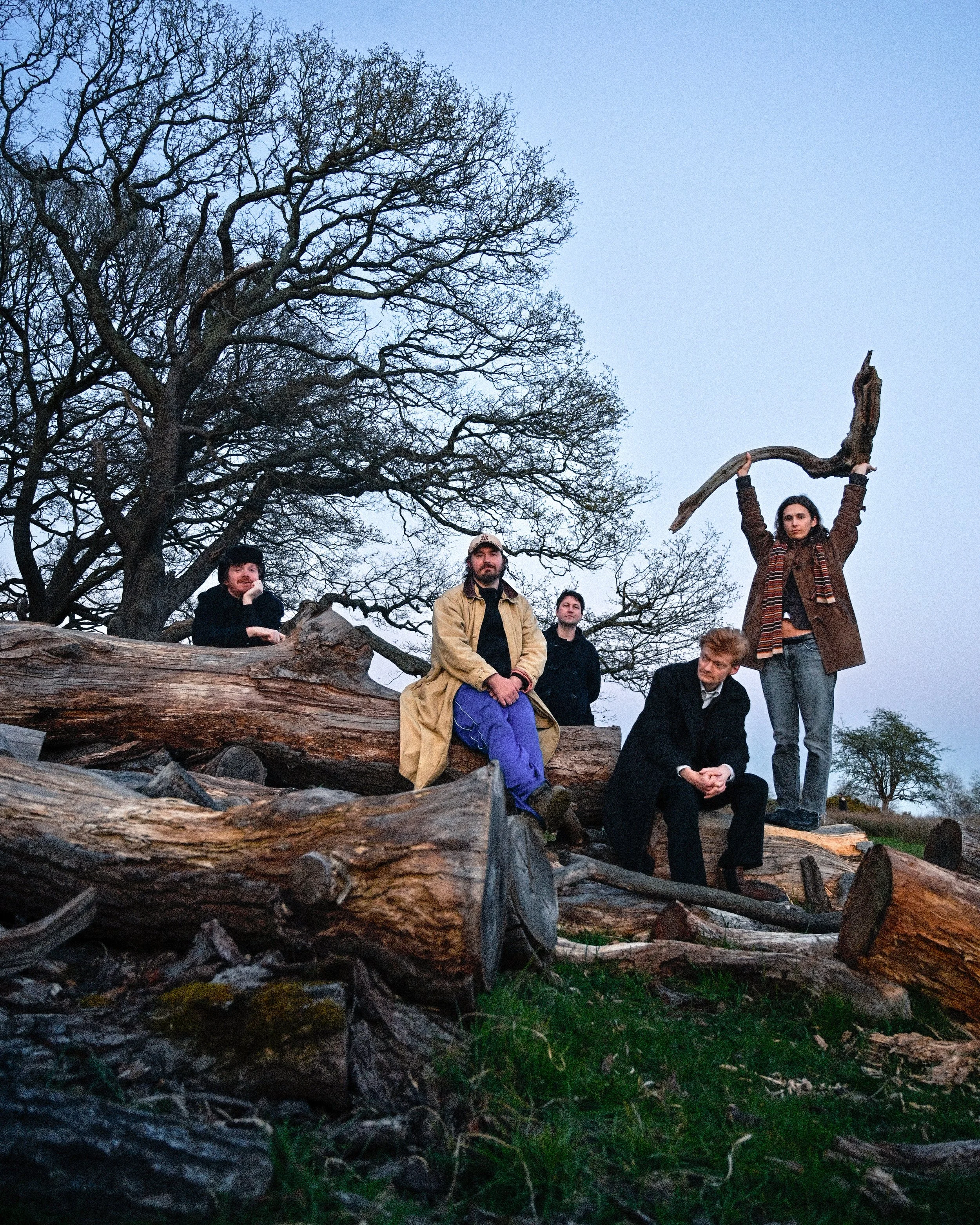
Photo by Maisy Banks
SUPPORT Gently Tender by listening, streaming, following. Support all artists mentioned in this interview. Support all artists.